
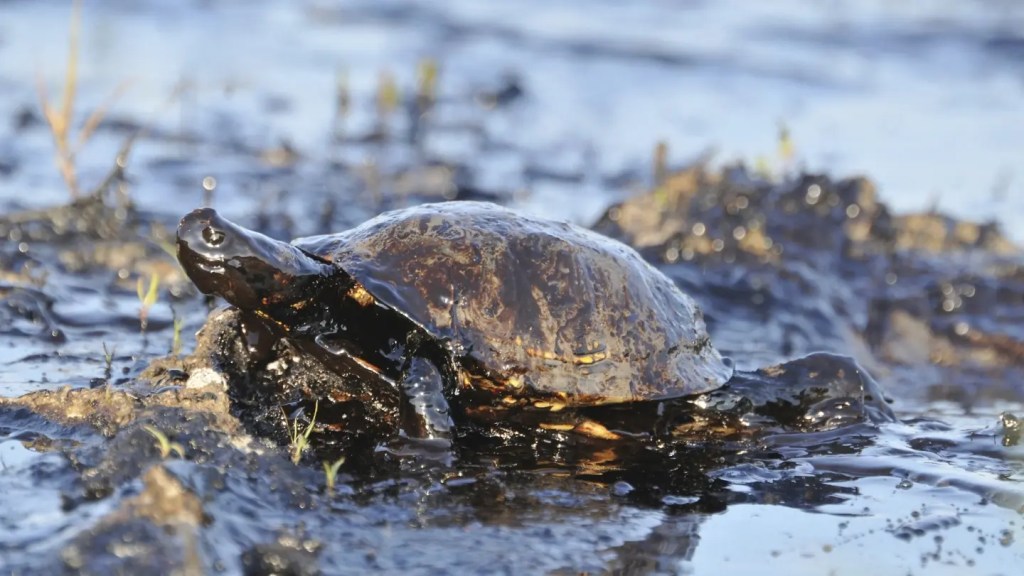
In an age of climate urgency and environmental accountability, our ability to respond to marine pollution is no longer just a technical issue, it’s a global development priority.
Here comes into play a digital solution such as ADIOS. ADIOS NOAA’s Automated Data Inquiry for Oil Spills is a foundational tool in the global fight to protect our oceans.
🌊 What is ADIOS?
Developed by the National Oceanic and Atmospheric Administration (NOAA), ADIOS helps responders and planners’ model how spilled oil behaves at sea.
Using a comprehensive database of over 1,000 types of crude and refined petroleum products, ADIOS models how the oil will weather over time. This includes predictions on:
- Spreading: How the oil slick will expand on the water surface.
- Evaporation: The rate at which the oil will dissipate into the atmosphere.
- Emulsification: The formation of water-in-oil mixtures, which can significantly increase the volume of pollutant requiring cleanup.
- Dispersion: The breaking up of the oil into smaller droplets that mix into the water column.
- Changes in Physical Properties: How the oil’s density and viscosity will change, affecting its behavior and the effectiveness of cleanup methods.
- Sedimentation: The process of oil particles sinking and settling on the seabed.
- Airborne Benzene Concentration: Estimation of the concentration of this hazardous compound in the air above the spill
This information is critical for oil spill responders and contingency planners in several ways:
- Developing Cleanup Strategies: By predicting the oil’s state, responders can determine the most effective methods for containment and removal, such as the use of chemical dispersants, skimmers, or in-situ burning. For example, ADIOS can help determine if the oil’s viscosity is still low enough for dispersants to be effective.
- Assessing Environmental Impact: Understanding the trajectory and weathering of the oil helps in identifying which coastal areas and resources are most likely to be affected, allowing for better allocation of protective measures.
- Estimating Cleanup Volume: ADIOS can predict the increase in volume due to emulsification, aiding in planning for storage and disposal of recovered materials.
- Supporting the Incident Command System (ICS): ADIOS can provide data to complete ICS forms, such as the oil budget.
- Risk Analysis and Preparedness: ADIOS can be used for forecast simulations and probabilistic risk analysis based on historical weather and ocean current data, aiding in preparedness efforts.
In summary, it provides hazard-specific forecasts with global spatial coverage, and is free to access, complete with tutorials for global users.
The functionalities of ADIOS have been integrated into another product of NOAA’s called WebGNOME, a web-based interface of the GNOME suite. GNOME focuses on predicting the trajectory of the oil spill, considering factors like wind, currents, and tides. By combining with ADIOS, WebGNOME provides a comprehensive tool for both the movement and weathering of oil spills.
🔍 Limitations:
While is a powerful tool, ADIOS has certain limitations:
- Short-Term Predictions: ADIOS is designed for short-term predictions, typically up to five days. It does not model longer-term processes like biodegradation and photo-oxidation, which become more significant after this period. However, NOAA has been developing new algorithms to model biodegradation for integration into the GNOME/ADIOS suite.
- Complexity of Real-World Spills: Real oil spills are complex events influenced by numerous factors that can be difficult to fully capture in a model. Factors like the specific chemical composition of the oil (which can vary even within the same type), wave conditions, and the presence of dispersants can affect the accuracy of predictions.
- Input Data Accuracy: The accuracy of ADIOS’s predictions depends heavily on the quality and accuracy of the input data, such as the type of oil and environmental conditions. Uncertainties in these inputs can lead to variations in the model’s output.
- Focus on Surface Spills: WebGNOME, which incorporates ADIOS, is primarily designed for modeling surface spills. Modeling subsurface oil releases, such as from well blowouts, may require more specialized tools, although GNOME has been integrated with models like TAMOC for deep water blowouts.
- NOAA’s Environmental Response Management Application (ERMA®) integrates data from various sources, including real-time information like ship locations and weather, as well as Environmental Sensitivity Index (ESI) maps. This is something which could benefit even further the database and its application.
- Historical Context and Trends: The ITOPF database provides valuable statistics on global spill events, an area not currently addressed within ADIOS.
🌐 Can ADIOS help to reach the SDG Goal 14 target?
The evolution and integration of oil spill detection tools like ADIOS are directly aligned with Sustainable Development Goal 14: Life Below Water, which aims to:
“Prevent and significantly reduce marine pollution of all kinds, in particular from land-based activities, including marine debris and nutrient pollution, by 2025.” (SDG 14.1)
By improving our predictive capabilities and accelerating informed response, ADIOS contributes to:
- Supporting sustainable marine governance and data accessibility, key themes of Agenda 2030
- Protecting marine biodiversity (SDG 14.2)
- Strengthening resilience to marine disasters (SDG 13.1)
💡 The Way Forward
As we approach critical climate tipping points, oil spill response can no longer exist in silos. ADIOS plays a crucial role in marine environmental protection by providing valuable insights into the behavior of oil spills. This knowledge enables more effective and timely responses, minimizing the potential damage to sensitive ecosystems and coastal communities. By aiding in the selection of appropriate cleanup techniques and predicting the spread of oil, ADIOS helps to reduce the environmental and economic impacts of oil spills.

 SaveOCEAN
Leave a comment