Our oceans are in crisis—but they are not beyond saving. Every drop of seawater tells a story of interconnection.
- Overfishing isn’t just depleting our seafood supply – it’s weakening the entire marine food web, making species more vulnerable to climate change.
- Acidification isn’t just a chemistry problem – it’s a threat to the skeletal structures of corals and shellfish that millions depend on for food and income.
- Oil spills don’t just blacken beaches- they disrupt ecosystems for generations. These threats aren’t isolated. They collide, reinforce, and amplify each other, creating a perfect storm of ecological collapse.
But just as these challenges are interconnected, so too are the solutions. Our response must be equally integrated, systemic, and urgent. This is not just about protecting marine life- it’s about preserving the stability of our climate, the sustainability of our economies, and the integrity of our future.
🌡️ Ocean Warming & Acidification
What’s happening?
Rising greenhouse gas emissions are heating our oceans and increasing their acidity. Warmer waters lead to coral bleaching and disrupt marine life migration patterns.
Acidification, caused by CO₂ absorption, weakens shell-forming organisms like oysters and corals, threatening entire food webs.

🐟 Overfishing & Trawling
What’s happening?
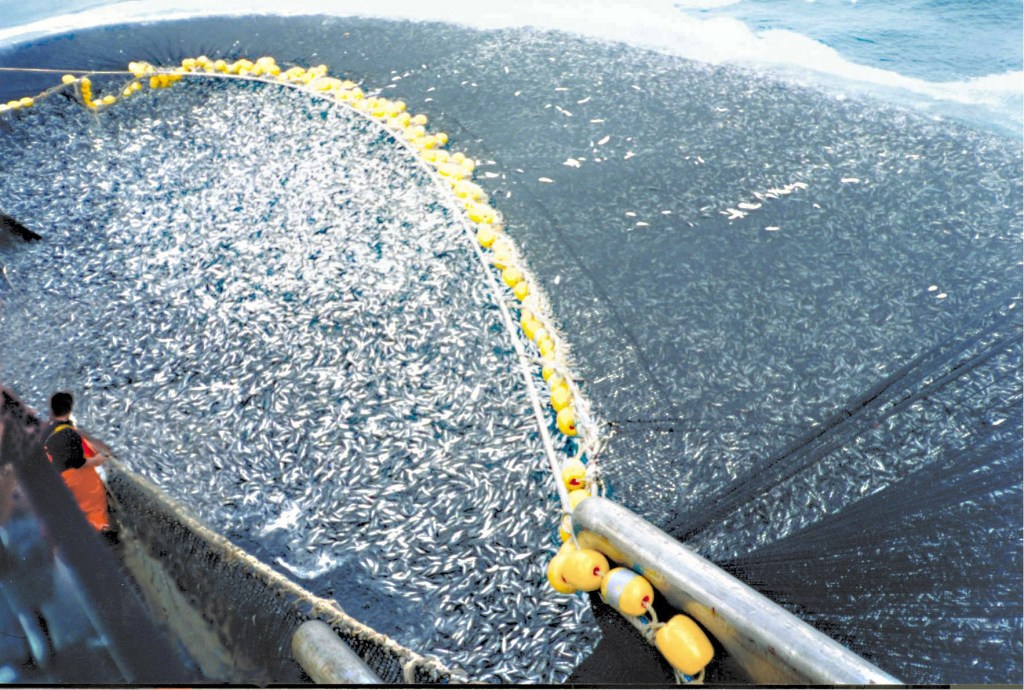
Overfishing depletes fish populations faster than they can reproduce. Coral reefs lose their grazers. Populations of juvenile fish are swept up as bycatch in indiscriminate nets.
When bottom trawling is added to the mix:
- Can cause significant damage to seafloor ecosystems by destroying habitats and reducing biodiversity.
- Can release stored carbon from seabed sediments into the water and potentially the atmosphere, contributing to climate change and ocean acidification.
- Often results in the unintentional capture of non-target species (bycatch), leading to injury, death, and disruption of marine food.
🧴 Plastic Pollution
What’s happening?
Over 14 million tons of plastic enter the oceans annually, harming marine life through ingestion and entanglement. Microplastics have been found in two-thirds of fish species studied, posing risks to the entire food chain.

🛢️ Oil & Chemical Spills
What’s happening?
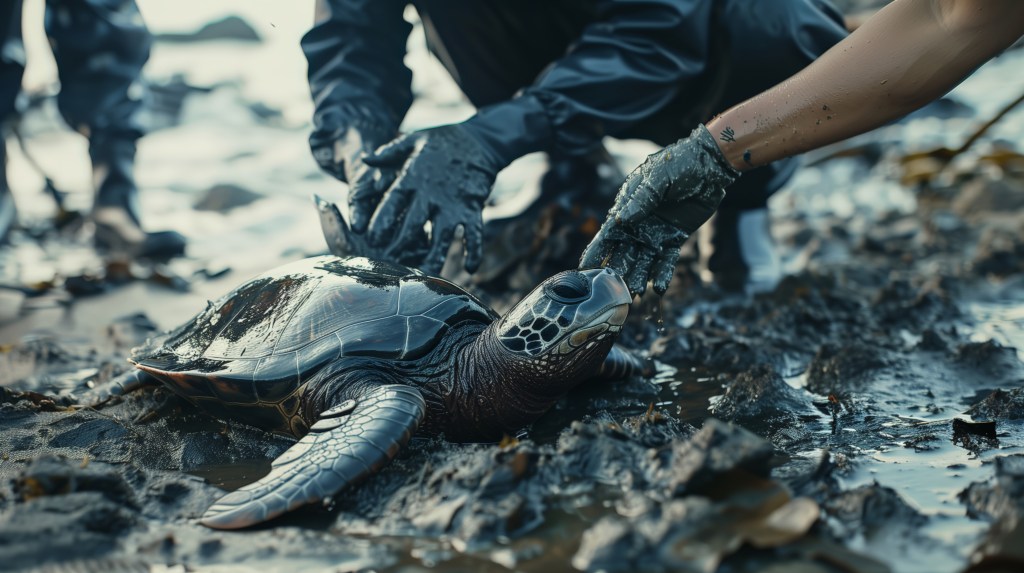
Oil spills, often from tanker accidents, shipping bulge systems, accidental leaks or drilling operations, coat marine life and habitats, leading to long-term ecological damage.
- Oil can persist in sediments for extended periods, causing chronic exposure and long-term impacts on populations, communities, and ecosystem functions, with recovery potentially taking decades
Chemical pollutants from agriculture, industry, and households, leads to eutrophication, dead zones, and bioaccumulation of toxins in marine life. When chemicals like nitrogen and phosphorus flow into the sea, they feed explosive algal blooms that suffocate marine life.
Persistent pollutants like POPs and microplastics, now found in everything from plankton to whales, threaten both ecosystems and human health.
🔧 Breaking the Cycle: Actionable Solutions
The good news? We have the tools. What we need is the will.
🎣 Reforming the Fishing Industry
- Ban destructive trawling in sensitive habitats. Establish and enforce no-trawl zones in Marine Protected Areas (MPAs).
- Promote sustainable fisheries. Support operations for sustainable fishing quotas, use of selective gear like pots, traps, and pole-and-line methods.
- Eliminate harmful subsidies. Redirect them towards innovation and sustainability, not overexploitation.
- Combat illegal, unreported, and unregulated (IUU) fishing. Leverage satellite monitoring and international cooperation to close loopholes.
🛢 Transition Away from Fossil Fuels
- Strengthen oil spill response systems. Equip every offshore operation with robust containment and mitigation plans.
- Accelerate the shift to renewables. Invest in the current renewables or research or even better ones as viable alternatives to fossil fuel dependency.
- Regulate extraction rigorously. Prioritize environmental impact assessments and transparency.
- Eco-friendly and biodegradable cleaning products.
- Support natural alternatives for pesticides and fertilizers.
🧪 Detoxify Our Seas
- Improve waste treatment infrastructure. Upgrade facilities to capture and neutralize harmful chemicals before they reach the sea.
- Adopt safer alternatives. Incentivize research into biodegradable plastics and non-toxic industrial inputs.
- Curb agricultural runoff. Support regenerative farming practices that reduce fertilizer and pesticide use.
- Push for global movement in safer ingredients in cosmetics which are already available.
🌡 Tackle Ocean Acidification
- Slash carbon emissions. Enact binding climate targets to limit global warming and stabilize ocean chemistry.
- Scale carbon drawdown solutions. Support ocean-based methods like kelp farming and alkalinity enhancement.
- Protect vulnerable regions. Develop local mitigation efforts in coastal communities hit hardest by acidification.
🔚 Conclusion: A Future Worth Fighting For
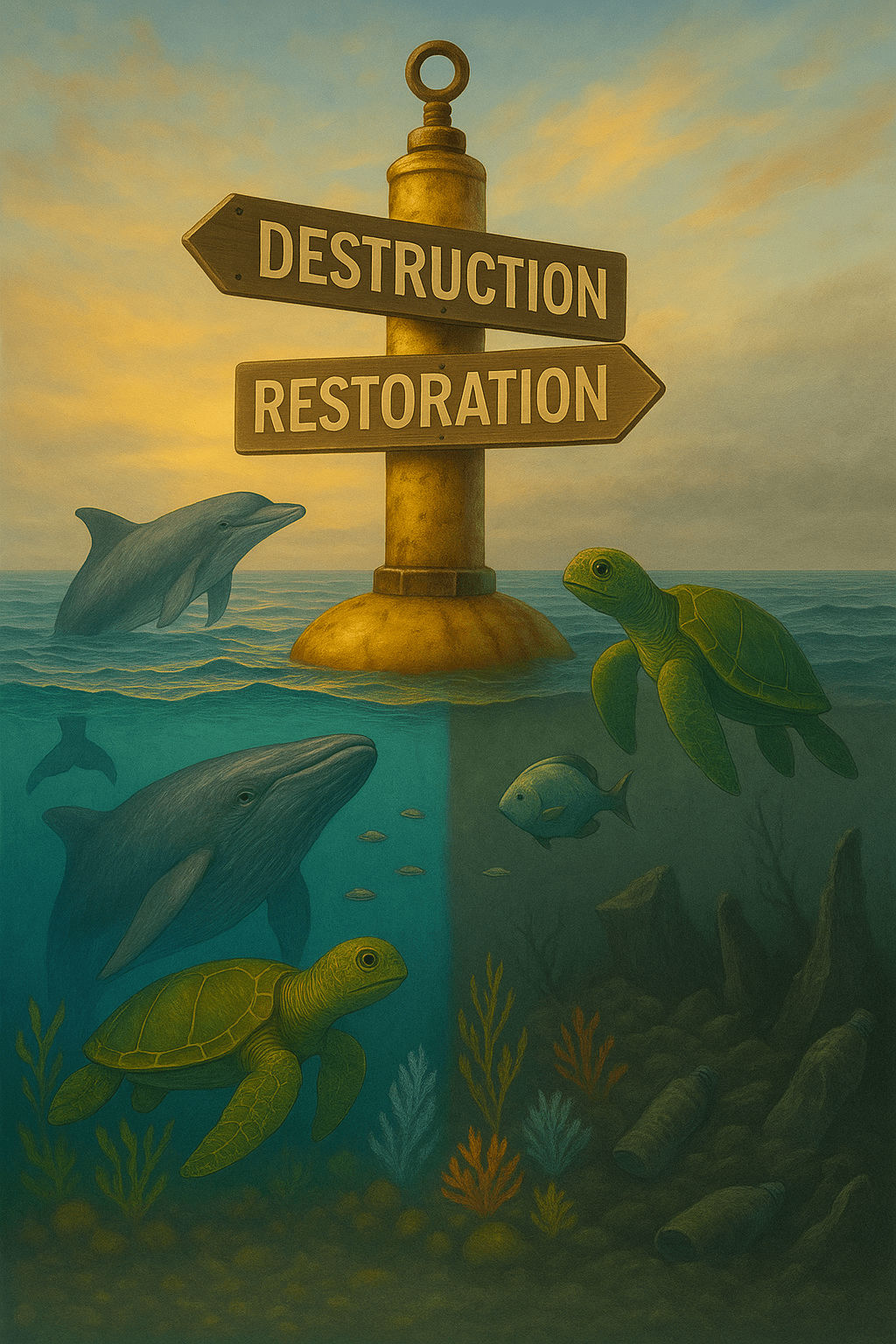
Our oceans are not lost. They are at a crossroads.
The same human ingenuity that has caused this crisis holds the key to its solution. Turtle Excluder Devices (TEDs) have slashed sea turtle deaths. These aren’t theories – they’re proven, scalable solutions.
Through bold policy, sustainable practices, and a rising tide of public commitment, we can heal our seas. We can protect not just marine life, but the very systems that make Earth habitable.
The question is not whether we can fix the ocean. The question is:
Will we rise together to meet the challenge?
#Transparent and Collective to Protect Every Wave#
 SaveOCEAN
Leave a comment