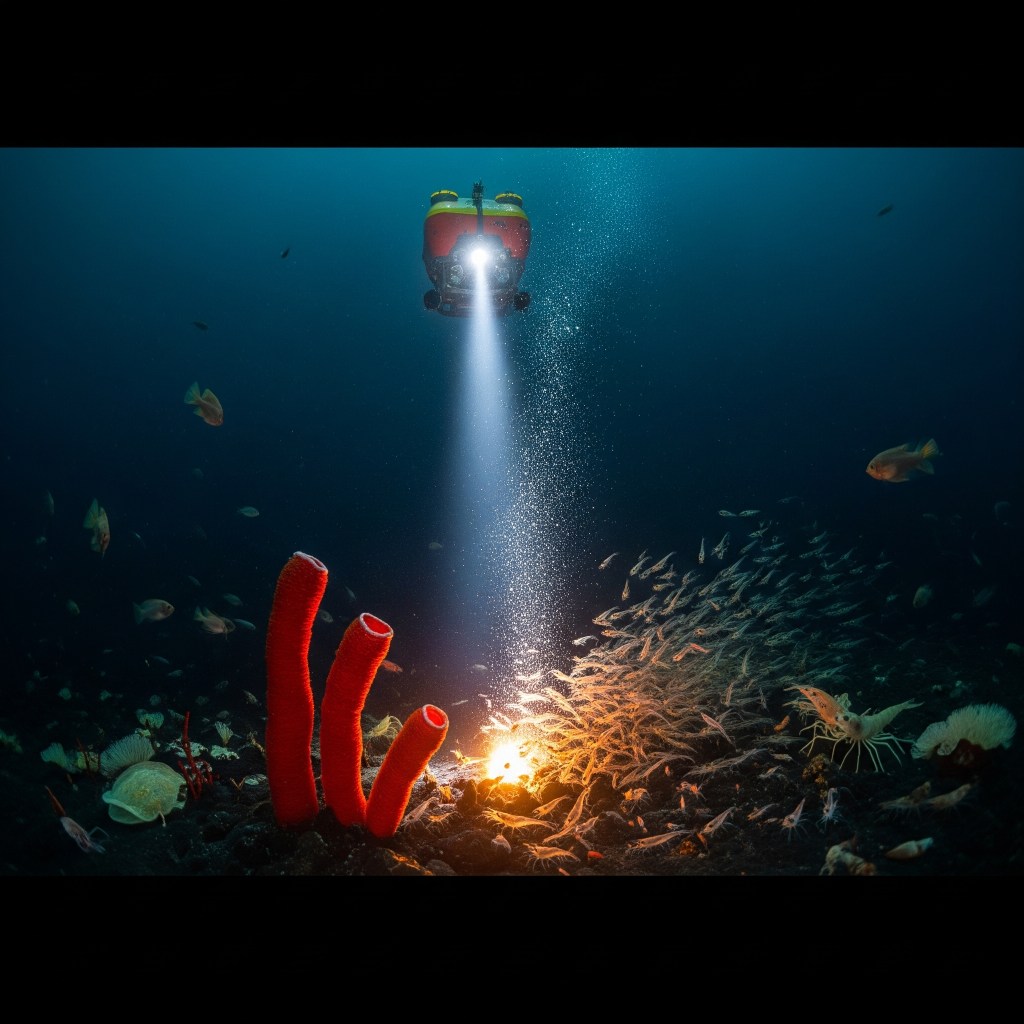
The deep ocean, a realm extending beyond the reach of sunlight, constitutes the largest habitat on Earth and plays a pivotal role in maintaining the planet’s health and stability. This vast, cold, and high-pressure environment is critical for regulating global climate through carbon sequestration and heat absorption, driving essential nutrient cycles, and supporting intricate marine food webs. Deep-sea ecosystems harbor unique biodiversity, including extremophiles adapted to these harsh conditions and a multitude of undiscovered species, holding immense potential for medicine and biotechnology. However, this fragile environment faces increasing pressures from human activities and climate change, necessitating sustainable management and conservation efforts.
Current research and exploration initiatives are actively working to unravel the mysteries of the deep ocean. These efforts encompass comprehensive mapping of the ocean floor, in-depth studies of deep-sea biodiversity and ecosystems, investigations into the impacts of climate change on this environment, and the development of advanced technologies to facilitate exploration and research.
Despite these significant advancements, substantial gaps remain in our understanding and capacity for deep ocean research. These include geographic biases in exploration, limitations of current deep-sea technology, understudied ecological functions and biodiversity, challenges in data management and standardization, and insufficient capacity building and global participation. Creating lasting change in the deep ocean necessitates a concerted global effort that prioritizes strengthening international collaboration, fostering interdisciplinary research and open data sharing, investing in technological innovation and accessibility, enhancing capacity building and global participation, and developing sustainable financing mechanisms. This article aims to make a summary of the current projects and gaps in the deep ocean exploration.
Current Deep Ocean Research Projects and Initiatives
Seabed 2030
The Seabed 2030 project is a global initiative aiming to create a complete, high-resolution map of the entire ocean floor by the year 2030.
This ambitious goal is being achieved through a collaborative network of Regional Centers that aggregate bathymetric data from various sources, including industry, governments, and research institutions.
NOAA Ocean Exploration
NOAA Ocean Exploration conducts telepresence-enabled expeditions on its research vessel, the Okeanos Explorer, focusing on unexplored and poorly understood regions of the U.S. Exclusive Economic Zone and the Pacific Ocean.
These multidisciplinary expeditions collect critical mapping and observation data, providing initial assessments of the physical, chemical, and biological characteristics of deep-sea areas.
Nautilus LIVE
The E/V Nautilus, operated by the Ocean Exploration Trust under the leadership of Dr. Robert Ballard, conducts scientific exploration of the seafloor, focusing on geology, biology, and archaeology. The program seeks out new discoveries using advanced mapping sonars and remotely operated vehicles.
Schmidt Ocean Institute’s
R/V Falkor (too) Plays a vital role in deep-sea exploration by supporting numerous research expeditions focused on diverse habitats, including hydrothermal vents and deep-sea coral reefs. These expeditions often involve the deployment and testing of innovative deep-sea technologies.
OceanX
OceanX utilizes the research vessel OceanXplorer, integrating scientific research with high-quality media production to reach a global audience and promote ocean literacy and conservation. This approach combines cutting-edge technology with storytelling to enhance public understanding of the deep ocean.
Digital DEPTH
The Digital Deep-sea Typical Habitats initiative, a major scientific plan under the UN Ocean Decade, aims to track the status of various deep-sea habitats, implement predictive capabilities, manage resources, and assess the impact of natural and human-induced changes. This global project involves a wide array of international marine research institutions and utilizes diverse methodologies, including remote sensing and modeling.
Ocean Census
The Ocean Census program is a global alliance dedicated to discovering and documenting ocean life at scale. This ambitious initiative brings together over 800 scientists from more than 400 institutions worldwide, conducting expeditions and workshops to identify the estimated two million marine species, of which a vast majority remain unknown. The program aims to provide essential baseline data on ocean biodiversity to support conservation efforts.
DOSI
The Deep Ocean Stewardship Initiative (DOSI) serves as a global network of experts from science, technology, policy, law, and economics, focusing on advancing deep-ocean science in policy and advising on ecosystem-based management.
Copernicus Ocean State Report (OSR)
The Copernicus Ocean State Report (OSR) provides a comprehensive annual assessment of the state of the global ocean and European regional seas. he OSR also documents the increasing frequency and intensity of marine heatwaves across various ocean regions and significant losses in sea ice cover in both Arctic and Antarctic regions.
Other remarkable projects:
- NOOA RESTORE Science Program Deep Pelagic Nekton Dynamics of the Gulf of Mexico (DEEPEND): focuses specifically on the biodiversity and ecological roles of organisms in the deep pelagic zone.
- Ocean Twilight Zone project: investigates the mesopelagic zone.
- Deep Sea Biology Society: facilitates knowledge sharing and collaboration among researchers studying deep-sea life.
- My Deep Sea, My Backyard: The “My Deep Sea, My Backyard” project successfully demonstrated the potential of low-cost technology in empowering developing nations to explore their own deep-sea environments.
What kind of technology exists for exploration?
- Autonomous Underwater Vehicles (AUVs) have become essential tools for deep-sea research, enabling mapping, data collection, and exploration without direct human control.
- Sentry and Echo Ranger are deployed for detailed seafloor surveys and habitat characterization.
- Sensors for monitoring conductivity, temperature, depth (CTD), oxygen levels, and ocean currents under extreme deep-sea conditions.
- High-resolution 4K camera systems and advanced bioluminescence detection technologies.
- Submersibles, such as the Alvin, are expanding the frontiers of human-occupied deep-sea exploration.
- Maka Niu platform using off-the-shelf hardware to lower the barriers to deep-sea exploration for researchers and communities worldwide.
- The Ocean Discovery League (ODL) is at the forefront of developing systems like DORIS (Deep Ocean Research & Imaging System).
- MBARI’s FathomNet database is a prime example, utilizing AI algorithms to process vast amounts of underwater imagery, enabling faster and more sophisticated analysis of marine life and habitats.
Resource Exploration Regulation
The International Seabed Authority (ISA) is in the process of developing regulations to govern the exploitation of these resources in international waters.
Gaps in Deep Ocean Research
- A recent study by the Ocean Discovery League revealed a striking geographic bias in deep-sea exploration.
- Less than 0.001% of the deep seafloor has been visually observed.
- Five countries: the United States, Japan, New Zealand, France, and Germany- account for 97% of all deep-sea submergence observations.
- Underwater communication remains a significant hurdle
- Submergence vehicles remains limited due to their high cost and operational complexity.
- Need for improved data management and standardization practices.
- Financial constraints, lack of access to deep-sea technology and infrastructure, and limited academic training opportunities create significant barriers for researchers from developing nations.
Creating lasting change
- Enhanced international cooperation
- Supporting the development and effective implementation of robust governance frameworks for all deep-sea activities, including the finalization of exploitation regulations by the ISA for deep-sea mining.
- Increased funding and support should be directed towards interdisciplinary research.
- Promoting the adoption of FAIR data principles.
- Supporting the creation of more efficient and versatile AUVs
- Reliable long-term sensors, and high-bandwidth underwater communication systems.
- Dedicated training programs and educational opportunities in deep-sea science
Conclusion
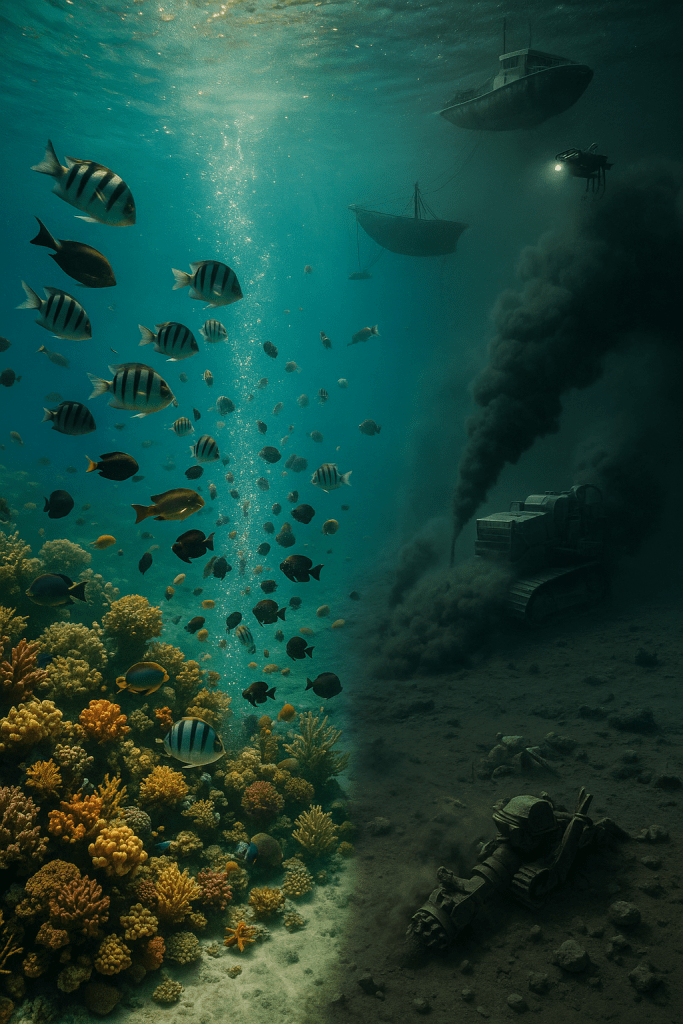
The deep ocean, a realm of immense ecological significance and undiscovered wonders, is facing unprecedented challenges in the 21st century. Strengthening international collaboration, prioritizing interdisciplinary research and open data sharing, investing in accessible technologies, enhancing capacity building for global participation, and developing sustainable financing mechanisms are essential steps towards ensuring the long-term health and resilience of the deep ocean. Only through such a comprehensive and collaborative approach can we hope to safeguard this vital ecosystem for future generations.
 SaveOCEAN
Leave a comment