The ocean. Our planet’s blue heart.
It’s a place of immense beauty and vital to all life on Earth. But beneath its shimmering surface, a silent crisis is unfolding, threatening to unravel the very fabric of marine ecosystems. We’re facing a deadly trio of threats: warming, acidification, and deoxygenation, all interacting to push our ocean to the brinks.
The Ocean on Overdrive: A Heat Crisis
Imagine a fever that never breaks. That’s what’s happening to our ocean.
It has absorbed a staggering 90% of the extra heat we’ve trapped with greenhouse gases. Think about that for a moment: 90% of our planet’s excess heat is being held by the ocean. Since the late 19th century, ocean surface temperatures have climbed by nearly a full degree Celsius, with the fastest warming happening in places like the Indian Ocean. And it’s not slowing down. Projections show increases of nearly 3°C by the end of this century if we continue on our current path.
This isn’t just about warmer swimming waters. Which in some situations may be convenient for relaxation purposes. This profound warming is leading to irreversible changes, reaching down into the deep ocean where heat is locked in for centuries, even millennia. We’re already seeing the devastating consequences:
- Marine heatwaves have doubled in frequency since the 1980s, becoming more intense and lasting longer. These underwater heatwaves are wreaking havoc. These events are projected to become four to eight times more frequent by 2081–2100
- Just look at the Great Barrier Reef, which has lost half of its shallow-water corals due to these events. In 2020 alone, it suffered its worst mass bleaching event since 1998. A trend which continues until today.
- The warming also makes it harder for marine life to thrive. Increased stratification in the upper ocean reduces the mixing of vital nutrients, impacting the productivity of the entire marine food web.
- This warming also exacerbates the effects of overfishing by reducing the resilience of fish populations and altering their geographic ranges, making recovery more challenging.
A critical aspect of this warming is its long-term commitment: deep-ocean warming is likely to continue until at least 2300, even with low-emissions scenarios, and is considered irreversible over centuries to millennia. This implies that even aggressive mitigation efforts today will not immediately halt these trends, necessitating robust adaptation strategies alongside emissions reductions.
Table 2: Key Ocean Warming and Acidification Statistics
| Metric | Baseline Period | Current/Observed Change | Projected Change (Low Emissions) | Projected Change (High Emissions) | Timeframe |
|---|---|---|---|---|---|
| Ocean Surface Temperature Increase | 1850-1900 | 0.88°C (by 2011-2020) | 0.86°C (by 2081-2100, SSP1-2.6) | 2.89°C (by 2081-2100, SSP5-8.5) | 21st Century |
| Global Ocean Heat Content Increase | 1971 | 0.396 Yottajoules (by 2018) | 2-4x observed (by 2100, SSP1-2.6) | 4-8x observed (by 2100, SSP5-8.5) | 21st Century |
| Ocean pH Drop (Acidity Increase) | Pre-industrial era | 0.1 pH units (~30% acidity increase) | Surface waters could be >2x as acidic | Surface waters could be >2x as acidic | End of Century |
| Marine Heatwave Frequency Increase | 1980s | Doubled | 4x more frequent (by 2081-2100, SSP1-2.6) | 8x more frequent (by 2081-2100, SSP5-8.5) | 21st Century |
This table provides a concise overview of the critical quantitative data on ocean warming and acidification, highlighting both historical observations and future projections under different emissions scenarios. It underscores the accelerating nature and magnitude of these changes, emphasizing the urgency of climate action.
The Silent Ocean Acidification
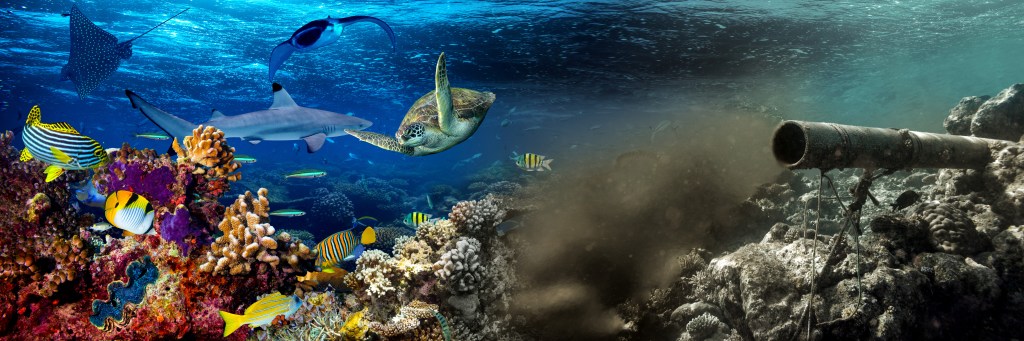
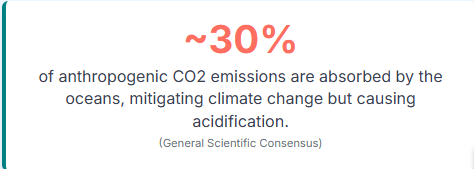
Imagine a beautiful garden slowly being poisoned, day after day. That’s what’s happening to our ocean. As we pump more and more carbon dioxide into the atmosphere, our vast ocean acts like a sponge, absorbing about 30% of those emissions. While this sounds like a good thing, a protective buffer, it comes at a terrible cost.
Since the dawn of the Industrial Revolution, the acidity of our surface ocean waters has climbed by a staggering 26-30%. Think about that: a 0.1 pH unit drop might not sound like much, but because the pH scale is logarithmic, it means a massive increase in acidity. This isn’t just a gradual shift; this rate of acidification is unprecedented, happening faster than at any point in the last 66 million years, and possibly even the last 300 million years! If we don’t drastically cut our carbon emissions, our ocean could become more than twice as acidic as it was just a century ago.
The primary ecological impact of ocean acidification is its effect on calcifying organisms, such as corals, shellfish, and certain plankton. The increased acidity reduces the availability of carbonate ions, making it more difficult for these organisms to build and maintain their calcium carbonate shells and skeletons. Since these species often form the structural foundation or base of marine food webs, impacts on them can cascade throughout the entire ecosystem, affecting ecosystem services like fisheries.
When these foundational species struggle, the entire ocean ecosystem trembles. Fisheries that feed millions are put at risk. The intricate balance of marine life, built over millennia, begins to crumble.
And the effects aren’t uniform. In the icy polar regions, where colder waters absorb even more CO2, the acidification is happening at an accelerated pace. Even in our own coastal waters, the natural upwelling of more acidic deep waters can intensify the problem, creating localized hot zones of heightened stress. This means our vulnerable oyster farms, our clam beds – they’re all facing a double whammy.
The Rising Tide: Our Dissapearing Shores
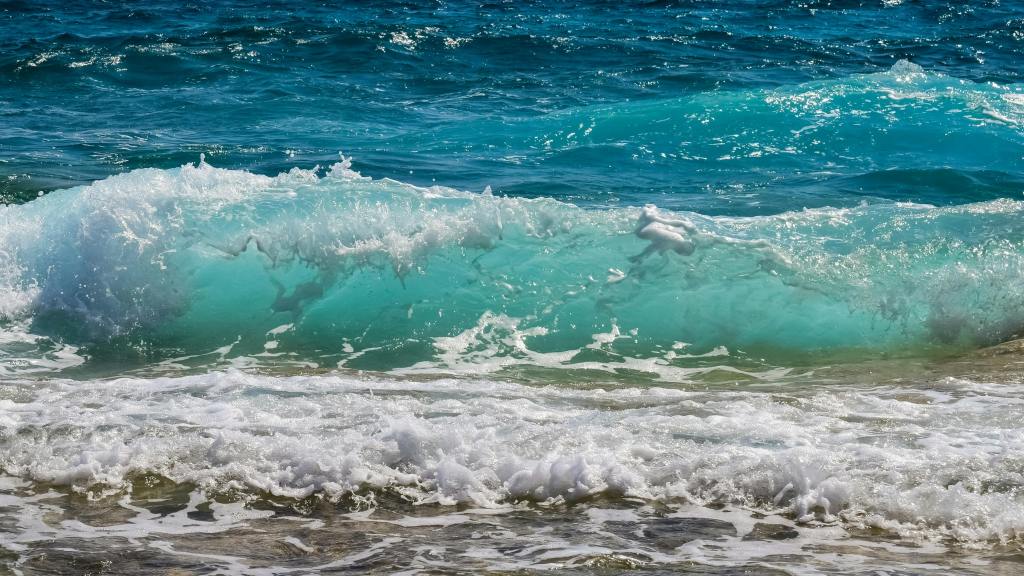
Imagine standing on a familiar beach, the gentle lapping of waves at your feet. Now imagine that same beach, slowly, inexorably, disappearing under the rising tide. This isn’t a scene from a distant future; it’s our unfolding reality.
Global mean sea level (GMSL) has risen by approximately 21 cm since 1900, reaching its highest recorded value in 2023. But it’s not just the total rise that’s alarming; it’s the speed at which it’s happening. The rate has more than doubled in recent decades, accelerating from a slow creep to a rapid surge. We’re no longer talking about millimeters per year; we’re seeing close to a centimeter every two or three years. While thermal expansion of ocean water was initially the main driver, the melting of glaciers and the Antarctic and Greenland ice sheets have exceeded the effects of thermal expansion. More concerning are model simulations which project a rise of up to 5 m by 2150 under a very high emissions scenario. This acceleration is overwhelmingly due to human activity.
Imagine New York, London, Miami, or Mumbai facing that reality. This isn’t a problem for our grandchildren’s grandchildren; it’s a looming crisis for our children. Every five-year delay in peaking our greenhouse gas emissions adds another 20 centimeters to the median sea level rise by 2300, and a full meter to extreme projections. The clock is ticking.
The impacts are already being felt. Coastal communities around the world are facing increased flooding, coastal erosion, and the slow, agonizing submergence of their homes and ancestral lands. Freshwater supplies are being contaminated by saltwater intrusion, threatening drinking water and damaging vital ecosystems. Millions are already being displaced, forced to abandon their homes and livelihoods. For small island nations, adaptation costs are reaching crippling levels, amounting to several percent of their entire GDP – a burden they simply cannot bear alone. There are limits to how much we can adapt if we let warming exceed 1.5°C.
The Ocean Deoxygenation
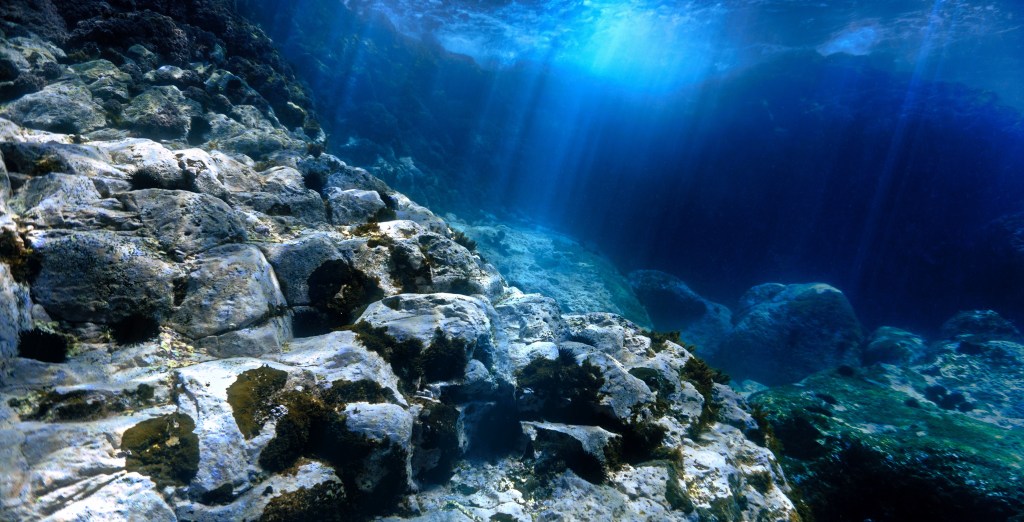
Imagine trying to breathe in a room where the air is slowly, steadily being sucked out. That’s the terrifying reality unfolding across our oceans.
Since the 1950s, our global ocean has lost approximately 2% of its vital dissolved oxygen. It might sound like a small number, but it’s a terrifying trend, projected to worsen by another 1-7% by the turn of the next century.
This isn’t a uniform decline. In some regions, the oxygen has plummeted by a staggering 20-50%. Imagine that: half the oxygen gone! The vast expanse of the open ocean has seen its low-oxygen zones expand by 4.5 million square kilometers – an area larger than India. And along our coasts, over 500 “dead zones” have been identified, including our precious estuaries. These are places where oxygen levels are so critically low that most marine life simply cannot survive. The largest of these, in the Gulf of Mexico, stretches over 6,700 square miles, a vast underwater desert where life struggles to exist.
Why is this happening? The causes are tragically simple, yet devastating.
- Firstly, it’s the heat. Just like a warm soda goes flat, a warmer ocean holds less dissolved oxygen. As our planet heats up, the ocean absorbs that warmth, and its capacity to hold the very breath of marine life diminishes.
- Secondly, nutrient inputs from agriculture and raw wastewater lead to eutrophication in coastal areas.
- This excess of nutrients triggers algal blooms, which, upon decomposition by microbes, consume large amounts of oxygen, leading to hypoxia (oxygen shortage) and the formation of coastal dead zones.
The ecological impacts are profound and terrifying. For mobile species like fish and sharks, it’s a desperate squeeze, forcing them into smaller, more competitive areas where food is scarce and stress is high – a phenomenon known as habitat compression. For creatures rooted to the seafloor, like corals and sponges, it’s a death sentence. Deoxygenation stunts growth, impairs vision, hinders reproduction, and leaves marine life vulnerable to disease. It fundamentally reshapes entire ecosystems, wiping out biodiversity and disrupting the delicate food webs that sustain all life in the ocean. Even our fished species are showing signs of habitat compression, and the very locations where we raise our aquaculture may become uninhabitable, threatening our food security and economic stability.
What can you do?
The ocean has given us life, food, beauty, and now, it offers us a path to healing. Will we seize this opportunity?
- Demand action from your leaders. Advocate for ambitious emissions reductions, robust ocean conservation efforts, and responsible research into marine carbon dioxide removal.
- Educate yourself and others. Learn about and support organizations working on protecting and restoring blue carbon ecosystems. Every mangrove planted, every seagrass bed preserved, makes a difference.
- Be an ocean advocate. Inspire your community, your friends, and your family. Reduce your personal carbon footprint in your daily life. Think about your transportation, your energy consumption at home, and the products you buy. Every choice matters.
- Support sustainable seafood. Choose seafood that is caught or farmed in ways that do not harm the environment and support the long-term health of ocean ecosystems.
- Share this critical information. The more people who understand the urgency, the stronger our collective voice will be.
Our ocean is calling out for help. Will you answer?
 SaveOCEAN
Leave a comment