
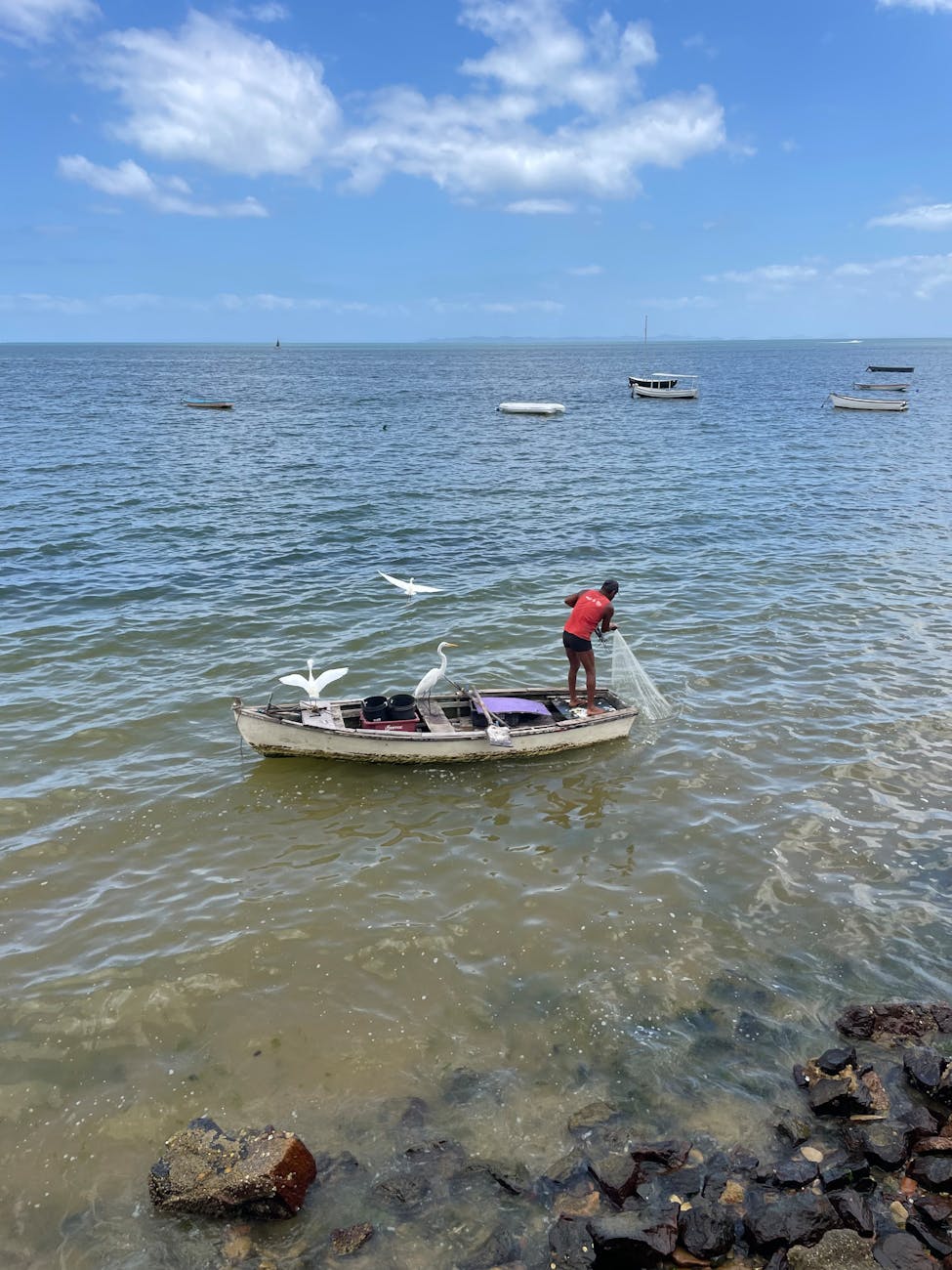
After Sri Lanka deposited its instrument of acceptance on 6 August 2025, 107 WTO members have now ratified the 2022 Agreement on Fisheries Subsidies—leaving just four more needed (111 in total, or two-thirds of the 166-member WTO) for the treaty to enter into force.
What the Agreement Does:
- Ends government subsidies that fuel illegal, unreported & unregulated (IUU) fishing.
- Stops subsidies to vessels targeting over-fished stocks.
- Bans support for fishing on the unregulated high seas.
- Introduces new transparency and reporting obligations

Why It Matters
Harmful fisheries subsidies are estimated at ≈ US $22 billion out of a US $35 billion global total each year, propping up uneconomic fleets and accelerating stock depletion. Cutting these flows is one of the fastest ways to give marine ecosystems—and the coastal communities that depend on them—a fighting chance.
The Finish-Line Checklist
- Four more WTO members must file their acceptance instruments in Geneva.
- Once the threshold is hit, the WTO Fish Fund will unlock technical-assistance grants for developing countries. World Trade Organization
- A “Phase 2” negotiation—targeting subsidies that drive over-capacity and over-fishing—will gain fresh momentum.
- Read more here: https://lnkd.in/dHxdrtKu
Your Takeaway:
The historic deal is within arm’s reach. If your country has completed domestic approval but hasn’t yet deposited its paperwork, the oceans—and millions of fishers—are waiting.
What do you think?
Should efforts focus on ratifying the existing agreement, or should more energy go toward negotiating the broader scope?
Your insights could help shape the conversation—and the future of ocean stewardship.
Share, tag decision-makers, and keep the spotlight on the final four!
 SaveOCEAN
Leave a comment