
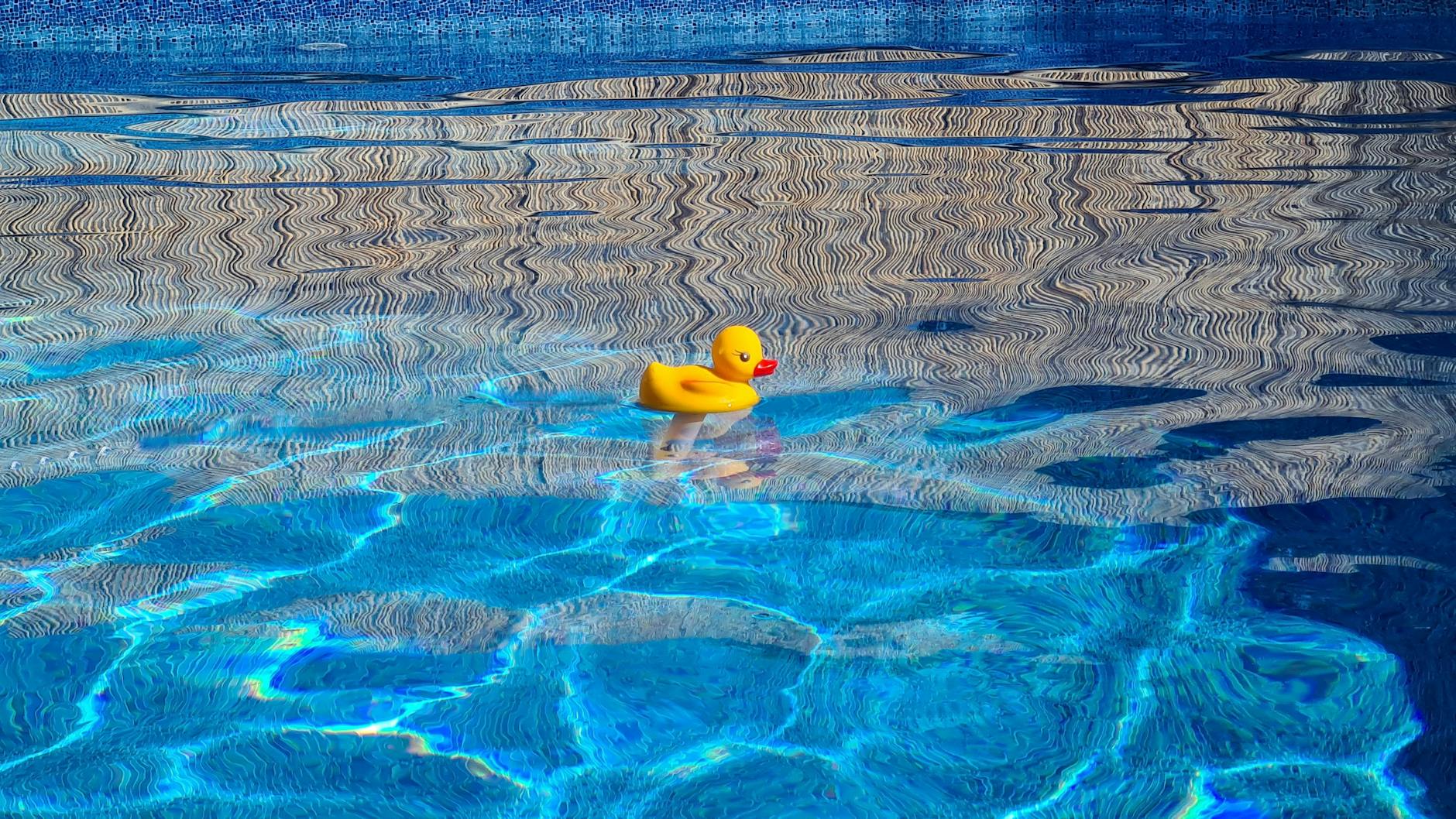
If you’ve ever seen a photo of a sun-bleached “rubber” duck on a stormy beach and thought cute, here’s the plot twist: those ducks helped oceanographers map the highways of the sea—and changed how we talk about plastic in the ocean.
The day the toys went overboard
On January 10, 1992, the container ship Ever Laurel hit a fierce North Pacific storm near the International Date Line. Twelve 40-foot containers slid into the sea; one burst open, releasing 28,800 bath toys—yellow ducks, red beavers, blue turtles, and green frogs—later nicknamed the Friendly Floatees.
Ten months later, the first ones washed ashore near Sitka, Alaska, exactly where a computer model had predicted. Wikipedia

Why these toys were perfect for science?
Unlike most bath toys, they didn’t have holes, so they never filled with water and could drift for years. Many ducks and beavers even bleached white in the sun, making them easier to spot. Wikipedia

How a children’s toy became ocean current map data
Oceanographers Curtis Ebbesmeyer and James Ingraham used the spill to validate their OSCURS surface-current model, crowdsourcing sightings from beachcombers and comparing them to decades of wind and pressure data. A “drifter” release that big (nearly 29,000 identical floaters at once) is a scientist’s dream—you can trace whole current pathways instead of guessing from a handful of bottles. (web.archive.org)
The team predicted some toys would get caught in the Bering Strait, freeze into Arctic pack ice, and later thaw into the North Atlantic—a route that helped pin down how long it takes to orbit the North Pacific gyre. Years later, reports trickled in from New England and Scotland. Even the toy maker got involved, offering a $100 reward in 2003 for verified finds.
The duck saga isn’t a one-off
Spills like this have quietly shaped ocean science—and our plastic problem:
- 1990 – Nike shoes: ~61,000 sneakers overboard; drift patterns helped calibrate OSCURS. web.archive.org
- 1997 – LEGO spill: a rogue wave knocked ~4.8 million LEGO pieces off Tokio Express near Cornwall; beachcombers still find them today. theguardian.com
- 2021 – X-Press Pearl: the world’s biggest nurdle (plastic pellet) disaster—~1,680 metric tons—devastated Sri Lanka’s coastline and sparked legal and treaty debates. Chemical & Engineering News
Meanwhile, the Great Pacific Garbage Patch isn’t an island; it’s a diffuse soup of microplastics shaped by rotating gyres—easier to sail through than to see, which is exactly why floating “drifters” like ducks, shoes, and LEGO became such useful clues. oceanservice.noaa.gov
Containers still go overboard—less often, but not never
Container losses have fallen, yet they still happen. The World Shipping Council estimates 576 containers were lost at sea in 2024, well below the 10-year average (1,274/yr), but each loss can become an unplanned ocean experiment—or a pollution crisis. World Shipping Council
Why this story still pops on your feed
- It’s a science thriller. Thousands of identical toys, a storm at sea, a global scavenger hunt, and a model that actually works—catnip for curiosity.
- It’s a myth buster. The ducks help explain ocean currents and the garbage patch without the “floating island” myth.
- It’s a mirror. The same supply chains that deliver bath toys can seed future spills—from sneakers to nurdles.
Want to spot a real “Friendly Floatee”?
Look for older ducks without a valve hole, scuffed smooth, sometimes bleached white; many legit finds turned up in Alaska (1992–93) and New England (2003), with the manufacturer once paying bounties. If you do find mystery flotsam today, note date, location, tide state, photo, and report it to local marine-debris groups—your tip can still sharpen current maps.
Conclusion and Call to Action
The moral isn’t “wow, currents are wild.”
It’s “every object we make wants a downstream.” Containers still fall. Plastics still persist. But the data—and people willing to collect it—can turn an oops moment into action.
Share the story and one takeaway (“garbage patches are diffuse, not islands”) to kill a myth and spark better conversations.
Use the Friendly Floatees as an entry point: a scavenger hunt for currents, a map activity for gyres, a discussion on how “data” can also be “debris.”
Join or SaveOCEAN community and lets turn the knowledge into a science lesson using the duck saga as the hook.
#ducksaga #SaveOCEAN
Leave a Reply