
The ocean gave us headlines that sting—and a few that genuinely lift. Here’s a clear look at what happened over the last month in ocean conservation, and why it matters.
The hard truths
Coral Crisis Continue
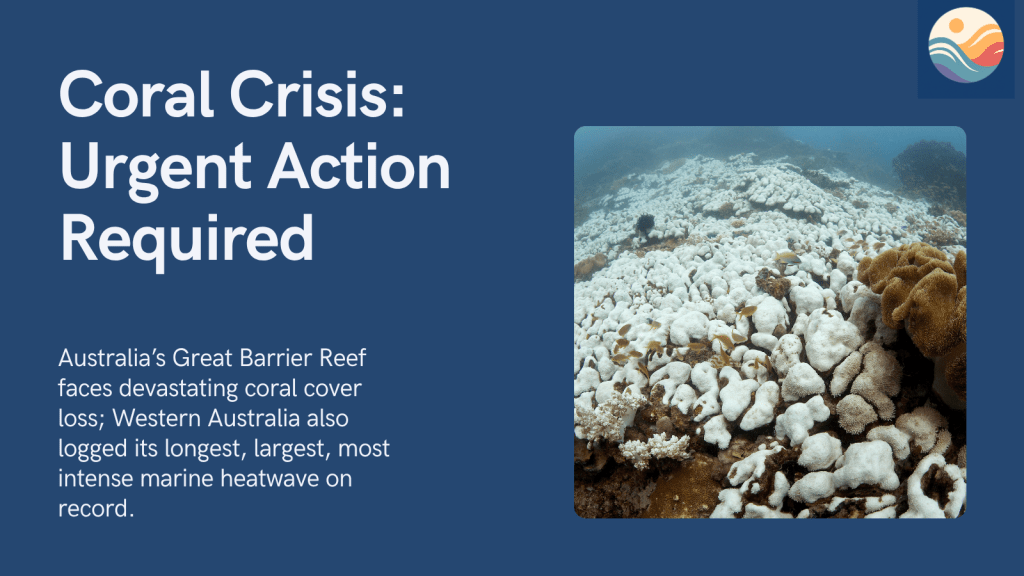
Australia’s Institute of Marine Science (AIMS) report shows the largest annual drop in live coral cover on key parts of the Great Barrier Reef after the global bleaching event. This year’s survey report found that in the reef’s northern section – between Cooktown and the tip of Cape York – bleaching, two cyclones and associated flooding had caused coral cover to fall by 25%. Western Australia also logged its longest, largest, most intense marine heatwave on record. Why it matters: heatwaves are arriving faster than reefs can recover. The Guardian
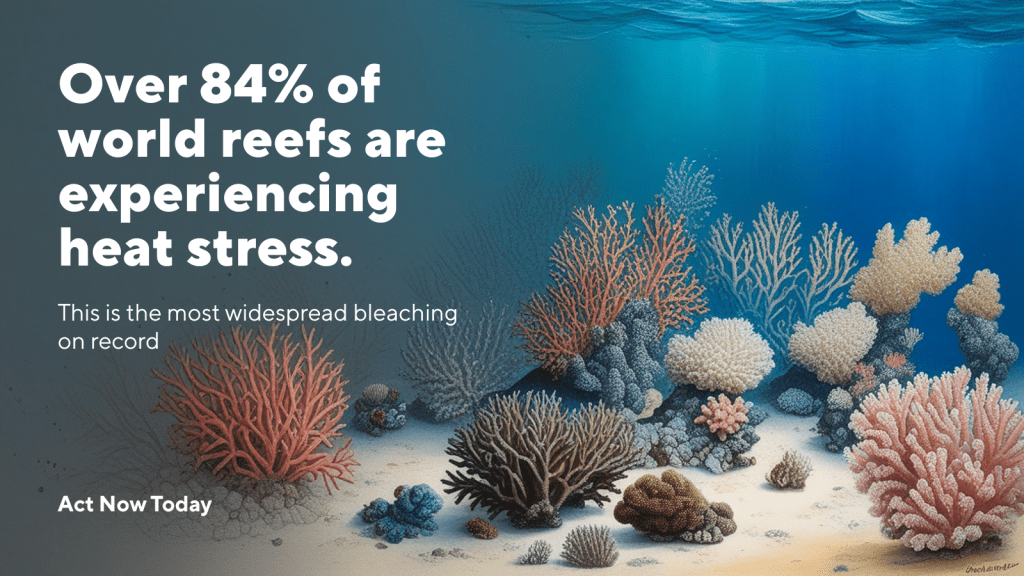
NOAA’s Coral Reef Watch confirms ~84% of the world’s reefs have suffered bleaching-level heat stress since 2023—and outlooks show more risk ahead. Why it matters: this is the most widespread bleaching on record; managers need to pivot to triage + resilience now. coralreefwatch.nooa.gov
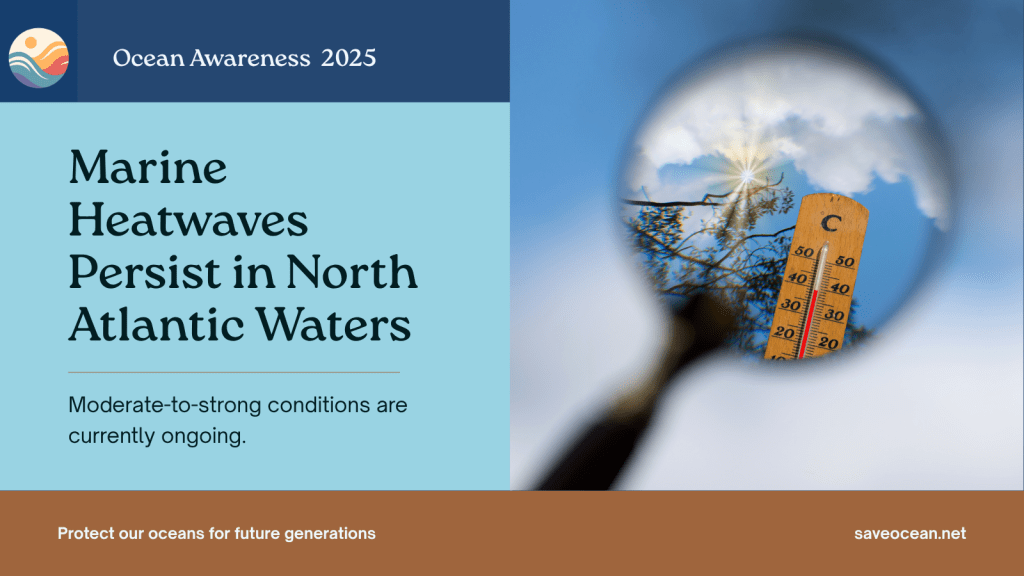
Marine heatwaves are still brewing.
Europe-adjacent North Atlantic waters entered moderate-to-strong marine-heatwave conditions —yet another reminder that extreme ocean warmth is not last year’s story alone. Mercator Ocean International
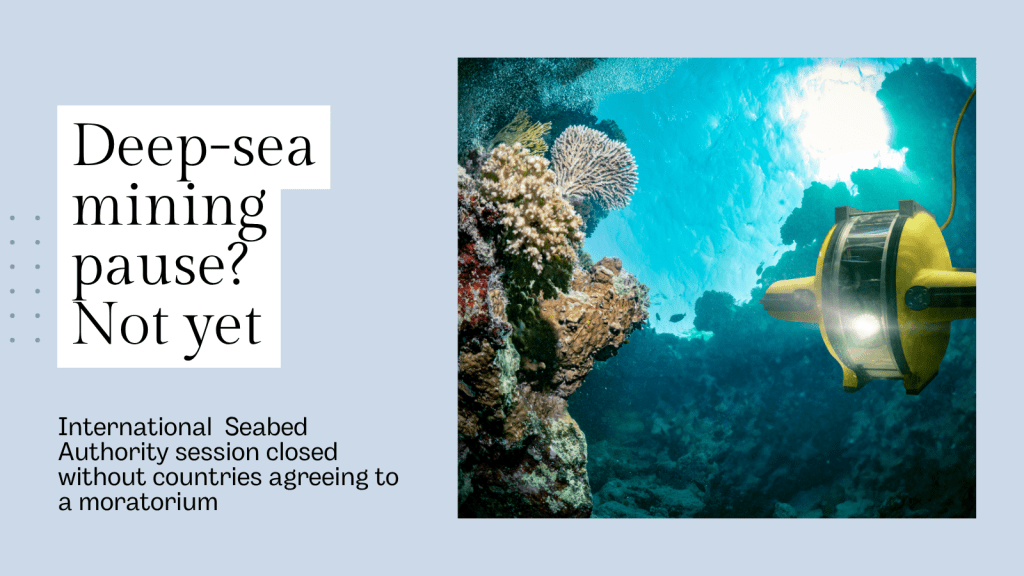
Deep-sea mining pause? Not yet.
The latest session of the U.N.–chartered International Seabed Authority in Kingston closed without countries agreeing to a moratorium or “precautionary pause.” Civil society groups called it a missed chance, while the Council pushed negotiations on exploitation rules forward without approving any mining contracts. Meanwhile, a growing bloc—about 32 ISA members—now publicly supports a pause or moratorium, citing major science gaps and risks to largely unknown deep-ocean ecosystems.. news.mongabay.com
Why it matters: the window to bake in precautionary thresholds and benefit-sharing is still open—watch the next Council rounds. isa.org.jm
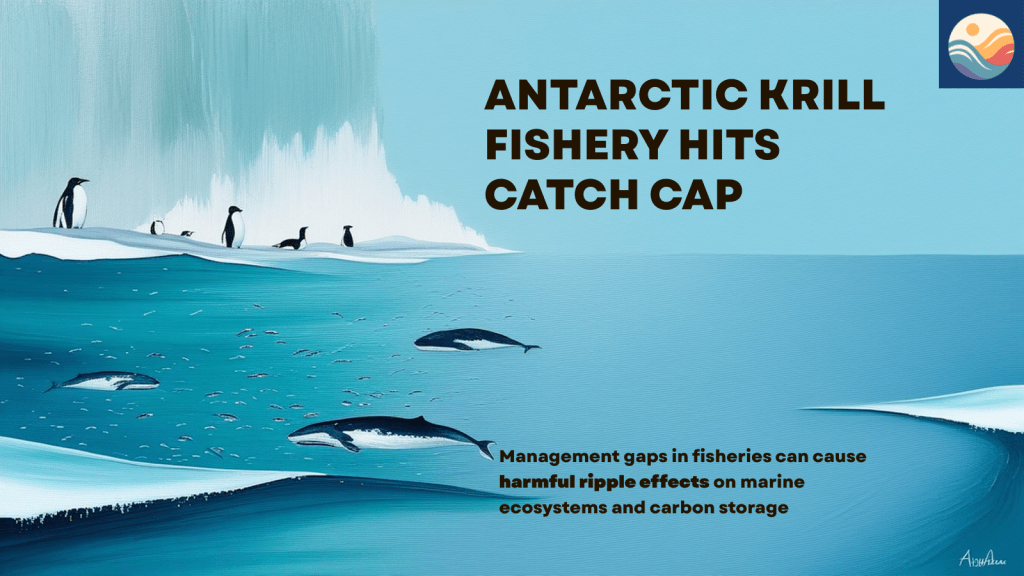
Krill season closed early in Antarctica
For the first time, regulators shut the Antarctic krill fishery early after the fleet hit the 620,000-metric-ton seasonal cap—closing the 2024–25 season in the first week of August, months before the usual. Why it matters: Krill aren’t just whale food; they underpin Southern Ocean food webs and help move carbon to the deep—so concentrated effort in predator hotspots or key feeding periods can echo up the chain and dull climate gains. The closure follows stalled updates to spatial limits and other safeguards, and recent whale entanglements in krill nets underscore why tighter, ecosystem-based rules matter. AP News
Reasons to hope
High Seas Treaty is nearly live
After a surge of ratifications at the UN Ocean Conference, leaders say the High Seas Treaty is on track to enter into force in early 2026, unlocking MPAs on two-thirds of the ocean. Also: €8.7B in new blue-economy pledges. Why it matters: this is the legal door to 30×30 on the high seas—implementation planning starts now. Reuters
Protecting coastal nurseries.
Ireland reinstated its inshore trawling ban, a win for fragile nearshore habitats and the small fish that become tomorrow’s fisheries. seafoodsource.com
Cracking down on illegal fishing.
Mexico reported seizing 4,266 tons of illegal gear and products so far this year—big, gritty enforcement that deters poachers and helps honest fishers. seafoodsource.com
Polluters pay.
A U.S. court levied over $1 million in civil penalties against Alaska fishing companies for illegal oil discharges into coastal waters—accountability that sets precedent. news.uscg.mil
People power, right now. It’s National Marine Week
In the UK (through Aug 10), with citizen events bringing thousands to beaches, estuaries, and tidepools—because love and knowledge are the strongest conservation multipliers. wildlifetrusts.org
Global treaty to end plastic pollution.
Diplomats opened a 10-day round in Geneva aimed at a global treaty to end plastic pollution. The politics are hard, but the stakes are clear: fewer toxic polymers, better design, strict monitoring, and real waste systems. Environment
Greece unveiled boundaries for two new marine parks in the Ionian and Aegean and will ban seafloor trawling inside them. Why it matters: first-mover momentum in the Mediterranean, where protections lag. Reuters
California’s MPA network became the first ecological network on the IUCN Green List—a quality seal for real-world impact and governance. Why it matters: proof that MPAs can work when well-designed and enforced. iucn.org
Hands-on science. The UK’s Big Seaweed Search wrapped days ago; thousands logged shoreline algae that act like living climate sensors—cheap, fast reconnaissance for a changing coast. nhm.ac.uk
French Polynesia announced the world’s largest MPA—its entire EEZ—with ~1.1 million km² under high/fully protected status and a ban on deep-sea mining. Why it matters: scale + strict zones signal a new bar for protection. iucn.org
Deep-sea mining: Not approved
The International Seabed Authority’s July session advanced rules but approved no exploitation; civil society hailed the stalemate, while negotiations continue.
What you can do this week
- Heat risk maps: If you manage reefs or coastal economies, track NOAA 4-month outlooks and pre-stage response (nursery moves, shade, comms). coralreefwatch.noaa.gov
- High Seas Treaty: line up finance, monitoring, and governance for first wave MPAs—don’t wait for day 120. Reuters
- Southern Ocean: push for updated CCAMLR measures so krill catches are spread and capped by biology, not politics. AP News
- Volunteer once (beach survey, tidepool count, seagrass mapping). One hour of your time can generate data that scientists really use.
- Ask your representatives to support a deep-sea mining moratorium until risks are credibly assessed.
The ocean story this week isn’t simple. But it’s not hopeless. The losses are real; the fixes are real; and the faster we move, the more life we keep in the water—for good.
 SaveOCEAN
Leave a comment