
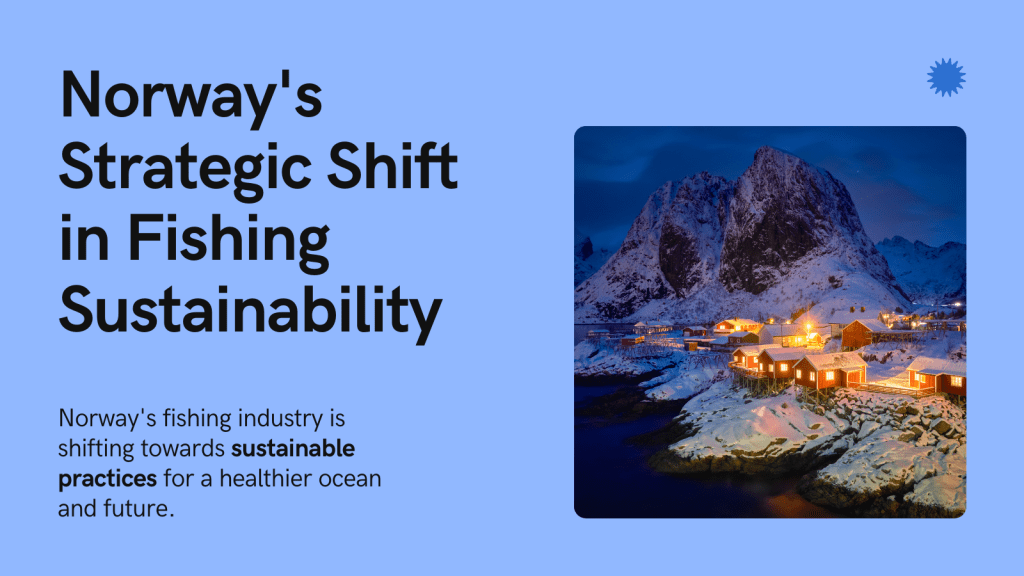
Norway stands as a prominent global seafood producer, with its fishing industry playing a vital role in both national economy and international markets. Historically, industrial fishing methods, particularly trawling and dredging, have been used to increase Norway’s catch volumes. These techniques, while highly efficient in terms of fish caught per unit of effort, are also recognized for their significant environmental impacts, including substantial bycatch and potential damage to marine ecosystems.
Globally, all types of trawling collectively account for over one-third of the total fish catch, with bottom trawling alone representing one-quarter.
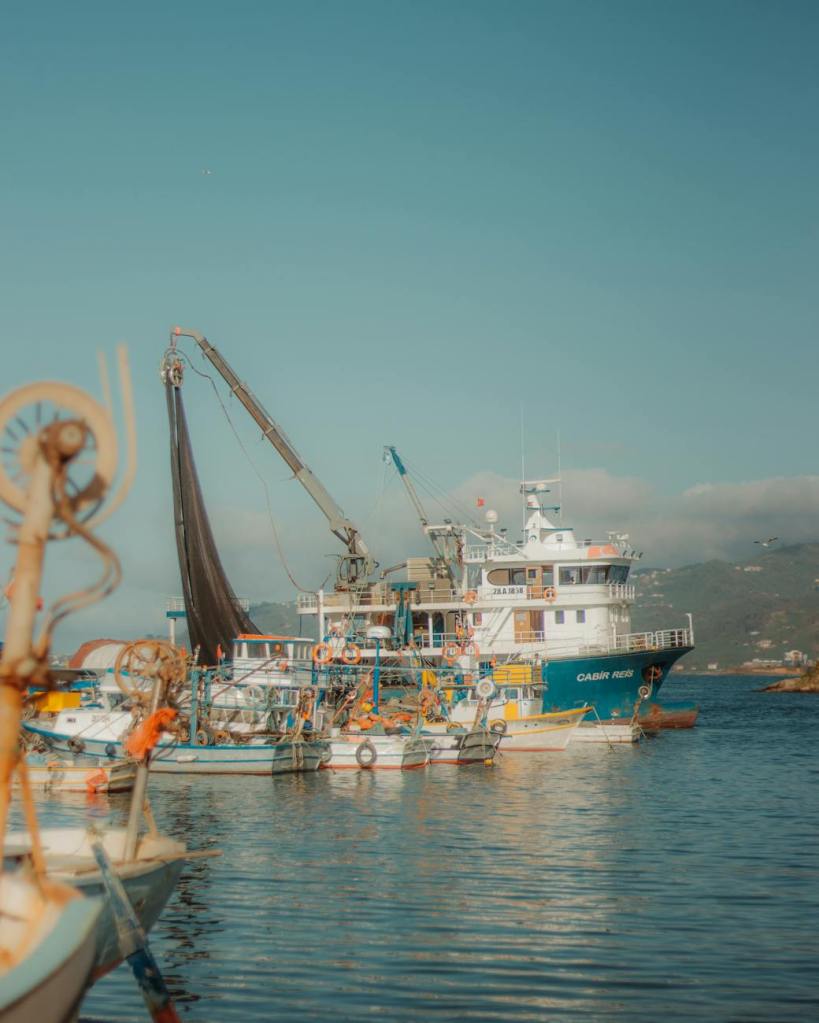
However, a discernible global and national movement towards more sustainable and less impactful fishing practices has emerged. The premise that fish caught by trawling and dredging in Norway is trending downwards in 2025 is strongly supported by a confluence of factors.
This article highlights the strategic shift towards more sustainable fishing technologies in Norway.
Primary drivers are:
- Significant quota reductions for key demersal species
- Extensive area closures for bottom-contact gear encompassing over 60% of Norway’s total sea area,
- Explicit bans on specific destructive gear such as beam trawls and shell dredging.
- The high operational costs associated with fuel-intensive trawling, exacerbated by new CO2 tax adjustments, are compelling the industry to adapt.
Current Status and Projected Trends
Overview of Trawling and Dredging Practices in Norwegian Fisheries
Trawling, particularly bottom trawling, remains a common method within industrial fishing operations, valued for its capacity to harvest large quantities of fish, especially demersal species such as cod, haddock, pollock, and saithe.
Despite its historical prevalence, there is a clear trend across Europe, where bottom trawling is becoming less common. This shift is partly a result of concerted efforts to mitigate overfishing and facilitate the recovery of fish stocks. In alignment with these broader European trends, Norway has proactively implemented specific bans and extensive restrictions on bottom-contact fishing gear.
The global and European trajectory of declining bottom trawling provides a macro-context for Norway’s situation, indicating that Norway’s actions are not isolated but rather integral to a broader, regional movement towards more sustainable or less impactful fishing practices. This suggests shared drivers, such as escalating environmental concerns and increasing regulatory pressures, are at play.
A hope for the future
The projected decline in fish caught by trawling and dredging in Norway for 2025 is directly substantiated by significant reductions in Total Allowable Catch (TAC) for several key species that are predominantly targeted by these methods.
For Barents Sea Cod, scientific advice indicates a substantial cut in the quota. The Joint Russian-Norwegian Arctic Fisheries Working Group has recommended that catches in 2026 should not exceed 269,550 metric tons (MT), which represents a 14% reduction from the quota advice for 2025 and a 21% reduction from the set quota for 2025.
If these recommendations are adopted, the TAC for Barents Sea cod will be at its lowest level since 2002, and potentially the lowest since 1991.
The 2025 quota itself was already a 31% reduction from the 2024 level of 453,427 MT. Given that bottom trawling is identified as the most important fishing gear for cod, haddock, and saithe , these quota reductions will directly translate into a decrease in potential catch volume for trawl-dependent fisheries in 2025 and beyond.
The long-term decline in the Barents Sea cod spawning population, which has been observed annually since its historic peak in 2013 underscores that these quota reductions are not arbitrary. Instead, they are a necessary biological response to the fundamental health challenges of the stock, suggesting a sustained downward pressure on trawl catches of this species rather than a temporary fluctuation.
Similarly, for North Sea Herring, the International Council for the Exploration of the Sea (ICES) has advised a 30% reduction in the total catch quota for 2026, recommending it not exceed 287,772 tones. This is a significant decrease from the 410,707 tones recommended for 2025. Norway’s share of this quota is approximately 29%. The reduction is attributed to a decline in the spawning stock of North Sea herring and very poor recruitment in recent years.
Furthermore, the overall Cod Quota for 2025 has been explicitly reduced by approximately 20%, following a 15% increase from 2023 to 2024. This is a direct and explicit reduction impacting the target year of the query. For the
Ling Fishery, vessel quotas are also set to decrease by 24% compared to 2024.
These explicit quota reductions for major species directly targeted by trawling translate to a clear decrease in potential catch volume for trawl-dependent fisheries in 2025. The biological realities of declining spawning populations and poor recruitment for key species mean that fewer fish are available to be caught, irrespective of fishing effort. This fundamental biological constraint is a primary driver of the projected decline in catches.
Table 1: Key Quota Reductions for Trawled Species (2024-2026)
| Species | Quota (Metric Tons) 2024 | Quota (Metric Tons) 2025 (Advised/Set) | Quota (Metric Tons) 2026 (Advised) | % Change 2024-2025 | % Change 2025-2026 | Primary Reason for Reduction |
| Barents Sea Cod | 453,427 | 311,587 | 269,550 | -31% | -14% | Reduced spawning population, poor recruitment |
| North Sea Herring | 410,707 | 410,707 | 287,772 | N/A | -30% | Reduction in spawning stock, very poor recruitment 7 |
| Cod (Overall) | N/A | ~20% reduction from 2024 | N/A | -20% | N/A | Rebuilding cod stocks |
| Ling | N/A | 24% reduction from 2024 | N/A | -24% | N/A | Management measures |
Note: Quota figures represent Total Allowable Catch (TAC) or advised catch levels. “N/A” indicates data not explicitly provided for that year/category in the available material.
Regulatory and Policy Frameworks Driving the Decline
Norway’s proactive and comprehensive regulatory environment is a significant force behind the anticipated decline in fish caught by trawling and dredging. These measures reflect a commitment to sustainable fisheries management and marine conservation.
National Bans and Restrictions
Norway has implemented explicit bans and stringent regulations on specific types of fishing gear that are known for their destructive impact. The use of “beam trawls and shell dredging is banned in Norway”. While the exact initial implementation dates are not consistently provided across all available information, it is documented that the enforcement of a beam trawl ban in Norwegian waters was postponed to October 1, 2022. This timeline confirms that these bans are active and have been influencing fishing practices in the years leading up to and including 2025. These explicit prohibitions on certain gear types represent a direct and forceful regulatory mechanism to reduce or eliminate the most environmentally damaging forms of bottom-contact fishing, thereby contributing directly to the overall decrease in catches by these methods. The dynamic regulatory environment, as evidenced by the postponement of the beam trawl ban, ultimately reinforces the long-term trend towards more restrictive practices.
In addition to gear-specific bans, Norway maintains a “discard ban on fish”. This regulation, which has been fully implemented in European fisheries since January 1, 2019 , mandates that all unwanted catches, including undersized or non-target species, must be brought ashore. The objective of this policy is to encourage fishermen to adopt more selective fishing practices and reduce overall fishing pressure on fish stocks.
Extensive Area Closures
A cornerstone of Norway’s conservation policy is the implementation of extensive area closures for bottom-contact fishing gear. Norwegian authorities have imposed “extensive restrictions on the use of bottom-contact fishing gear” across vast marine territories, including the Norwegian Economic Zone, the Jan Mayen Zone, and the Fisheries Protection Zone around Svalbard. According to Fiskebåt CEO Audun Maråk, these measures alone mean that “more than 60% of Norway’s total sea area is effectively closed to trawling”.3 These closures specifically include “coral protection zones and restrictions on coastal fishing” , safeguarding vulnerable marine ecosystems.
Beyond permanent or long-term closures, Norway also employs Real-Time Closures (RTC) in areas such as the North Sea and Skagerrak. These dynamic closures allow for the temporary cessation of fishing activities for 14 days in specific grounds if the proportion of juvenile or small fish exceeds predefined thresholds. This measure is designed to protect vulnerable fish populations and ensure sustainable fisheries management by preventing the targeting of immature fish. The extensive area closures, particularly the 60% of sea area closed to trawling , represent a strategic, long-term commitment to marine conservation that fundamentally limits the operational footprint of trawling and dredging. This moves beyond simple quota management to a spatial reorganization of fishing activity, indicating a systemic shift in how Norway manages its marine resources, which inevitably leads to reduced trawl catches.
International and Regional Conservation Efforts
Norway’s regulatory stance is further reinforced by its active participation in and adherence to international and regional conservation frameworks. The European Commission, for instance, banned bottom trawling in deep waters (below 800m) in 2016 , a measure that reflects a broader European trend towards mitigating the environmental impact of this gear. Norway’s integrated ocean management plans, which cover critical areas such as the Barents Sea–Lofoten area, the Norwegian Sea, and the North Sea and Skagerrak , demonstrate a holistic approach to marine resource governance.
The North East Atlantic Fisheries Commission (NEAFC), an international body, has also adopted significant measures concerning bottom fishing activities. These include rules stipulating that regular bottom fisheries can only occur in “existing bottom fishing areas,” defined based on historical fishing activity within a specific reference period. Furthermore, NEAFC prohibits the deployment of gillnets, entangling nets, or trammel nets at depths greater than 200 meters. Norway has adopted and implemented these NEAFC regulations, including the Regulation on bottom fishing activities in the Norwegian Economic Zone and other protection zones. Norway’s active participation in and adherence to these international and regional conservation frameworks demonstrates a multilateral commitment to reducing destructive fishing practices. This collaborative approach suggests that the decline in trawling and dredging is not an isolated national policy but part of a coordinated international effort, reinforcing its likelihood and long-term nature.
Table 2: Summary of Norwegian Trawling/Dredging Restrictions and Area Closures
| Type of Restriction | Specifics | Implementation Details/Dates | Relevant Zones/Areas |
| Gear Ban | Beam Trawls | Banned (enforcement postponed to Oct 1, 2022) | All Norwegian waters (EEZ) |
| Gear Ban | Shell Dredging | Banned | All Norwegian waters (EEZ) |
| Operational Ban | Discard Ban (Landing Obligation) | Fully implemented in European fisheries starting Jan 1, 2019 | Applies to Norwegian fisheries |
| Area Closure | Extensive Restrictions on Bottom-Contact Gear | More than 60% of Norway’s total sea area effectively closed to trawling | Norwegian Economic Zone, Jan Mayen Zone, Fisheries Protection Zone around Svalbard |
| Area Closure | Coral Protection Zones | Prohibit bottom trawling | Specific areas with cold-water corals |
| Area Closure | Coastal Fishing Restrictions | Prohibit bottom trawling | Coastal areas |
| Dynamic Closure | Real-Time Closures (RTC) | Fishing grounds closed for 14 days if juvenile/small fish thresholds exceeded 12 | North Sea and Skagerrak |
| Deep-Water Ban (EU) | Bottom Trawling below 800m | Banned in 2016 | European deep waters (relevant to Norway’s broader context) |
| International Measures (NEAFC) | Bottom Fishing in “Existing Areas” only | Adopted in 2008, supplemented in 2014 | NEAFC Regulatory Area (Norway has implemented) |
| International Measures (NEAFC) | Gillnets/Entangling Nets/Trammel Nets | Prohibited at depths greater than 200m | NEAFC Regulatory Area (Norway has implemented) |
Environmental and Ecological Drivers of Reduced Activity
Beyond direct regulatory interventions, the inherent environmental and ecological impacts of trawling and dredging serve as fundamental drivers for the reduction of these activities in Norway. Scientific understanding of these impacts has increasingly informed policy and industry practices.
Seabed Habitat Degradation
Bottom trawling and seabed littering are recognized as two of the most serious threats to the integrity of the seabed in Norwegian waters. The physical disturbance caused by trawl gear has documented negative effects on benthic communities—organisms living on or in the seabed—and their habitats. Sessile megafauna, such as corals and sponges, are particularly vulnerable to this impact, experiencing breakage and dislodgement. The recovery of these long-lived species from severe trawling impacts can take decades. Research indicates that high fishing intensity from bottom trawling can lead to a significant reduction in species richness, with studies suggesting a potential 20% decrease in areas subjected to intense fishing. Even in areas with harder substrates where trawl marks are less visible, the physical impact on organisms can be substantial. The observed damage to cold-water coral reefs, even after bans were implemented, highlights the long-term and persistent nature of these impacts. The severe and long-lasting ecological damage caused by bottom trawling provides the fundamental scientific justification for the stringent regulatory measures, such as extensive area closures and gear bans, thereby establishing a direct causal link between ecological degradation and conservation policy, which in turn leads to reduced trawling activity and catch.
Bycatch and Ecosystem Health
A significant ecological concern associated with bottom trawl fisheries is their non-selective nature, often resulting in high bycatch rates—the capture of non-target species. Globally, average bycatch rates in trawl fisheries range between 31-55% of the total catch, and an estimated 60% of global discards originate from trawl fisheries. While Norway has a “discard ban on fish” , which aims to reduce unwanted catches by requiring all caught fish to be landed , the underlying issue of non-selectivity remains. To address this, there is “ongoing collaboration between the industry, research institutions, and authorities to develop new gear” that is “even more energy-efficient, gentler on the seabed, and reduces unwanted bycatch”. The historically high bycatch rates associated with trawling highlight an inherent inefficiency and ecological cost of this method. Although Norway’s discard ban aims to mitigate some of these issues, the continued focus on developing new gear to reduce unwanted bycatch indicates that bycatch remains a significant concern, pushing for a reduction in the overall impact of trawling, potentially through reduced effort or the adoption of more selective methods.
Climate Change and Ocean Acidification
Climate change and ocean acidification pose considerable challenges to Norwegian fisheries and marine ecosystems. Long-term trends in the Norwegian Sea reveal rising temperatures and salinity since the mid-1990s, with measurable acidification of seawater due to increasing atmospheric CO2 content. Ocean acidification is occurring more rapidly in parts of the Norwegian Sea than the global average, with pH levels dropping by 0.13 units over the past 30 years.
This acidification can adversely affect calcifying organisms such as plankton, molluscs, echinoderm larvae, and sea butterflies, which form crucial components of marine food webs. Shrimps, krill, sea urchin larvae, and cold-water corals are also susceptible to the combined effects of ocean acidification and changing water temperatures.17
Furthermore, bottom trawling itself contributes to climate change. The act of disturbing seafloor sediments through trawling is linked to the release of large amounts of CO2. Studies suggest that annual CO2 emissions resulting from the disturbance of sediments by bottom trawlers could equate to approximately 10% of annual global emissions from land-use change. The dual impact of climate change (warming, acidification) on marine ecosystems and the contribution of bottom trawling to CO2 emissions create a reinforcing cycle. As climate concerns intensify, the environmental cost of trawling becomes a compelling reason for its reduction, not only for its direct impact on fish stocks but also for its contribution to broader climate change, adding another layer of pressure for its decline.
Fish Stock Health and Recruitment
The health of fish stocks, particularly their reproductive capacity and recruitment success, is a direct determinant of sustainable catch levels. For Barents Sea cod, the primary justification for the significant quota cuts is the reduced spawning population and consistently “poor recruitment”. The weakest year classes (2019 and 2020) are now entering the fishery, leading to an expected lowest spawning population in 2025 and 2026. This biological reality directly impacts the availability of fish for trawl fisheries. Similarly, for North Sea herring, the observed decline is attributed to a “reduction in the spawning stock” and “very poor recruitment in recent years”. Poor recruitment and declining spawning populations for key species directly targeted by trawling mean that fewer fish are available to be caught, regardless of fishing effort. This biological reality is a fundamental driver of the projected decline in catches, as management decisions must align with the productive capacity of the stocks.
Blue Economy and Technological Influences on Trawling and Dredging
Beyond environmental and regulatory pressures, economic realities and ongoing technological advancements significantly shape the future of trawling and dredging in Norway, contributing to their anticipated decline.
Profitability Challenges
The Norwegian fishing fleet has faced a period of declining overall profitability. In 2023, the fleet’s inflation-adjusted operating revenue decreased, and its operating margin dropped from 18.1% in 2022 to 17.3%. This decline was particularly pronounced in demersal fisheries, which heavily rely on trawling. Operating margins in this sector fell significantly from 15.7% in 2022 to 11.3% in 2023, with offshore vessels experiencing the steepest decline, from 16.9% to 8.2%. In contrast, pelagic fisheries saw an increase in profitability during the same period. This divergence highlights the economic challenges faced by the demersal sector. Studies also suggest that some bottom trawl fisheries globally would not be profitable without government subsidies. The declining profitability of the demersal fishing sector creates an economic disincentive for continued heavy reliance on trawling. This financial pressure, combined with the inherent high operational costs of trawling, can lead to reduced investment in trawl fleets, potential downsizing, or a strategic shift towards more profitable, less fuel-intensive fishing methods, thereby contributing to a decline in trawl activity.
Fuel Costs and Operational Efficiency
Trawling is an inherently energy-intensive fishing method, with fuel costs constituting a substantial portion of its operating expenses. This makes trawl operations particularly vulnerable to fluctuations in energy prices. A new regulation, effective from 2025, will adjust compensation calculations for vessels that purchase fuel without the full Norwegian CO2 tax. This adjustment means that only 70% of the value of their catch will count towards compensation, effectively increasing the cost of fuel for certain operations and reducing their economic viability.
Research indicates that significant fuel savings can be achieved through operational adjustments and shifts in fishing methods. For instance, reducing vessel speed can lead to 12-15% fuel savings for trawling operations. Even more substantial savings, estimated at 15-20%, are possible by switching from trawling to longlining. The high fuel dependency of trawling makes it particularly susceptible to rising energy prices and new environmental taxes. This economic vulnerability acts as a continuous pressure point, compelling the industry to either reduce trawl effort, invest in more fuel-efficient technologies, or transition to less fuel-intensive fishing methods, directly contributing to the projected decline in trawling.
Technological Innovation and Alternative Methods
The Norwegian fishing industry, in collaboration with research institutions and authorities, is actively engaged in developing new fishing gear that is “even more energy-efficient, gentler on the seabed, and reduces unwanted bycatch”. This collaborative effort underscores a commitment to innovation aimed at mitigating the environmental footprint of fishing.
A notable area of development is research into biodegradable fishing gear, which seeks to combat plastic pollution in the ocean.22 Initial tests show promising results, with biodegradable alternatives demonstrating comparable catch efficiency to conventional gear and fully decomposing within a few years without releasing harmful microplastics.
Longline fishing, characterized by its “relatively low carbon footprint” and classification as an “environmentally friendly fishing method,” is gaining increased attention. A new research project, funded by the Norwegian Seafood Research Fund, is specifically focused on developing environmentally friendly materials for longline fishing, with trials scheduled for 2025 and 2026. The potential for considerable fuel savings by switching from trawling to longlining further enhances the appeal of such alternative methods. The active development and promotion of more sustainable and economically viable alternative fishing methods indicates a strategic shift away from traditional, high-impact trawling. This technological evolution provides practical alternatives that can absorb fishing effort, contributing to the decline of trawling by offering more environmentally sound and potentially more cost-effective options.
Conclusion and Outlook
The projected downward trend in fish caught by trawling and dredging in Norway in 2025 is a multifaceted phenomenon, resulting from a complex interplay of regulatory, environmental, ecological, economic, and technological forces. This decline is not an isolated event but rather a systemic shift within the Norwegian fishing industry, driven by a commitment to long-term sustainability.
The primary factors contributing to this trend include robust regulatory interventions, such as :
- Explicit bans on destructive gear like beam trawls and shell dredging,
- The implementation of extensive area closures that have effectively closed over 60% of Norway’s sea area to trawling.
- Spatial restrictions are complemented by significant quota reductions for key demersal species, notably Barents Sea Cod and North Sea Herring, which are directly impacted by declining spawning populations and poor recruitment.
- The discard ban further incentivizes more selective fishing practices.
From an environmental and ecological perspective, the well-documented damage to seabed habitats, benthic communities, and vulnerable species like corals caused by bottom trawling provides the scientific imperative for these regulatory actions. Concerns over high bycatch rates associated with trawling, coupled with the industry’s contribution to CO2 emissions from disturbing seafloor sediments, create additional pressure for a reduction in these activities. These environmental considerations directly inform and necessitate the regulatory frameworks, creating a direct causal link between ecological degradation and policy development.
Economically, the declining profitability of the demersal fishing sector, as evidenced by falling operating margins, creates a strong disincentive for continued heavy reliance on trawling. The high fuel consumption inherent in trawling operations, compounded by new CO2 tax adjustments in 2025, further exacerbates these economic pressures. These economic realities, combined with a growing environmental consciousness, are propelling technological innovation and the adoption of alternative, more sustainable fishing methods. The active development of more energy-efficient, gentler, and selective gear, including biodegradable options, and the increasing shift towards methods like longlining with lower carbon footprints, provide viable alternatives that absorb fishing effort away from traditional trawling.
The interplay of these factors creates a reinforcing cycle. Environmental concerns lead to stricter regulations, which in turn impact economic viability, prompting technological shifts towards sustainability. This feedback loop accelerates the transition away from environmentally impactful methods like trawling and dredging, suggesting that the trend is not merely a temporary dip but a fundamental, systemic transformation of the Norwegian fishing industry.
Implications for the Future of the Norwegian Fishing Industry and Marine Conservation
The decline in trawling and dredging signifies a maturation of Norway’s fisheries management towards more ecosystem-based approaches. While this transition may present challenges for certain segments of the fishing fleet, it strategically positions Norway as a leader in sustainable seafood production. This alignment with global conservation goals can enhance the long-term resilience and market value of its wild-caught fish, potentially opening new market opportunities for sustainably sourced products. The emphasis on protecting vulnerable marine ecosystems and rebuilding fish stocks contributes to the overall health and productivity of Norwegian waters, ensuring marine resources for future generations.
Recommendations for Continued Sustainable Management and Adaptation
Our oceans feed families, power livelihoods, and steady the climate. SaveOcean builds simple, human-centered tools that help fishers, scientists, and policymakers make good decisions in real time—so coastal communities can thrive while the sea recovers. Here’s how we keep the momentum going.
- Power decisions with living data: Robust and ongoing scientific research is crucial for accurate stock assessments, comprehensive ecosystem monitoring, and a deeper understanding of the impacts of climate change and ocean acidification on marine life. This scientific foundation will ensure that management decisions remain adaptive and evidence-based.
- Further Development and Incentivization of Low-Impact Gear: Continued investment in research and development of highly selective, energy-efficient, and environmentally friendly fishing gear is essential. Policies should be designed to incentivize the adoption of these innovative technologies across the fleet, potentially through subsidies or preferential quota allocations.
- Make the transition doable for people: Support communities moving from high-impact to sustainable practices. Providing targeted support and training for fishing communities and fleets to transition from high-impact methods to more sustainable practices is vital. This includes assistance with gear conversion, retraining of personnel, and exploring new market opportunities for sustainably caught fish.
- Cooperate across borders with a shared ocean picture: Collaborative efforts with neighboring countries and international organizations will ensure a coordinated approach to shared marine resources.
Follow us to find out more how SaveOCEAN tools will help closing the gap.
Works cited
- Fish and Overfishing – Our World in Data https://ourworldindata.org/fish-and-overfishing
- Evaluating the sustainability and environmental impacts of trawling compared to other food production systems | ICES Journal of Marine Science | Oxford Academic, https://academic.oup.com/icesjms/article/80/6/1567/7226311
- Norwegian Trawl Fishing “A Climate-Friendly Food Source” – The Fishing Daily – Irish, UK and European Fishing Industry News, https://thefishingdaily.com/norwegian-fishing-industry-blog/norwegian-trawl-fishing-a-climate-friendly-food-source/
- Advised cuts to Barents Sea cod would put quota at lowest level in 30 years, https://www.seafoodsource.com/news/supply-trade/advised-cuts-to-barents-sea-cod-would-put-quota-at-lowest-level-in-30-years
- Advice on fishing opportunities for Northeast Arctic cod in 2026 in ICES subareas 1 and 2, https://www.hi.no/hi/nettrapporter/imr-pinro-2025-4
- Virkninger for fiskeri av etablering og drift av et demonstrasjonsanlegg for flytende havvind utenfor Finnmark – Regjeringen.no https://www.regjeringen.no/contentassets/0a1bed852d94451aaf74c829b833535d/vedlegg-7c-ku-fiskeri.pdf
- ICES recommends 30% reduction in North Sea herring quota for 2026, https://weareaquaculture.com/news/fisheries/ices-recommends-30-reduction-in-north-sea-herring-quota-for-2026
- New Regulations and Controls Announced For Norwegian Fisheries 2025 https://thefishingdaily.com/norwegian-fishing-industry-blog/new-regulations-and-controls-announced-for-norwegian-fisheries-2025/
- Enforcement of beam trawl ban in Norwegian waters postponed – The Fishing Daily, https://thefishingdaily.com/latest-news/enforcement-of-beam-trawl-ban-in-norwegian-waters-postponed/
- NSAC calls on COM to engage with Norwegian government over beam trawling ban, https://thefishingdaily.com/latest-news/nsac-calls-on-com-to-engage-with-norwegian-government-over-beam-trawling-ban/
- The Landing Obligation (Discard Ban) fully implemented starting in 2019 – ILVO Vlaanderen, https://ilvo.vlaanderen.be/en/news/aanlandplicht-en-teruggooiverbod-in-de-eu-visserij-gunstig-effect-op-lange-termijn
- Real-time closure (RTC) – English https://www.fiskeridir.no/english/Fisheries/real-time-closure
- Norway’s integrated ocean management plans – Regjeringen.no, https://www.regjeringen.no/contentassets/5570db2543234b8a9834606c33caa900/en-gb/pdfs/stm201920200020000engpdfs.pdf
- Information on actions taken to give effect to General Assembly Resolution 61/105, 64/72, 66/68 and 71/123 Submission by Norway – the United Nations, https://www.un.org/Depts/los/bfw/Norway.pdf
- Impacts of Bottom Trawling and Litter on the Seabed in … – Frontiers, https://www.frontiersin.org/journals/marine-science/articles/10.3389/fmars.2018.00042/full
- Title The value of bottom trawling in Europe Authors Affiliations – Together for the Ocean, accessed July 2, 2025, https://for-the-ocean.org/wp-content/uploads/2025/03/Bottom-Trawling-Preprint_National-Geographic-Pristine-Seas.pdf
- Meld. St. 35 (2016–2017) – Regjeringen.no, https://www.regjeringen.no/en/dokumenter/meld.-st.-35-20162017/id2547988/?ch=3
- A vulnerability assessment of the Norwegian fishing industry in the face of increasing ocean acidification: Fishing in Acid Waters: The Case of Norway | Request PDF – ResearchGate, https://www.researchgate.net/publication/307088069_Fishing_in_acid_waters_A_vulnerability_assessment_of_the_Norwegian_fishing_industry_in_the_face_of_increasing_ocean_acidification_Fishing_in_Acid_Waters_The_Case_of_Norway
- Fishing gear associated with global marine catches II. Trends in trawling and dredging | Request PDF – ResearchGate, https://www.researchgate.net/publication/235417767_Fishing_gear_associated_with_global_marine_catches_II_Trends_in_trawling_and_dredging
- Norwegian Fishing Fleet Experienced Declining Profitability in 2023, https://thefishingdaily.com/norwegian-fishing-industry-blog/norwegian-fishing-fleet-experienced-declining-profitability-in-2023/
- FUEL SAVING POTENTIAL IN NORWEGIAN FISHERIES – ICES, https://www.ices.dk/sites/pub/CM%20Doccuments/1980/B/1980_B14.pdf
- Scientists in Norway explore biodegradable fishing gear to tackle plastic pollution in the ocean – Responsible Seafood Advocate, https://www.globalseafood.org/advocate/scientists-in-norway-explore-biodegradable-fishing-gear-to-tackle-plastic-pollution-in-the-ocean/
 SaveOCEAN
Leave a comment