
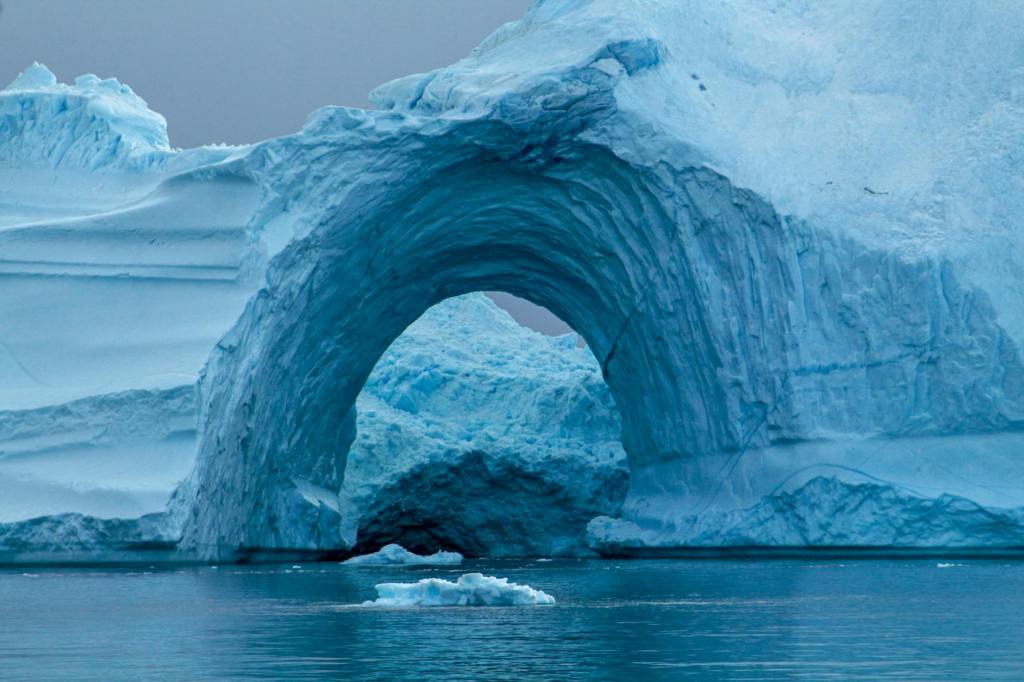
Antarctica used to be the quiet end of the world. Not anymore. An new article explainer lays out a clear message: sea ice, ice shelves, ice sheets, and deep ocean currents around Antarctica are all shifting at once — and together they add up to a global story we’ll all feel.
Why this matters
- Sea ice is at repeated record or near-record lows, a sharp break from past variability. Less sea ice means darker ocean, more absorbed heat, and a feedback that can speed warming.
- Antarctica’s “lungs of the deep ocean” are weakening. Meltwater is freshening surface layers and slowing the Antarctic overturning circulation that helps ventilate deep seas with oxygen and store carbon. That has knock-on effects for weather, fisheries, and sea level over decades to centuries.
- Ecosystems are already responding, from stressed krill habitats to emperor penguin breeding failures in low-ice years.
The big 4 facts
1) The seasonal shield is thinning out
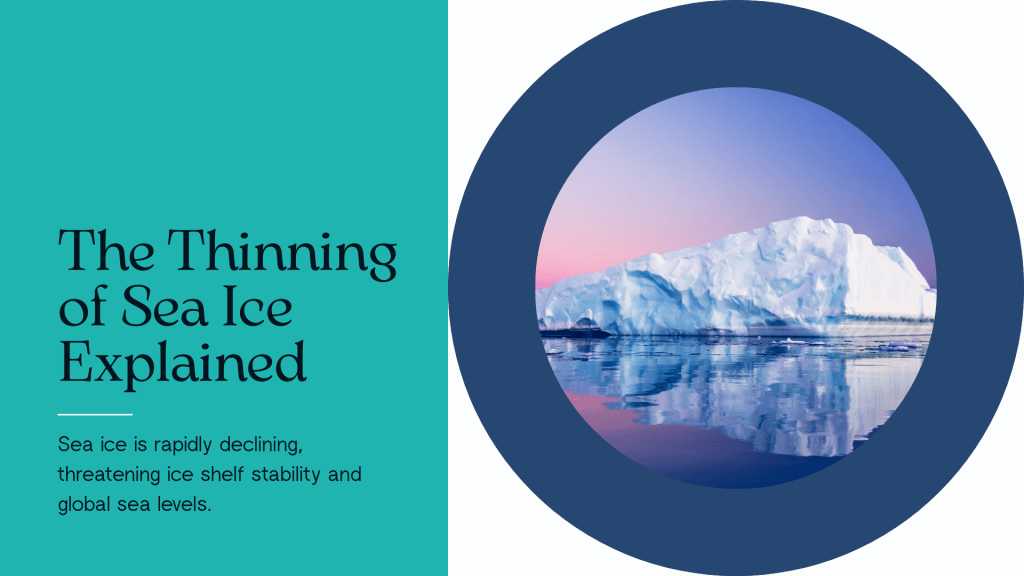
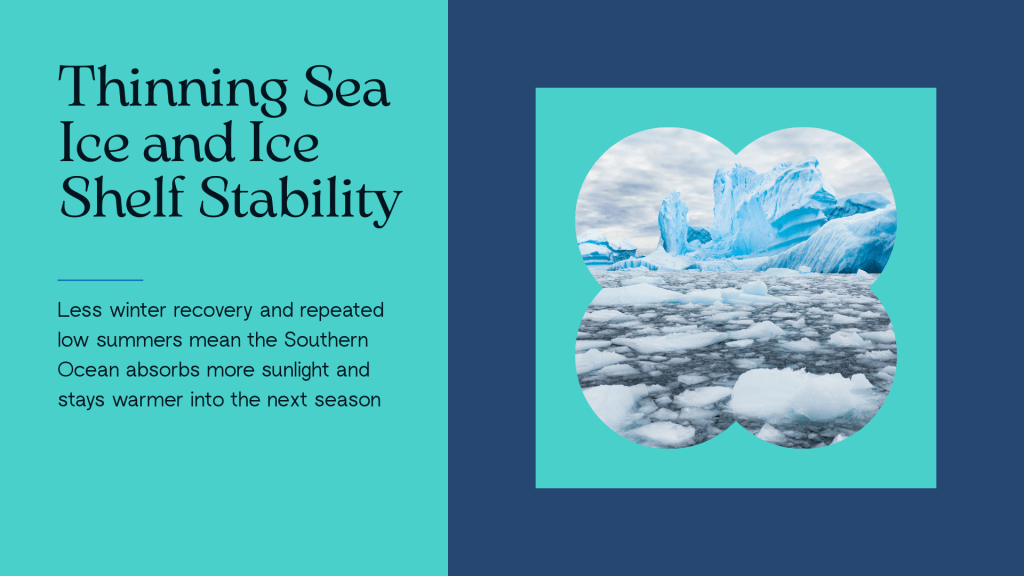
Four of the lowest summer sea-ice minimums in the satellite era occurred since 2022 — with 2023 the record low and 2024/2025 tied for second. That’s a pattern, not a blip. Less winter recovery and repeated low summers mean the Southern Ocean absorbs more sunlight and stays warmer into the next season.
Why you should care: Sea ice isn’t “sea-level ice,” but it buffers ice shelves from waves and warm water. Lose the buffer, and shelves can thin and fracture more easily — opening the door for land ice to flow faster into the sea. (See “What to watch next” below.)
2) Ice shelves & ice sheets: the gates to sea level
Ice shelves are floating extensions of the ice sheet that buttress the ice inland. Warmer water under shelves plus surface melt on top can thin them; once weakened, outlet glaciers can speed up. The Conversation piece ties this to abrupt changes underway right now. Independent coverage from Reuters and Australia’s Antarctic Division links these trends to a new Nature analysis flagging “interlinked” Antarctic changes.
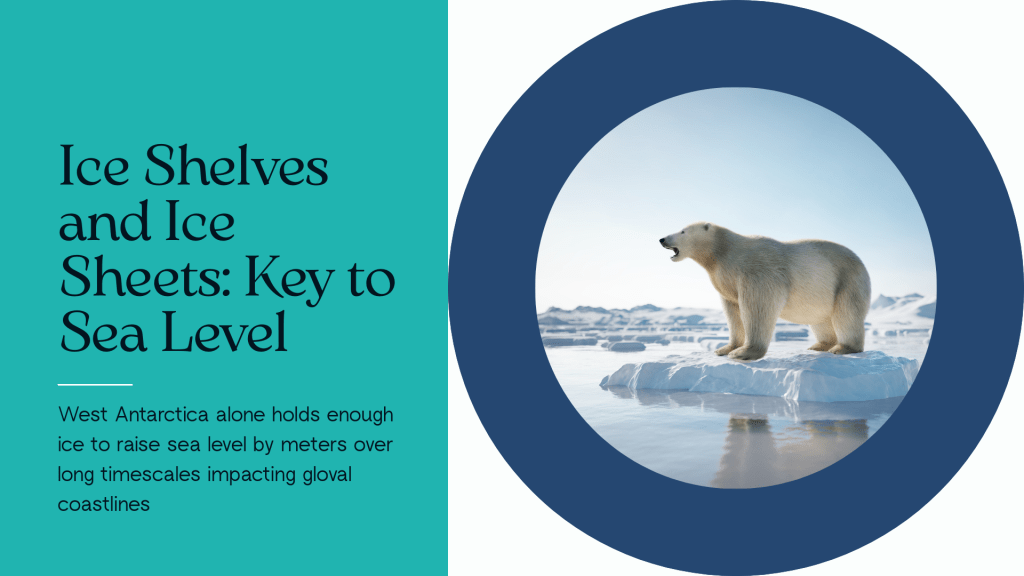
Why you should care: West Antarctica alone holds enough ice to raise sea level by meters over long timescales. Decisions we make this decade influence how fast we approach those outcomes.
3) Ocean circulation: the deep conveyor is faltering
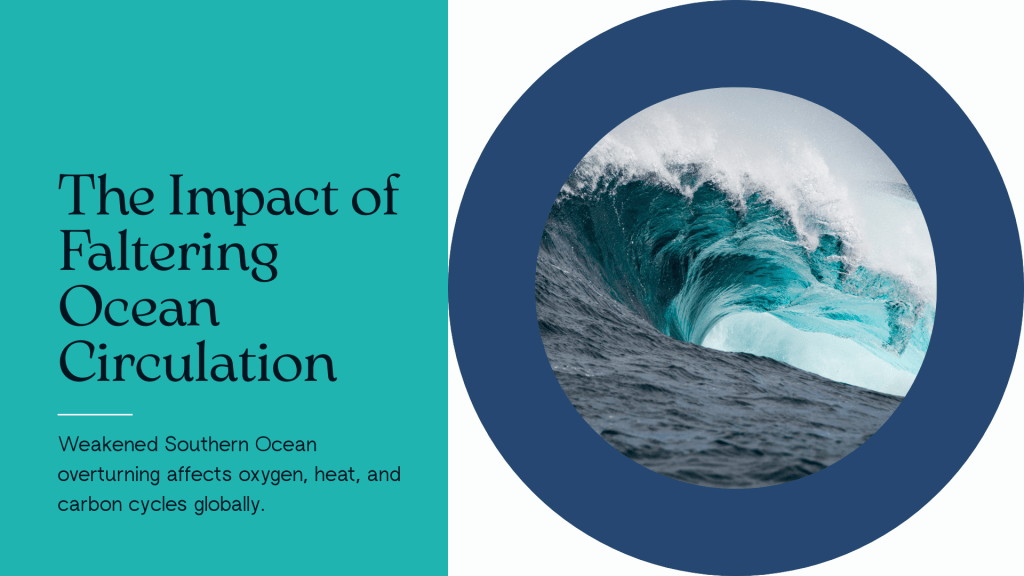
Multiple studies show the deep limb of the Southern Ocean overturning has weakened in recent decades. In the Weddell Sea, the densest bottom waters have shrunk ~30% since the early 1990s; globally, the lower overturning cell has weakened while the upper cell has shifted and strengthened. Fresh meltwater is a key driver.
Why you should care: This “breathing” moves oxygen to the abyss and locks heat and carbon away. A slowdown means less oxygen for deep ecosystems, more heat lingering where it can erode ice shelves from below, and long-tail climate effects that are hard to reverse.
4) Ecosystems: from krill to penguins
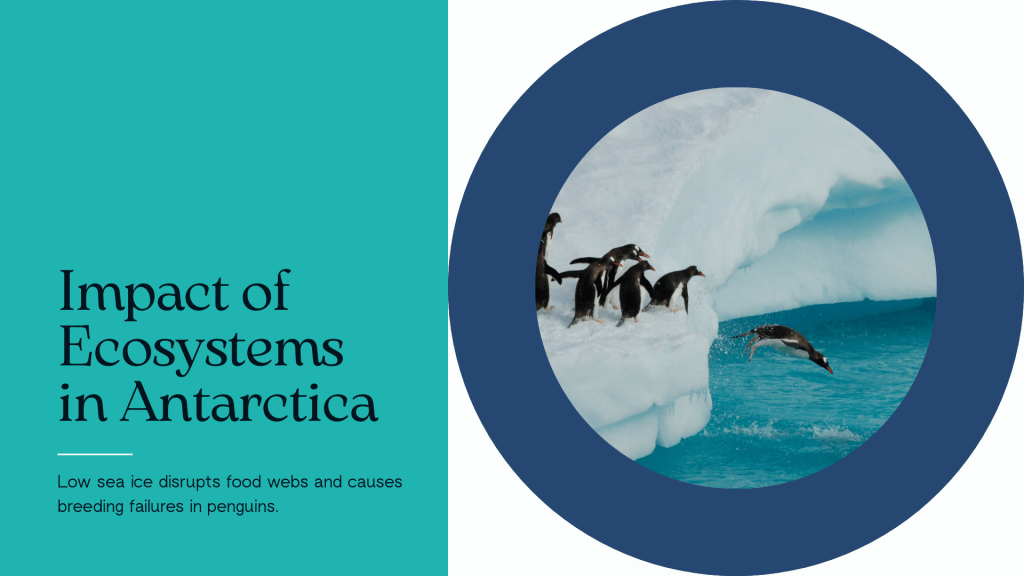
Low sea ice disrupts the seasonal timing and habitat for phytoplankton and krill — the base of Antarctic food webs — and emperor penguins have suffered mass breeding failures in recent low-ice years. These are real-world impacts, not just graphs.
What’s new in the research the article highlights?
The Conversation authors summarize new Nature work arguing that Antarctic changes are abrupt, interlinked, and self-reinforcing: sea-ice loss exposes dark water, warms the ocean, weakens deep formation of cold dense water, and further undermines ice shelves — a loop. Official summaries from Australia’s Antarctic Division and global reporting echo the same takeaways.
Learn to “read” Antarctica like a pro
1) Follow the sea-ice heartbeat:
- NSIDC “Sea Ice Today” posts track daily extent and explain anomalies with clean visuals. Pair it with NASA Earth Observatory image stories for context.
2) Connect ice to oceans:
- Dive into peer-reviewed work on Antarctic Bottom Water decline and changes in the global overturning. These are technical reads, but their abstracts are gold.
3) Watch wildlife indicators:
- Newsrooms synthesize colony-level observations (e.g., emperor penguins) that don’t yet show up in global stats. They help translate climate signals into lived impacts.
What we don’t know yet
- Variability vs. trend: Antarctic sea ice used to swing widely year-to-year. Scientists are actively probing when recent lows cross from “wild swing” into “new normal.”
- Thresholds: How much fresh meltwater tips local currents? Where are the “weak points” for ice shelves by basin? New observing systems and models are closing the gap — watch this space.
What to watch next
- Late-winter/early-spring sea-ice maps: Do we see continued low maximums like 2023 and 2024, and does 2025 stay among the outliers?
- Weddell & Ross Sea shelf waters: Signs of warmer deep water intrusions or reduced brine rejection (the salt-making process that helps form bottom water).
- Field seasons & penguin reports: Colony status updates after winter and early summer break-ups.
The SaveOcean take
Behind every satellite map is a deckhand watching the wind and swell, a scientist tending sensors in freezing spray, and a policymaker deciding how to safeguard coasts for the next generation. Learning to “read” Antarctica isn’t just climate literacy — it’s a way to make smarter, kinder choices everywhere the ocean touches our lives.
Sources & further reading
- The Conversation explainer on abrupt Antarctic changes (authors: England, Strugnell, Purich, McCormack, Abram). Live Science
- NSIDC: 2025 near-record summer minimum; repeat lows since 2022; daily trackers. nsidc.org
- NASA Earth Observatory / SVS: Visual explainers of 2024–2025 sea-ice minima. earthobservatory.nasa.gov
- Nature & related research: Weddell Sea bottom water decline; global meridional overturning changes; mechanistic studies of abyssal warming. Nature
- Australian Antarctic Division briefing on the new Nature study (2025). antarctica.gov.au
- Reuters roundup of the Nature findings and implications. Reuters
 SaveOCEAN
Leave a comment