The months of August and September 2025 have been marked by significant progress in international policy and technological innovation for ocean conservation.
Key events and outcomes focused on a global push for a more sustainable “blue economy” and addressing the interconnected crises of pollution, climate change, and biodiversity loss.
1. Global Plastic Pollution Treaty 🌍
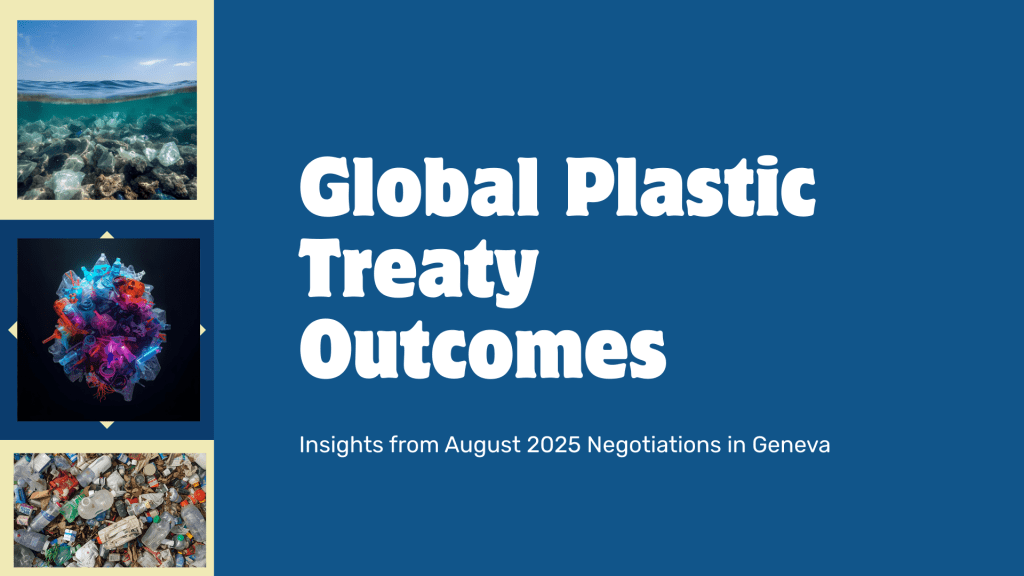
Outcomes: The Intergovernmental Negotiating Committee (INC-5.2) to develop a legally binding instrument on plastic pollution held a crucial session in Geneva in August 2025. Approximate ~2,600 participants from 183 countries and 400+ observer orgs has attended the event.
Goal:
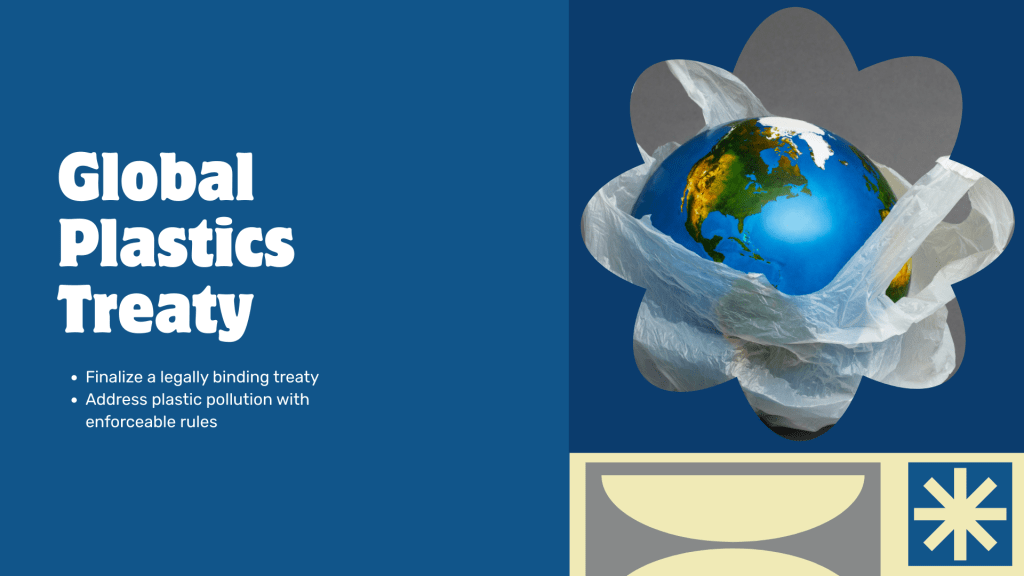
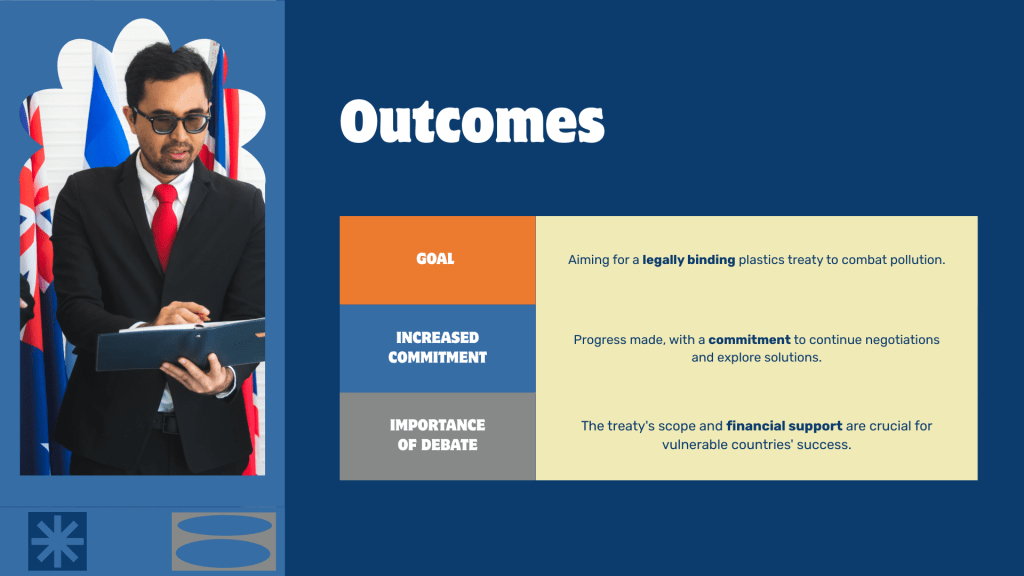
- Finalize a text for a legally binding plastics treaty.
Outcome:
- While the negotiations adjourned without a full consensus, the discussions underscored a new level of commitment and understanding of the multifaceted nature of the crisis.
- The Committee agreed to resume negotiations at a future date.
- A “Solutions Day” event was also held to highlight scalable, real-world solutions and galvanize multi-stakeholder collaboration.
Why it matters:
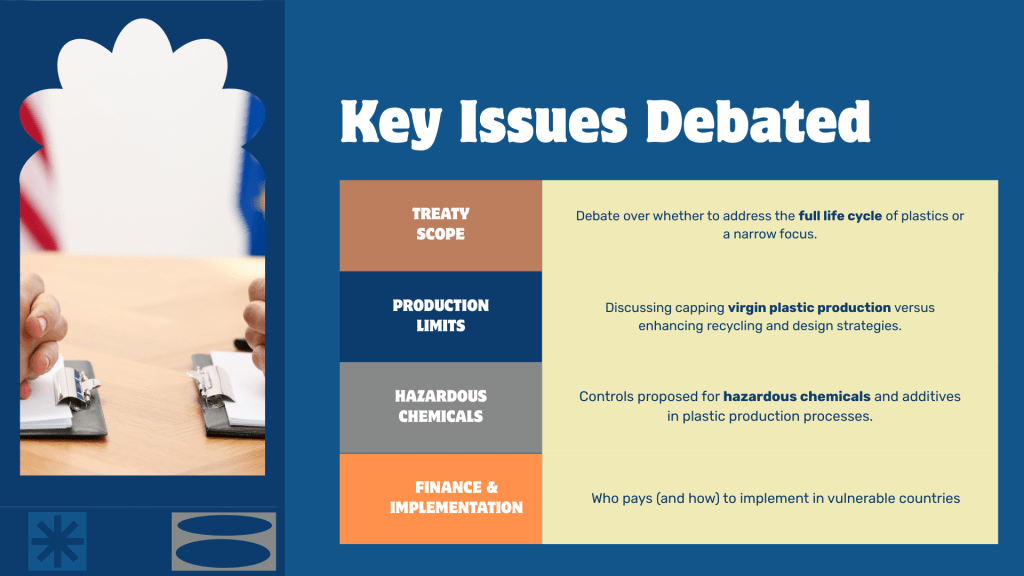
- Scope (full life cycle vs. narrower focus): Many backed the UNEA mandate covering the full life cycle; a few sought to reopen or narrow scope. This determines whether the treaty can address upstream drivers, not just waste.
- Production limits: Deep split on capping virgin plastic production vs. centering on design/recycling. This is the treaty’s main lever on volumes.
- Chemicals/additives & product controls: Disagreement on binding controls for hazardous additives and problematic products. These clauses affect health and trade.
- Finance & implementation: Who pays (and how) to implement in vulnerable countries; debates over new country categories and “capacity to contribute.”
Future Projections:
The lack of a final agreement is not seen as a complete setback but rather as a signal of the complexity and the need for a more comprehensive approach. Some highlights below:
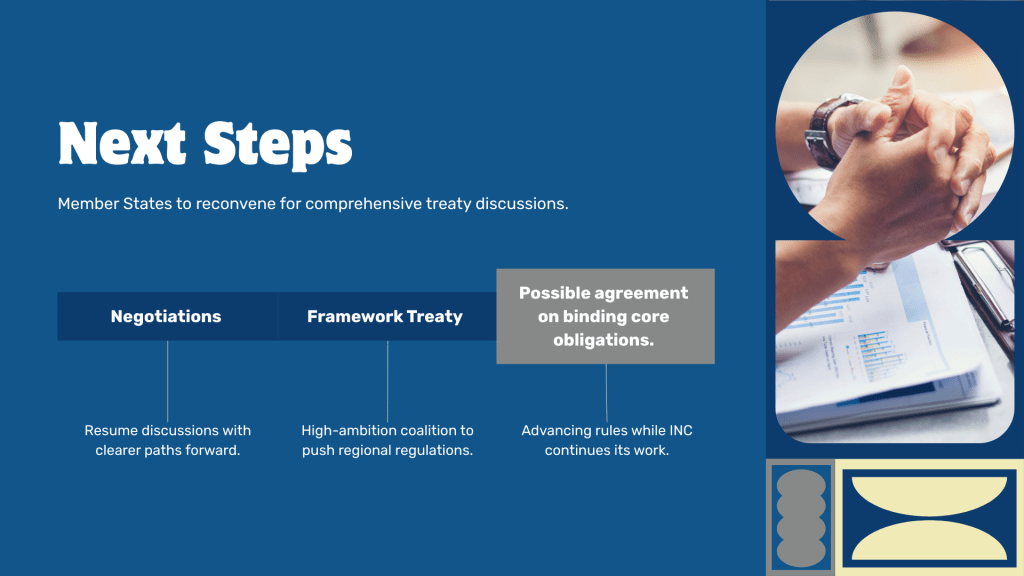
- Member States to reconvene with clearer negotiating tracks (production, chemicals, finance, compliance), improved transparency, and a consolidated text derived from the Chair’s proposal
- A framework treaty with binding core obligations (e.g., chemicals disclosure, product restrictions) that can tighten production measures over time. This mirrors pathways raised by observers and business coalitions after Geneva’s adjournment.
- A high-ambition coalition (incl. EU and allies) advances coordinated domestic/regional rules (on additives, design, EPR, trade measures) while keeping the INC track alive—raising the regulatory floor even without a finished treaty
2. Marine Biodiversity & High Seas Treaty 🌊
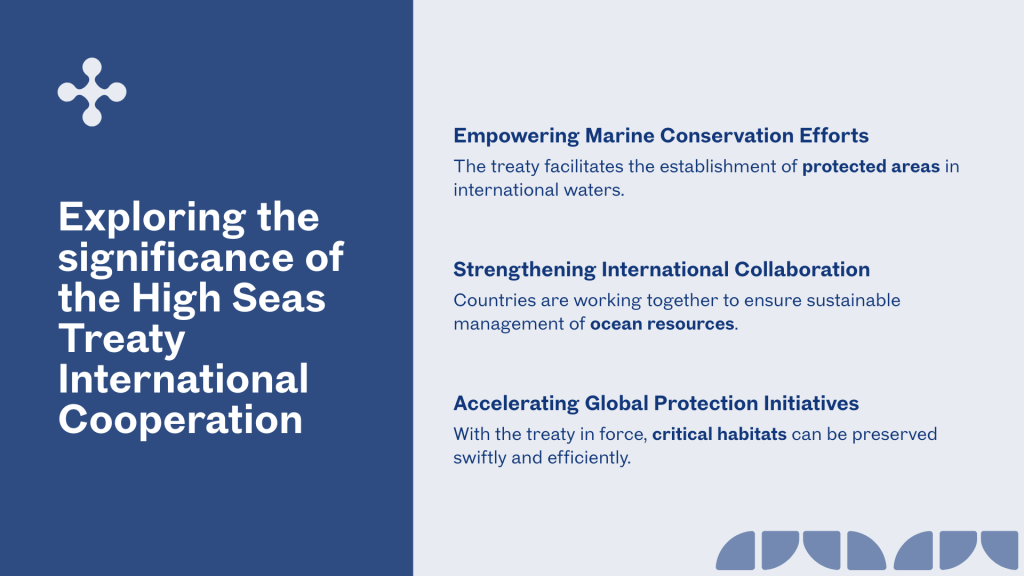
Outcomes: The UN Ocean Conference in June 2025 concluded with a landmark development: the High Seas Treaty (BBNJ Agreement) received the necessary number of ratifications to enter into force.

Why it matters:
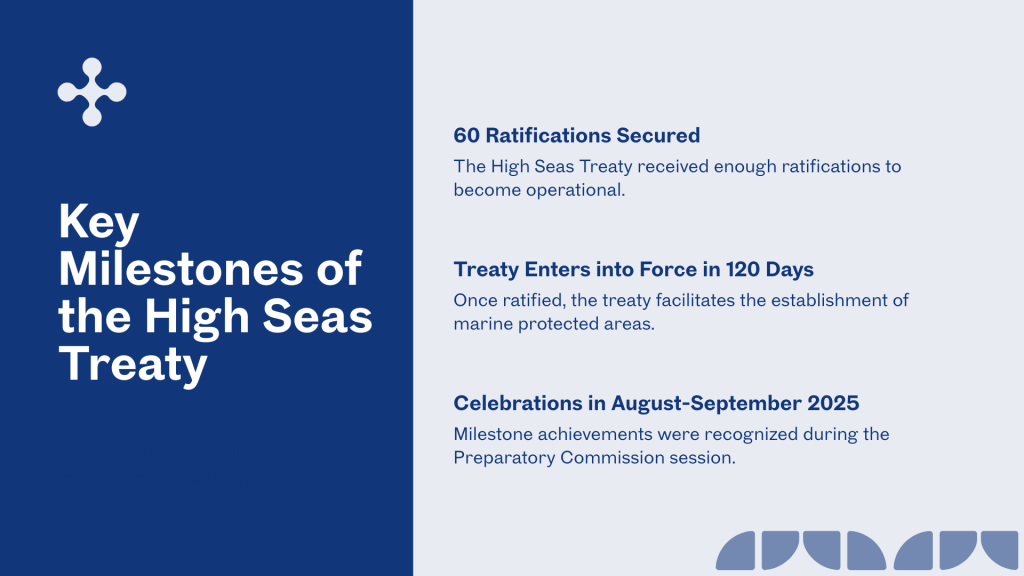
Once the 60 ratifications are deposited , the treaty enters into force i20 days later, enabling creation of marine protected areas (MPAs). This milestone was celebrated in August and September as it created a legal framework for establishing marine protected areas in international waters. A Preparatory Commission session was held from August 18-29 to begin the process of building the necessary bodies and processes to make the treaty effective.
Future Projections:
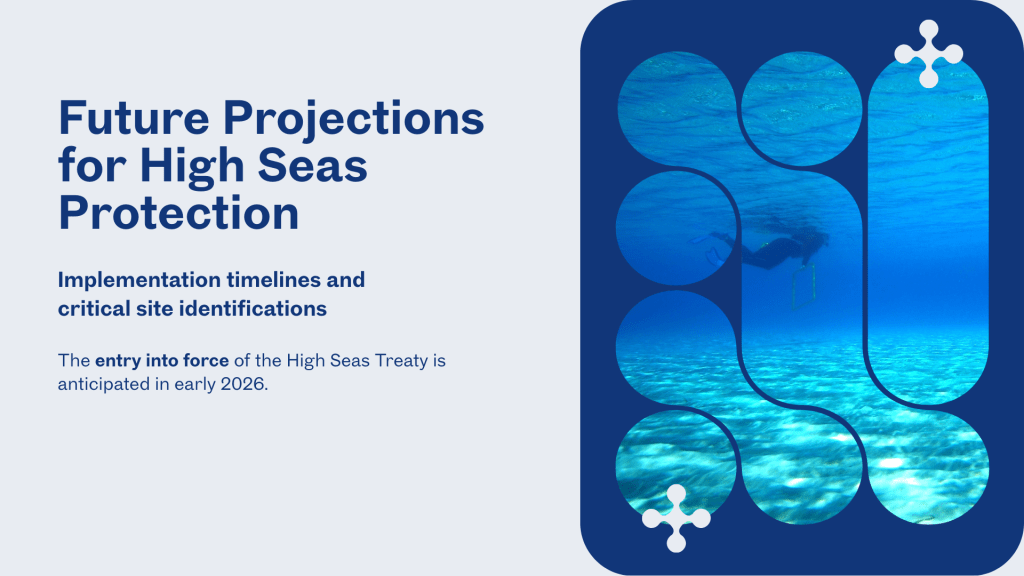
The focus has now shifted to the practical implementation of the treaty. The immediate projection is to identify and propose critical High Seas sites for protection.
- Multiple governments pledged ratification in H2 2025; entry into force would then fall in early 2026.
- COP-1 within ~1 year of entry into force. Expect adoption of MPA proposal processes, interim EIA guidelines, and an initial work programme for capacity building/technology transfer.
- Interim “coalitions of the willing.” Even before COP-1, regional groupings may pre-cook candidate MPA packages and data rooms to fast-track designations once the COP opens.
3. EU’s “Restore Our Ocean and Waters” Mission 🇪🇺
Outcomes: The European Union’s Horizon Europe Missions announced in August 2025 that 30 consortia have secured funding to contribute to the restoration of oceans and waters by 2030. Total funding: €200M+. highlighted 13 ocean-and-waters projects: spanning Black Sea, Danube, Baltic & North Sea, Mediterranean, Atlantic & Arctic basins.
Why it matters:
This is the EU moving from strategy to funded delivery at scale: dozens of multi-country teams now have budgets and milestones to deploy operational solutions (not just research) across Europe’s sea basins—precisely where implementation usually stalls.
What the projects cover:
- Ecosystem restoration & protection (nature-based solutions, MPA management, blue-carbon habitats). Publications Office of the EU
- Pollution prevention & cleanup (nutrients, plastics, port/urban runoff), incl. “waterfront cities & ports” demonstrators to accelerate real-world adoption. Horizon-europe.gouv.fr
- Blue-economy transition (low-carbon operations, circularity) coordinated via basin “lighthouses” such as BlueMission Atlantic & Arctic.
Future Projections:
This initiative represents a significant financial and strategic investment in ocean health.
- Project mobilization through 2025–26. Consortia onboard partners, start pilots in priority basins; first public results expected within 12–18 months of grant start.
- Scale via basin “lighthouses.” Expect cross-project integration (methods, data standards, citizen engagement) so results can be replicated beyond pilot sites. bluemissionaa.eu
- Tighter links to EU reporting. Outputs will increasingly feed MSFD/WFD implementation, open-data obligations, and SDG-14 indicators to prove impact.
Innovative Solutions Developed in Recent Months
Here are some of the most innovative and promising solutions developed or highlighted in the past few months to address specific ocean challenges.
Plastic & Microplastic Pollution
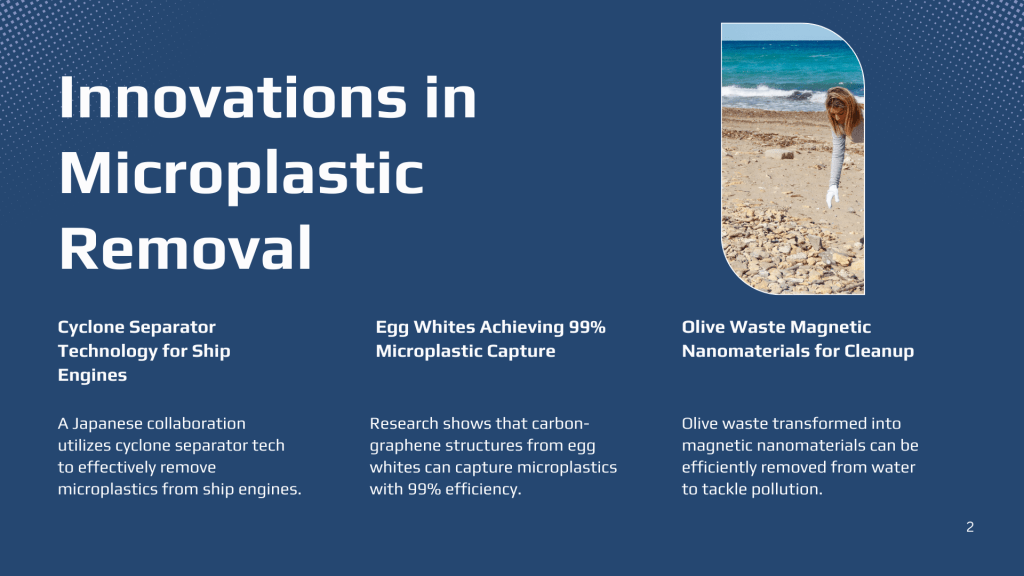
- Microplastic Removal from Ship Engines: A Japanese collaboration between Mitsui O.S.K. Lines and Miura Co. has developed a second-generation device that can continuously collect microplastics while ships are underway. By diverting seawater from the ship’s engine cooling line, the system uses a cyclone separator to efficiently capture microplastics. This technology has the potential to turn a global fleet of commercial vessels into active microplastic collectors.
- Egg Whites: Researchers have found that dehydrated and heated egg whites form a carbon-graphene structure that can remove microplastics from seawater with 99% efficiency.
- Olive Waste: A team in Australia has created a magnetic adsorbent using nanomaterials derived from olive waste. This material attracts microplastics and can be easily removed from water using a magnet, offering a fast and eco-friendly solution.
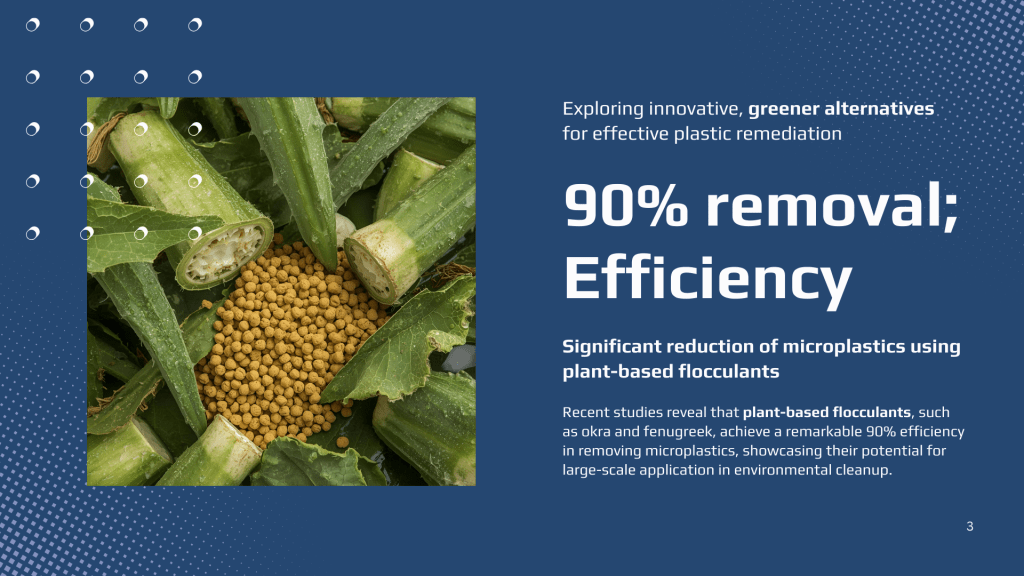
- Plant-Based Flocculants: New research highlights the effectiveness of plant-based extracts from okra pods and fenugreek seeds. These natural compounds cause microplastic particles to clump together and sink, making them easier to filter out of water. This is a greener alternative to many chemical treatments.
Sewage Cleaning and Wastewater Management
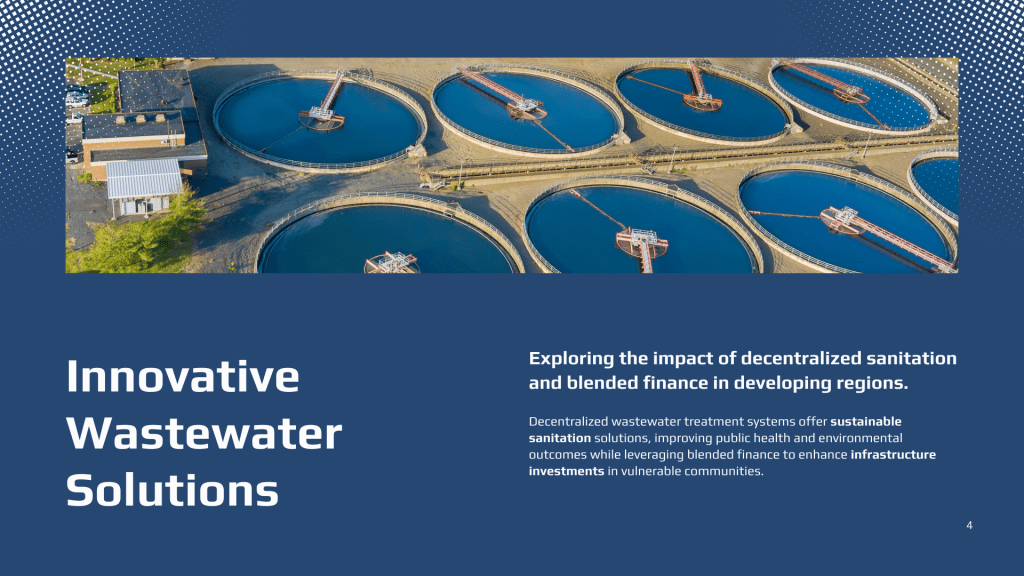
- Decentralized Wastewater Treatment: The Ocean Sewage Alliance has showcased solutions that use blended finance (mixing grants and loans) to fund small-scale, decentralized wastewater plants in coastal communities, such as in Kenya. This approach makes projects more attractive to private investors and scalable.
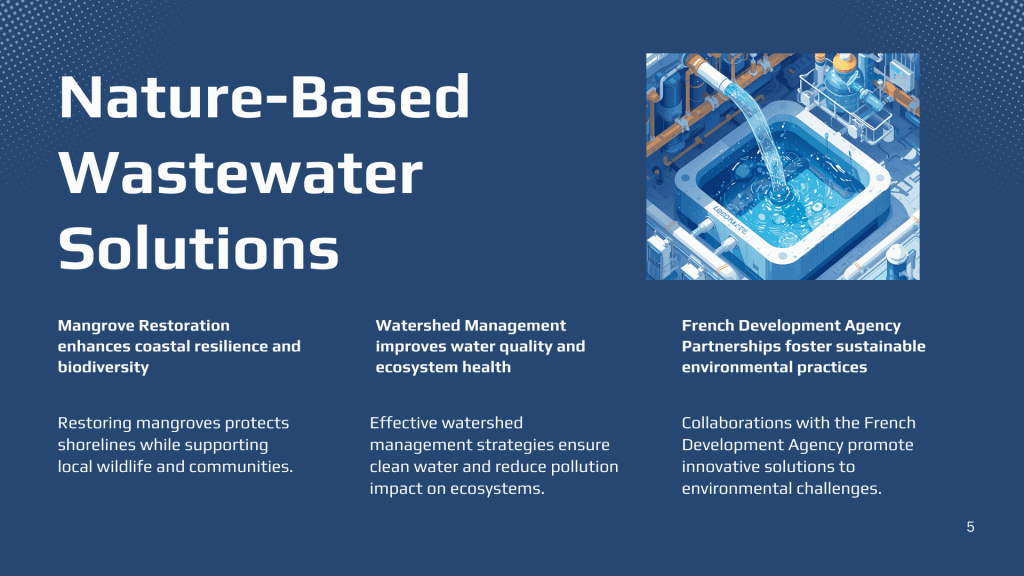
- Nature-Based Solutions: The French Development Agency and other partners are mainstreaming nature-based solutions into larger infrastructure projects. Examples include mangrove restoration and watershed management, which naturally filter pollutants and reduce runoff into the ocean.
Sustainable Fisheries
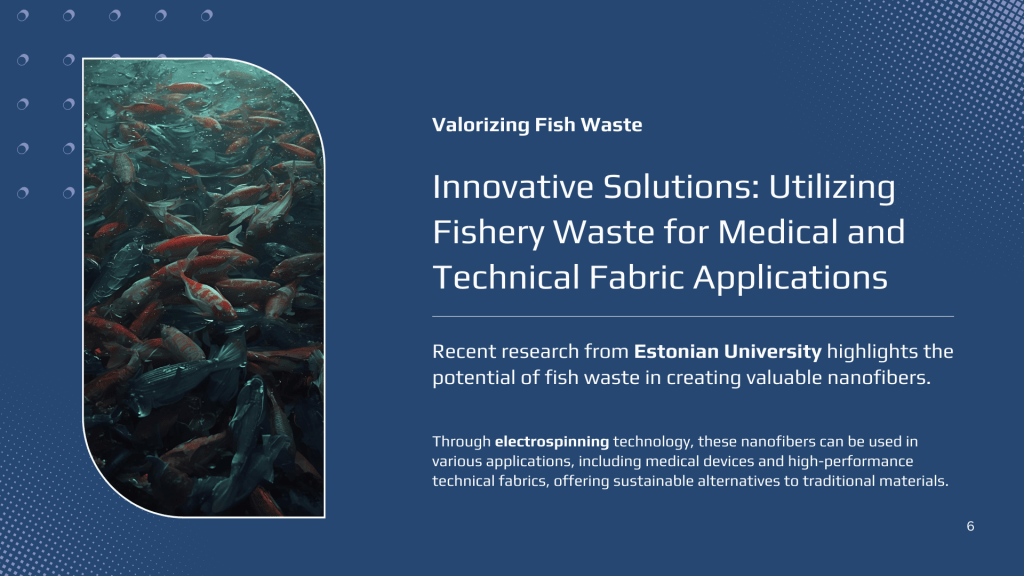
- Valorizing Fishery Waste: An innovative project at the Estonian University of Life Sciences is transforming fishing industry by-products into high-value resources. By using electrospinning technology, scientists are converting fish waste into nanofibrous materials for medical applications like wound dressings, as well as new leather-like fabrics. This not only reduces waste but also creates a new, sustainable revenue stream.
Biodiversity Protection
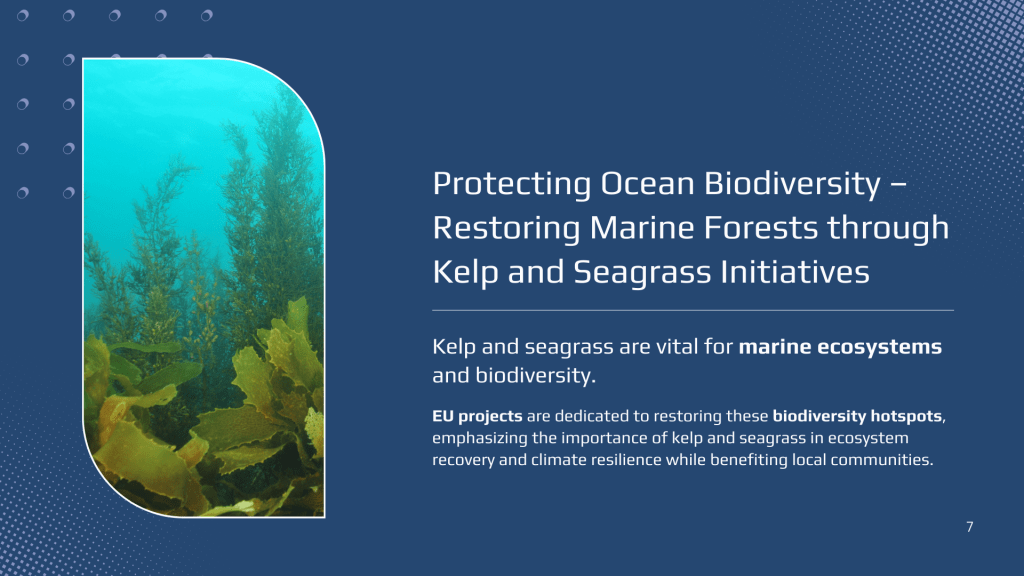
- Restoring Marine Forests: A number of EU-funded projects are focused on regenerating marine forest ecosystems like kelp forests and seagrass meadows. These “underwater gardeners” are working to restore these critical habitats, which act as biodiversity hotspots and powerful carbon sinks, supporting the overall resilience of the ocean.
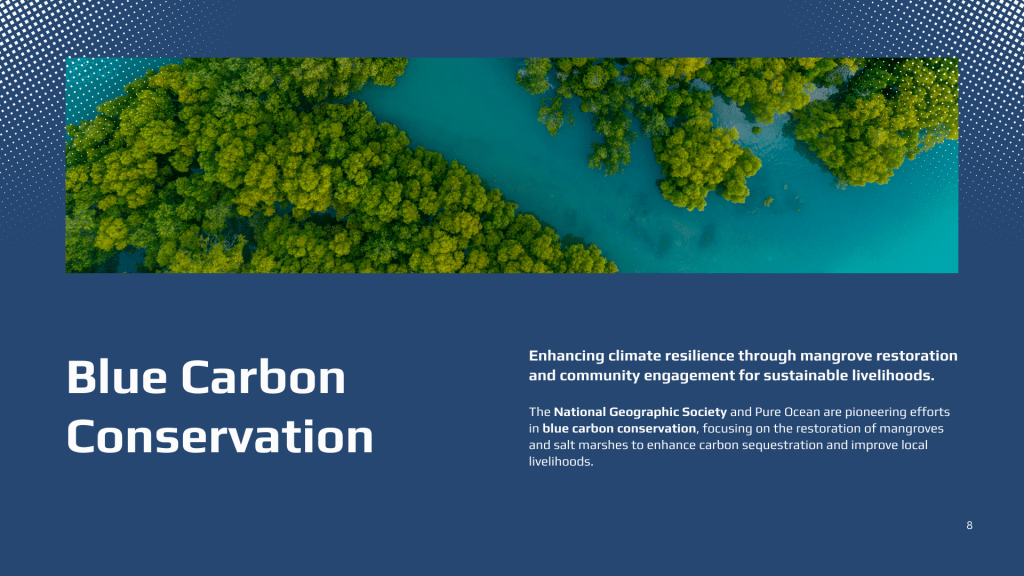
- Blue Carbon Conservation: Grant programs from organizations like the National Geographic Society and Pure Ocean are actively seeking proposals to protect, restore, and enhance coastal blue carbon ecosystems—such as mangroves and salt marshes—that sequester large amounts of carbon and benefit both biodiversity and local communities.
The SaveOcean take — from talk to real-time truth
The legal door to protect the ocean has evolve. The operational gap now is implementation: MPA design, monitoring, and transparent reporting.
Our role is to help authorities and coalitions move from treaty text to auditable action—with decision dashboards, data plumbing, and simple indicators stakeholders can trust.
 SaveOCEAN
Leave a comment