

When the ice moves, the world moves. A new lead article in Frontiers in Science takes a hard look at five much-publicized polar geoengineering ideas—and comes back with a clear message: they don’t pass scientific, environmental, ethical, or governance muster for the coming decades. Meanwhile, the Arctic has been warming ~3× faster than the global average, Antarctica is heating at ~2×, Antarctic sea ice has hit record lows, and deep Southern Ocean measurements suggest a ~30% slowdown in Antarctic overturning circulation over recent decades. These are not niche changes; they are shocks to the global climate, ocean circulation, sea level, food webs, and coastal risk.
Below, we translate the findings into plain language—and a plan for the next generations.
Also, read the Frontiers Science article here: Frontiers
What the new assessment actually did
A multinational team of polar scientists evaluated five proposed polar geoengineering concepts against effectiveness, feasibility, side-effects, costs, and governance:
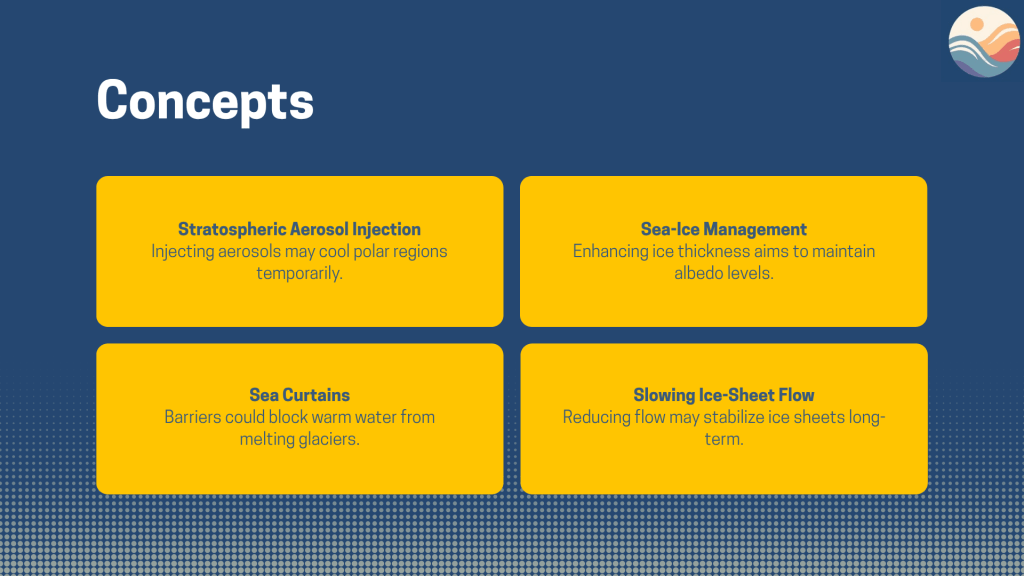
- Stratospheric aerosol injection (SAI) over the poles
- Sea curtains (or seabed walls) to block warm water from glaciers
- Sea-ice management (boosting albedo/thickness)
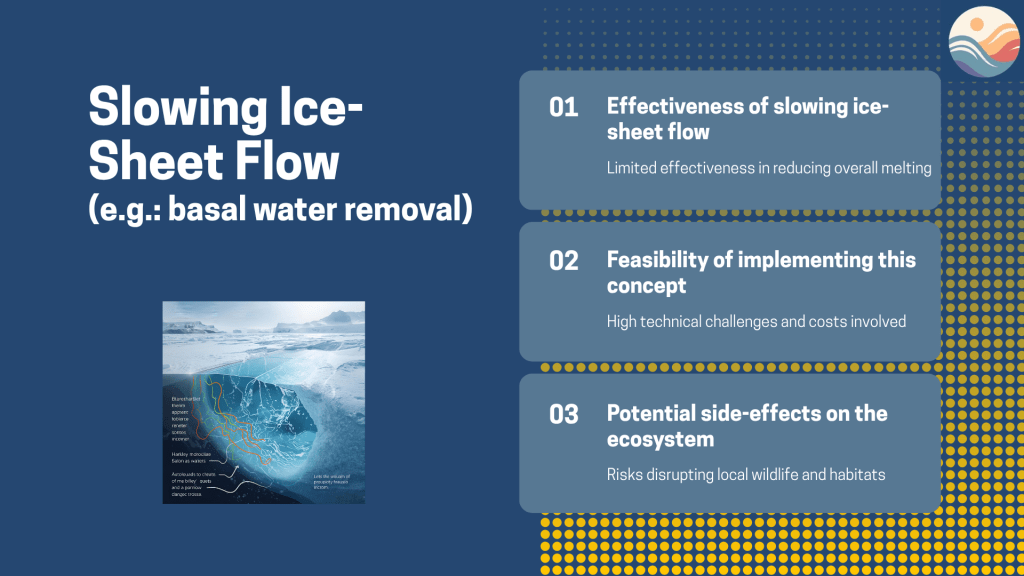
- Slowing ice-sheet flow (e.g., basal water removal)
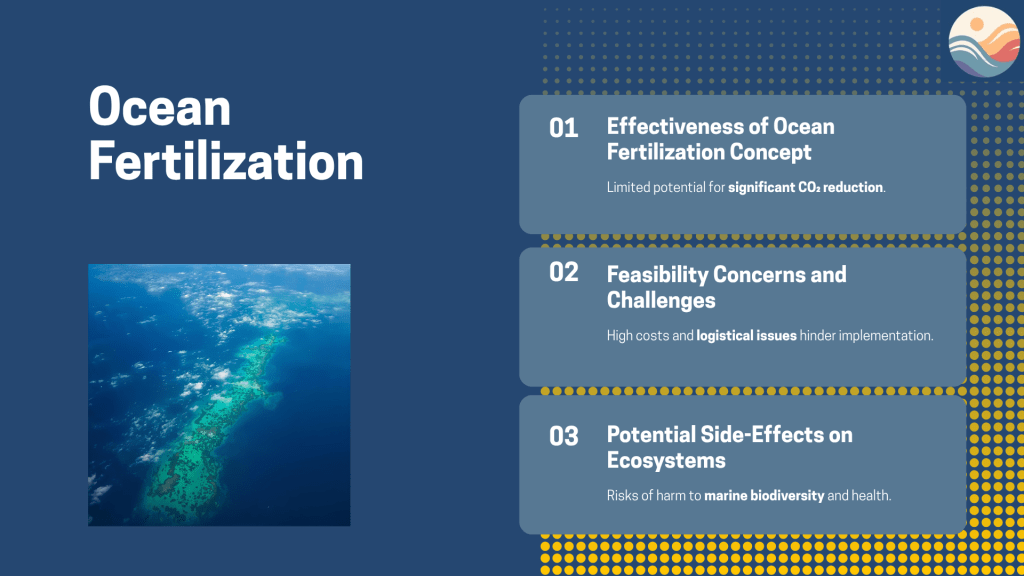
- Ocean fertilization (to enhance CO₂ uptake)
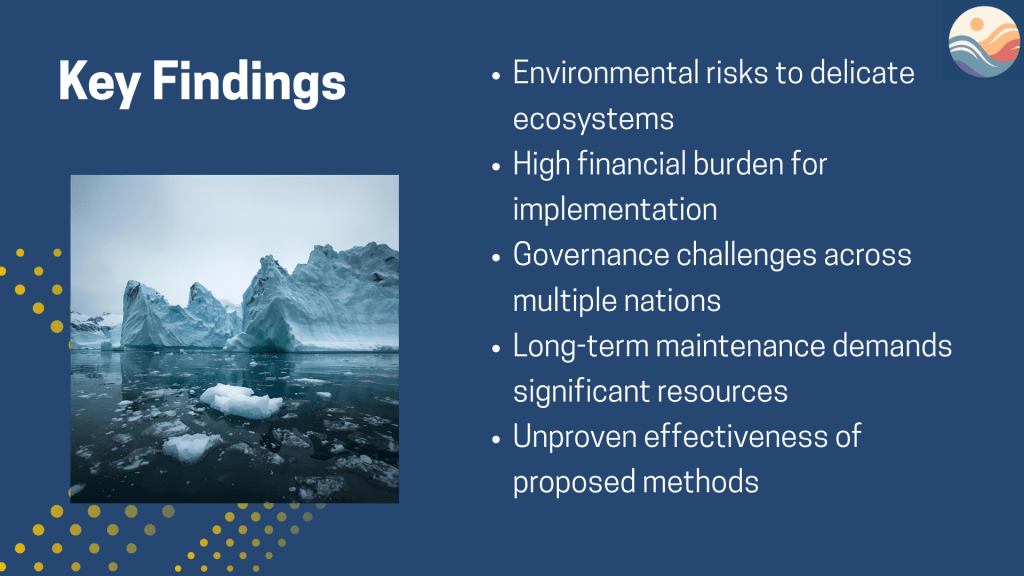
Their conclusion: none of these ideas are responsible or feasible options “in the coming decades”; several carry predictable harm to fragile polar ecosystems, require hundreds of billions up-front plus decades of maintenance, and would almost certainly distract from urgent decarbonization.




Key facts
- The scale problem: After the 1991 Pinatubo eruption injected ~17 megatons of SO₂ to the stratosphere, the Northern Hemisphere cooled by ~0.5–0.6 °C (global ~0.5 °C for nearly 2 years). Turning that into a policy tool would mean lofting hundreds of thousands to millions of tons of material to ~20 km every year—indefinitely—while risking ozone damage and regional climate shifts.
- The governance problem: The Antarctic Treaty demands tough environmental assessments; the Arctic is split among states and Indigenous homelands. There is no accepted governance to authorize, monitor, or unwind large-scale polar interventions.
- The physics problem: Polar systems are entangled with the planet. Changing albedo or ocean flows in one place spills across borders, interacts with monsoons, storms, and ecosystems, and can’t be neatly contained. Recent expert essays in the same Frontiers hub reinforce that uncertainty, complexity, and impracticality dominate these proposals.
- The real priority: Cutting greenhouse gases stops the driver. The authors stress immediate, rapid, and deep decarbonization to net-zero CO₂ by mid-century, backed by proven technologies.
Why this matters for coasts and communities
- Climate change: Sea ice and ice sheets reflect incoming sunlight. Lose them, and will turbocharge local and global warming.
- Circulation: A ~30% slowdown in deep Southern Ocean overturning has already been observed; models suggest further weakening this century, with ecosystem and climate feedbacks worldwide.
- Sea level: West Antarctica and Greenland ice losses accelerate global sea-level rise; “quick fixes” at the poles don’t replace emissions cuts that reduce long-term melt risk.
Summary
Ideas like anchored seabed curtains to shield glaciers reappear in headlines. The new assessment groups these with other interventions and finds them logistically extreme, costly, and high-risk—with uncertain benefits and likely ecological disruption. Good headlines ≠ good policy.
The five polar geoengineering concepts—fail on feasibility, risk, cost, and governance for the timelines that matter.
The Arctic (~3×) and Antarctica (~2×) warming rates, record sea-ice lows, and ~30% overturning slowdown are alarms to accelerate decarbonization and resilience, not to gamble on planetary hacks.
So what do we do in this coming year?
SaveOCEAN supports open, critical research and Indigenous-informed decision-making—but we won’t sell mirages. Polar geoengineering is not our lifeboat. The safest, fastest, fairest path is to cut emissions now, bolster ocean–coast resilience, and scale nature-positive measures we can govern and measure.
1) Focus on coastal buffers that work at human scales
- Seagrass, kelp, dunes, and floodplain reconnection protect coasts, store carbon, and improve water quality—without planetary side-effects.
2) Invest in polar observation—not polar manipulation
- Expand ocean/ice/atmosphere monitoring in the Arctic and Antarctic
5) Keep communities in the room
- Polar decisions implicate Arctic Peoples, fishers, and coastal cities. Support consent-based processes; no experiments that can’t be fully governed, reversed, and repaired.
At SaveOCEAN we will channel partnerships and public attention toward measurable emissions cuts, credible coastal protection, and open polar science—so we progress in the right way.
 SaveOCEAN
Leave a comment