
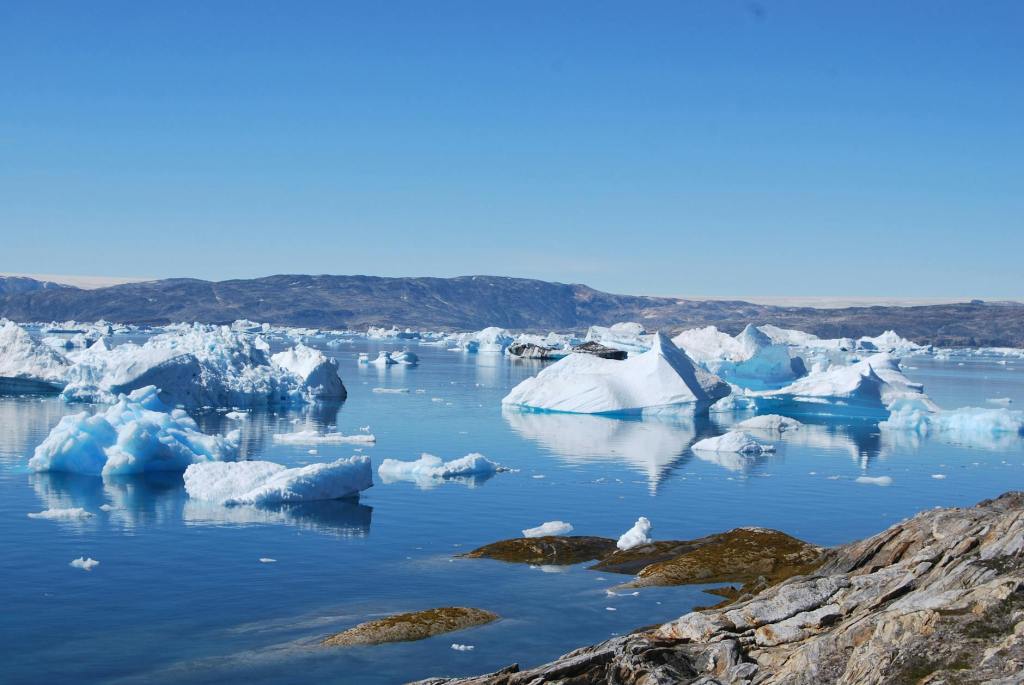
Some stories are written in ink; ours is traced in meltwater.
In just the past few months, the poles have delivered a set of hard, unzippable facts. On September 17, 2025, Antarctic sea ice likely hit its winter maximum of 17.81 million km²—the third lowest in 47 years of satellite records. Earlier this year, on March 1, the Antarctic minimum tied for second lowest on record. The bookends of the southern winter compressed, again.
Up north, the Arctic summer minimum likely arrived on September 10, 2025, at 4.60 million km²—tied for tenth lowest. It’s part of a stubborn pattern: the last 19 years hold the 19 lowest September extents in the satellite era. Scientists note that within this low range there’s no significant trend since 2007—but the floor itself has sunk far lower than the world we grew up in.
And in between those poles, Greenland had an uneasy summer: above-average melt in July, strong melt and rain across southern ice in mid-August, and then a brief “refresh” of snowfall that brightened the surface—weather whiplash over ice as big as a continent. Data hiccups this season mean some melt was likely underestimated, but the signal is there.
These are not headlines; they’re coordinates for action.
What the poles are telling us
- Antarctica’s sea ice is unsettled. The third-lowest winter maximum (2025) arrives just two years after the record-low maximum and alongside a near-record summer minimum this March. Extremes that were once rare are recurring.
- The Arctic remains historically low. 2025’s minimum is “only” tenth lowest, but it sits within two decades of depressed extents—the long slide that has already transformed weather, ecosystems, and access across the North.
- Greenland is running warmer and wetter. Melt pulses and rain on snow events alter albedo, refreeze, runoff, and firn structure—details that decide how much water reaches the ocean.
None of these points live in isolation; together they redraw how heat and moisture move around the planet we share.
From witness to work: what SaveOcean will push for now
1) Stop flying blind.
Good decisions need continuous, open polar data. We support for real-time monitoring, including backup sensors to avoid gaps that can mask melt events.
2) Protect blue-carbon coasts while we decarbonize.
As polar buffers thin, coastal vulnerability rises. We’ll back projects that restore seagrasses, salt marshes, and mangroves—natural surge brakes that also lock away carbon—in parallel with cutting emissions across energy, transport, and industry.
3) Make “no-regrets” cuts, fast.
Methane and black carbon warm the Arctic quickly. We’ll advocate for oil & gas methane monitoring and leak elimination, clean cookstoves, and shipping soot standards on polar routes. These are near-term cooling wins while the world drives CO₂ down.
4) Build with the map we have.
Ports, fisheries, Indigenous communities, and Arctic towns deserve plans based on current ice reality, not 20th-century assumptions. We’ll convene with partners into local adaptation playbooks: evacuation routes, supply strategies, permafrost-safe foundations.
5) Tell the story where it counts.
Data changes policy when it meets people. SaveOcean pairs community storytellers with polar scientists so the next sea-ice update isn’t just a chart—it’s a choice your council can vote on.
What you can do this week
- Bring one polar scientific and latest fact in the comments.. Facts repeated become norms; norms move budgets.
- If you run buildings, cut methane leakage and upgrade refrigerants.
- If you run a fleet, commit to cleaner fuels and controls on northern routes.
- If you run a city, fund stormwater and coastal nature-based defenses.
- Support organizations that keep the ice record unbroken with transparent data sharing.
Why hope still matters
Hope isn’t pretending the map hasn’t changed. It’s deciding to use the better map.
Here’s ours: an Antarctic winter that peaked low, an Arctic summer that stayed low, a Greenland that melted, rained, and snowed in quick turns—each one measured, archived, and explained by scientists whose job is not to scare us, but to show us. Our job is to close the distance between what we know and what we do.
SaveOcean is here for that exact distance: with micro-grants for coastal communities, toolkits that make polar data usable by city engineers and school boards, and campaigns that turn “someone should” into “we did.”
If you’re ready to turn witness into work, join us. Bring your port, your classroom, your company. We’ll bring the map—and the shovels.
Sources for the article:
- NSIDC News & Stories overview and latest releases. nsidc.org
- Antarctica (2025 winter maximum): 17.81 million km², third lowest on record. nsidc.org
- Antarctica (2025 summer minimum): 1.98 million km² on March 1, tied for second lowest. nsidc.org
- Arctic (2025 summer minimum): 4.60 million km² on September 10, tied for tenth lowest; last 19 years are the 19 lowest September extents. nsidc.org
- Greenland 2025: Above-average July melt; mid-August melt and rain; snowfall “refresh”; note on data gaps. nsidc.org
 SaveOCEAN
Leave a comment