

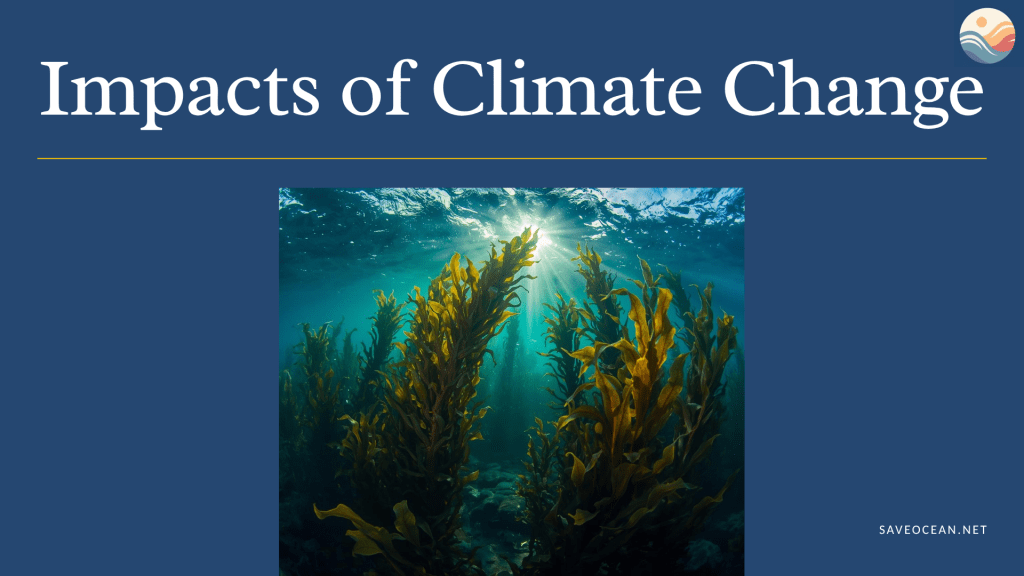
Seaweed forests, kelp canopies and rocky-shore algal beds, are the green engines of our coasts. The latest research thread is clear: climate change is reshaping who thrives, who fades, and how entire shorelines function. But it also maps out where resilience lives and how we can scale it.
What’s changing (and how fast)

Warming + marine heatwaves (MHWs)
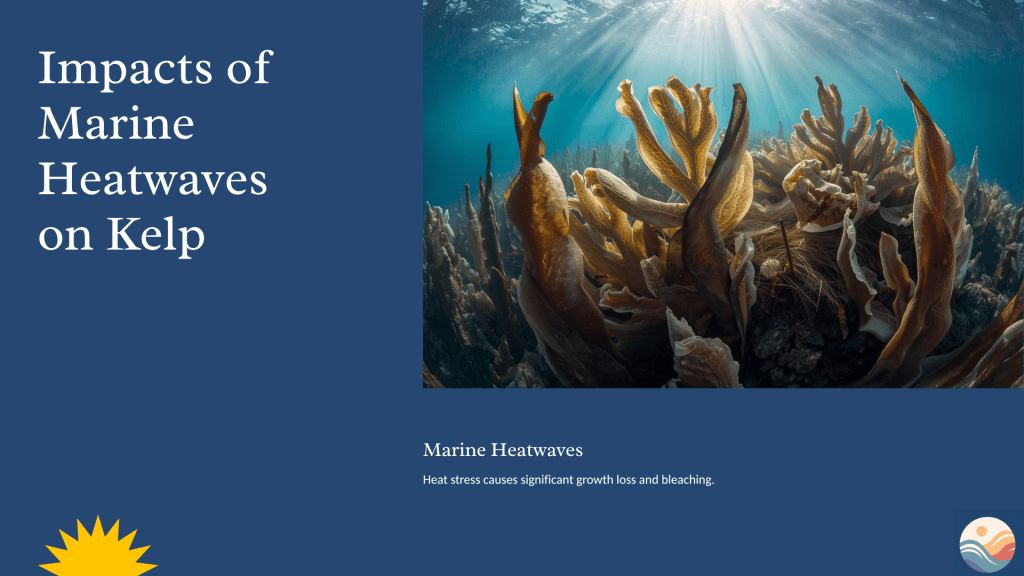
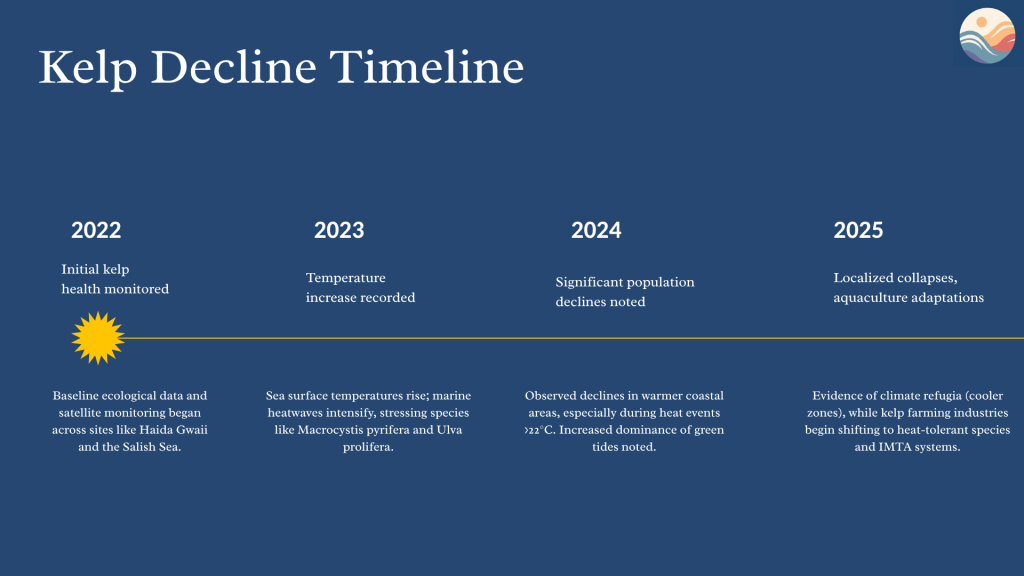
Experimental heatwaves show giant kelp juveniles lose >30% growth under all heat treatments, with ~22°C a danger line where blade erosion, bleaching and even mortality kick in—especially when heat lasts for weeks.
Long records reveal century-scale kelp losses in places like Haida Gwaii, tying declines to past warming and extremes—an early signal of vulnerability that’s now becoming widespread.
Acidifying seas
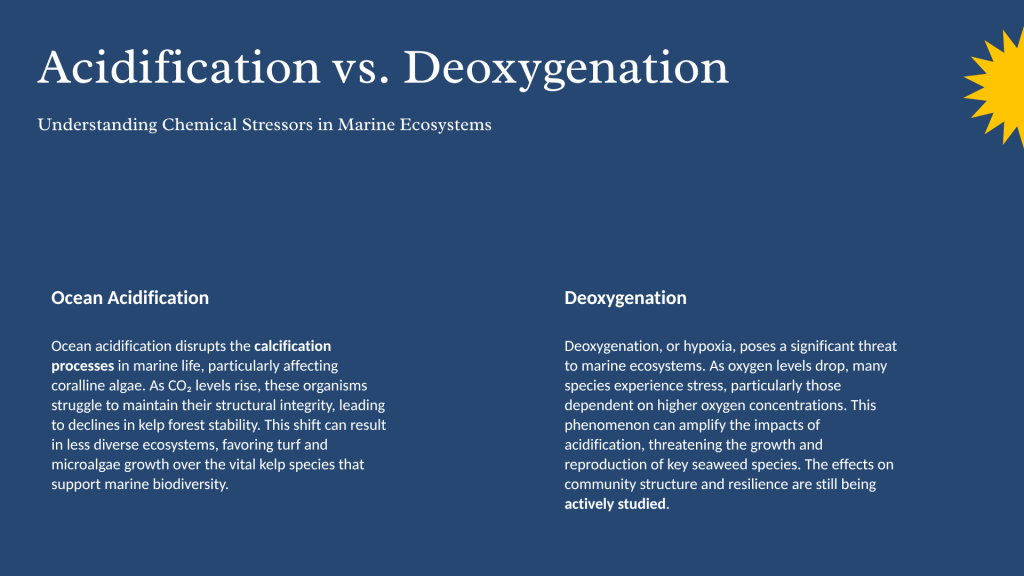
Calcifying red algae (corallines)—the pink “cement” that stabilizes reefs and kelp foundations—are among the most OA-sensitive seaweeds, with frequent drops in calcification, recruitment, and internal pH under high CO₂; communities tend to shift toward turf and microalgae.
Deoxygenation
Hypoxia is rising and likely amplifies other stresses, but its ecosystem-wide effects on seaweed assemblages are still under-studied—an evidence gap flagged by editors of the new Research Topic.
Coastal darkening (sediments + runoff)
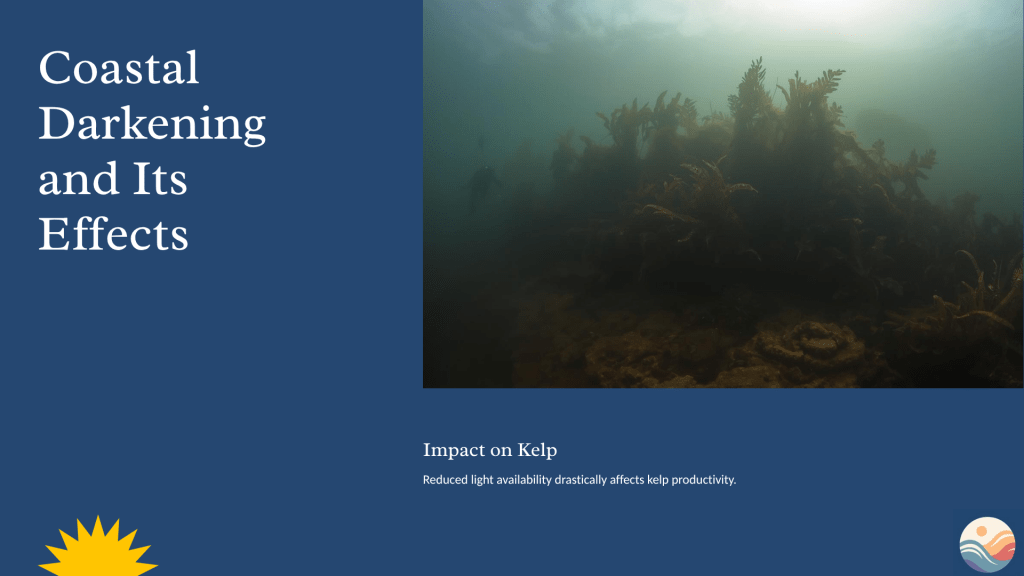
More storms and land runoff reduce underwater light, slashing kelp productivity and tipping communities toward lower-productivity forms; darkening also interacts with heat stress.
Nutrients and winners/losers
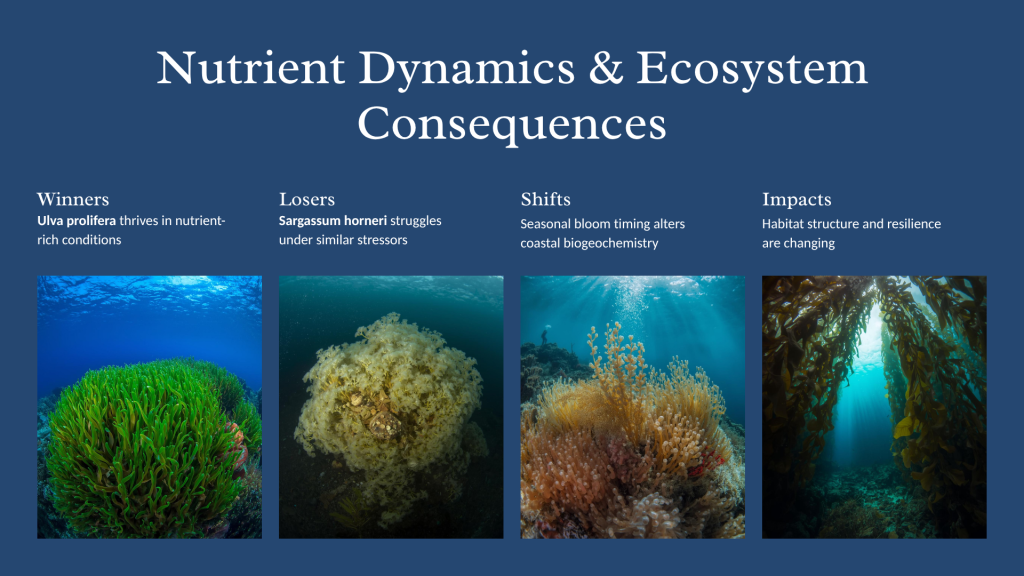
Under eutrophication and higher temperatures, green-tide Ulva prolifera outcompetes Sargassum horneri, reshaping seasonal blooms and biogeochemistry.
For some farmed red seaweeds (e.g., Gracilariopsis lemaneiformis), nutrient supply can matter as much as moderate warming for photosynthesis and growth, highlighting place-specific responses.
Key Points Summary
| Stressor | Impact on Seaweeds |
|---|---|
| 🌡️ Ocean Warming | Alters metabolism, causes range shifts, and threatens kelp (e.g., Laminaria digitata, Macrocystis pyrifera) |
| 🔥 Marine Heatwaves | Acute mortality, loss of giant kelp, especially above 22°C (Bunting et al.) |
| 🧪 Ocean Acidification | Shifts dominance from calcifying algae to turf/microalgae; degrades coralline habitats |
| 🫁 Deoxygenation | Poorly understood but likely to amplify stress |
| 🌊 Coastal Darkening & Sedimentation | Reduces light for photosynthesis; alters ecosystem functions |
| 💩 Eutrophication | Promotes green tide (Ulva prolifera) over golden tide (Sargassum horneri) under high temps (Wu et al.) |
Nuance matters: not everywhere is collapsing
Cold refuges exist. Kelp beds in British Columbia’s Broughton Archipelago have persisted for a century, likely because local waters stay below species’ thermal limits—microclimate wins.
Arctic winters aren’t a simple doom story. In lab simulations, Laminaria digitata endured polar-night “winter warming,” showing metabolic stress but no near-term collapse—until you add changing light or other stressors.
What this means for people and coasts
Ecosystem services at risk: less carbon drawdown, weaker habitat “architecture,” more coastal erosion where kelp thins. The new Frontiers editorial synthesizes these cascading losses across latitudes.
Aquaculture on the front line: Farms face abiotic change, extremes, and disease/herbivory; solutions include future-proof site selection, selective breeding & microbiome work, restorative/IMTA designs, and climate-smart siting tools.
Recent reviews and sector snapshots echo the trend: climate impacts are already widespread in laver/seaweed production, demanding redesign rather than business-as-usual.
Critical Inquiry
Regional Variation: While some kelp populations remain resilient (e.g., in cool refuges), others collapse—what local drivers (currents, nutrients) protect some areas?
Adaptation vs. Extirpation: Is genetic selection enough to keep pace with climate velocity, especially for long-lived kelp species?
Management Strategies: Given multi-stressor impacts (heat, nutrients, acidification), can marine protected areas or aquaculture redesign offer realistic buffers?
Conclusion and call to action
Seaweed ecosystems are being pushed—by heat, haze, acidity, and oxygen debt—but not uniformly, and not beyond help. The new Frontiers collection threads the latest lab, field, and farm evidence into one message: local choices can bend global pressures.
If we protect cold pockets, clear the water, and redesign farms and fisheries around the multi-stressor reality, we keep these underwater forests working for coasts, climate, and communities.
Sources for the article
- Editorial: Impacts of climate change on seaweeds (Frontiers in Marine Science, 2025) — synthesis across warming, MHWs, OA, deoxygenation, darkening, and aquaculture. Frontiers
- Bunting et al. 2024 — 22 °C and heatwave duration as critical thresholds for giant kelp juveniles. Frontiers
- Gendall et al. 2025 — century-scale Haida Gwaii kelp trends and warming links. Frontiers
- Man et al. 2025 — Broughton Archipelago as a kelp climate refuge. Frontiers
- Trautmann et al. 2024 — Arctic winter warming responses of Laminaria digitata. epic.awi.de
- Wu et al. 2024 — warming + eutrophication favor Ulva over Sargassum (“green tide” risk). Frontiers
- Zhang et al. 2024 — nutrients vs. moderate warming in Gracilariopsis physiology. Frontiers
- Cornwall et al. 2022/2024 — OA sensitivity and likely turf-ward shifts where corallines decline. PubMed
- Blain et al. 2021 & related — coastal darkening reduces kelp carbon contribution and interacts with heat. ResearchGate
- Veenhof et al. 2024 — North Atlantic seaweed aquaculture risks & solutions. Frontiers
- Stanford (2025) — predator recovery and kelp resilience under MHWs. news.stanford.edu
 SaveOCEAN
Leave a comment