Deep-dive inspired by the IOC–UNESCO & Ocean Panel “Handbook on Sustainable Ocean Plans”
Why this moment matters
At SaveOCEAN, we believe that saving the ocean starts with understanding it. For too long, ocean management has been a fragmented, reactive, and often sector-specific. But the ocean doesn’t respect bureaucratic boundaries. It operates as one vast, interconnected system.
In late October 2025, the Intergovernmental Oceanographic Commission of UNESCO (IOC-UNESCO) and the Ocean Panel launched a practical Handbook on Sustainable Ocean Plans: a step-by-step guide for countries to manage 100% of their national waters sustainably, not just small slices of them. This aligns with global momentum after the 2025 UN Ocean Conference in Nice and the drive to deliver SDG14 (“Life Below Water”).
This mandate moves us from the “ocean we have” (stressed and fragmented) to the “ocean we want” (healthy, productive, and equitable). Crucially for us in the digital action space, this entire framework is built on a foundation of knowledge, data, and evidence.
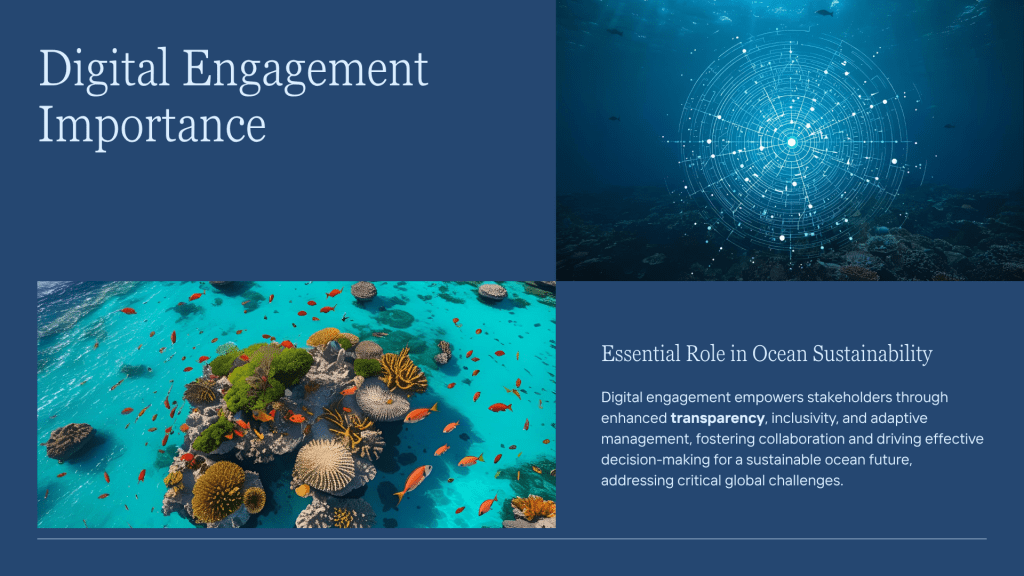
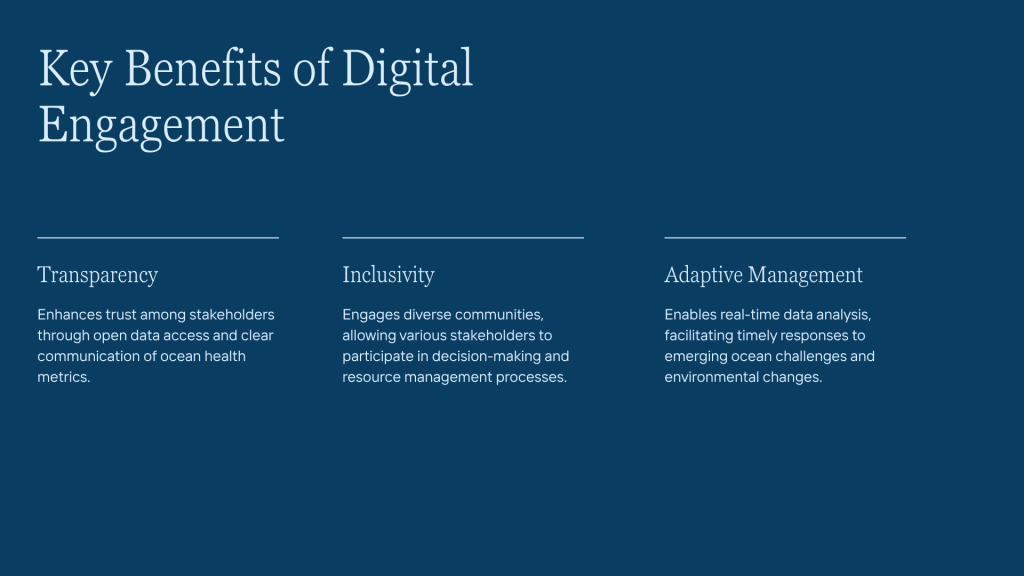

The big idea: Sustainable Ocean Plans (SOPs)
Think of a Sustainable Ocean Plan as a country’s master playbook for the sea: one framework that connects science, communities, industries, and government so decisions add up to a thriving ocean and thriving coastal livelihoods. The Handbook positions SOPs as an “umbrella” that aligns policies and tools across sectors (fisheries, tourism, shipping, conservation, climate, energy) to deliver whole-of-ocean stewardship.
The Handbook operationalizes the IOC-Wide Strategy on Sustainable Ocean Planning and Management (SOPM) for 2025–2030, reinforcing global targets like the UN Decade of Ocean Science (2021–2030) and the 30×30 biodiversity goal.
What makes SOPs different
- Total coverage: They aim at sustainable management of all waters under national jurisdiction 100%.
- Practice over posture: Clear actions, roles, budgets, indicators, and timelines.
- Participation by design: Inclusive processes for local and Indigenous communities, women and youth, and ocean-dependent workers.
- Adaptive backbone: Plans are updated as climate, ecology, and economies change.
The Data Mandate: Ocean Accounts and Digital Baselines
A Sustainable Ocean Plan is only as good as the information it’s built upon. The Handbook elevates the concept of Ocean Accounts as a central, critical methodology.
What are Ocean Accounts? They provide a framework to systematically measure the state of the ocean and the contribution of the ocean economy (economic, environmental, and social) using standardized indicators.
This shift means policymakers are no longer flying blind. Instead, Ocean Accounts, enabled by digital tools, allow countries to:
- Measure Performance: Track progress towards sustainable management consistently over time.
- Identify Critical Areas: Provide the evidence needed to establish Marine Protected Areas (MPAs) and support spatial planning decisions.
- Value the Ecosystem: Measure not just the economic output of sectors like fishing, but also the intrinsic value of ecosystem services from mangroves, coral reefs, and coastal habitats.
For the SaveOCEAN community, this is a clear call: we must mobilize our citizen science data, AI analysis, and digital platforms to feed these Ocean Accounts, ensuring the baseline data is robust, real-time, and truly representative.
The five digital practical steps
The Handbook outlines five practical steps that nations must follow to create a Sustainable Ocean Plan. We see technology as the accelerator for every single phase:
| Step | Core Goal | Digital interpretation (SaveOCEAN) |
| Setting Objectives & Scope | Define the shared vision and policy goals. | Use digital collaboration tools to ensure inclusive participation from all stakeholders, including marginalized voices, right from the start. |
| Financial Planning | Secure funding and align resources. | Use data dashboards to transparently demonstrate the ROI of sustainable ocean investments and track resource allocation to priority areas. |
| Defining the Baseline | Collect and analyze all relevant data (environmental, social, economic). | Deploy AI and geospatial mapping tools to integrate diverse datasets for robust future scenario analysis. |
| Building the Plan | Integrate objectives, data, and strategies into a unified, adaptive plan. | Utilize open-source platforms and toolkits to help practitioners draft, share, and continually refine the plan in an iterative, transparent manner. |
| Implementation & Action | Develop a roadmap, monitoring, and evaluation (M&E) system. | Establish real-time digital monitoring systems to track indicators and provide rapid feedback, enabling truly adaptive management of marine resources. |
Signals of success (how to know it’s working)
- Nature rebounds: Seagrass and mangroves expand; bycatch and illegal fishing decline; reefs hold on through heatwaves.
- People prosper: Small-scale fishers report higher net income and safer seas; blue-collar port and tourism jobs become more secure.
- Conflicts cool down: Clear rules reduce gear clashes and user disputes; permitting is faster and fairer.
- Trust grows: Communities see monitoring data and budget flows; co-management councils make real decisions.
How you can get involved, today
- Join local monitoring, from beach-plastic transects to catch diaries and reef checks — your data powers better policy.
- Back frontline groups with time or funds; demand that blue finance reaches communities, not just consultants.
- Stay curious — read the Handbook’s summary, then bring one idea (e.g., a youth ocean council or a seagrass levy) to your next town hall.
The tide we choose
This Sustainable Ocean Plan framework provides governments with the how-to guide. But sustainable ocean management is only effective if it is inclusive, equitable, and knowledge-based.
If we build SOPs well, we won’t just use the ocean; we’ll grow with it — restoring nature, strengthening communities, and navigating uncertainty together.
That’s the SaveOCEAN future: practical, inclusive, and relentlessly curious about better ways to care for our one blue planet.
Questions we should be asking further
- How can we ensure that the Sustainable Ocean Plans in your region are not just paper documents, but living, dynamic strategies powered by the best available science and the most diverse inputs?
- Whose knowledge guides the plan? What changes when Indigenous sea tenure and traditional practices are treated as foundational knowledge, not an afterthought?
- What does “100% sustainable” really mean locally? How do offshore wind, MPAs, artisanal fisheries, and shipping coexist in the same seascape?
- Can finance be fair? Which revenue tools (blue carbon, tourism fees, access rights) protect nature and lower costs for small-scale fishers?
- Are we measuring what communities value? Beyond biomass and GDP: safety at sea, cultural continuity, youth jobs, access to the beach.
What specific data or insights do you think your nation’s SOP needs most? Let us know how we can help you turn that data into impact.
#SaveOCEAN #SaveOCEANAlliance
Sources & further reading
- IOC-UNESCO news on the launch of the Handbook on Sustainable Ocean Plans (31 Oct 2025). ioc.unesco.org
- Ocean Panel publication page for the Handbook on Sustainable Ocean Plans: A Practitioner’s Guide. Ocean Panel
- WIOMSA note summarizing the Handbook’s five-step process. blog.wiomsa.net
- OceanAccounts summary of the Handbook’s purpose and audience. oceanaccounts.org
- Eurocean brief on the SOP approach and 100% sustainable management ambition. Eurocean
 SaveOCEAN
Leave a comment