

The Dubai Future Forum, Day 1 made one thing very clear:
- Everyone is redesigning the next 10–20 years: health, energy, cities, finance, even how we think about consciousness.
If the ocean isn’t in those blueprints, it gets treated as scenery, not infrastructure.
Our job at SaveOCEAN is to make sure the ocean is in the room whenever the future is being planned.
1. A new scoreboard for countries: “national cognitive potential” attention as a new battleground
The opening keynote from Khalfan Belhoul, CEO of Dubai Future Foundation, tries to rewrite how we think about national power. He says the real advantage in the age of AI is that countries will compete less on raw GDP and more on collective cognitive strength, meaning
how well societies focus, collaborate, and read weak signals.
A few big threads from his talk:
- Focus as currency: in a world where every app is trying to steal seconds from your day, the countries that can protect deep focus (through education, culture, policy) will win.
- Experts are changing: authority won’t just be whoever has the biggest title, but the people who can read weak signals early and make sense of them.
- Belonging becomes infrastructure: social bonds aren’t “nice to have”; they’re part of national competitiveness because innovation is a team sport.
He folds this into another idea: superforecasting – the discipline of noticing tiny shifts long before they show up in the headlines. If you can see the quiet changes early, you get to shape them; if you don’t, you just react.
Why SaveOCEAN cares
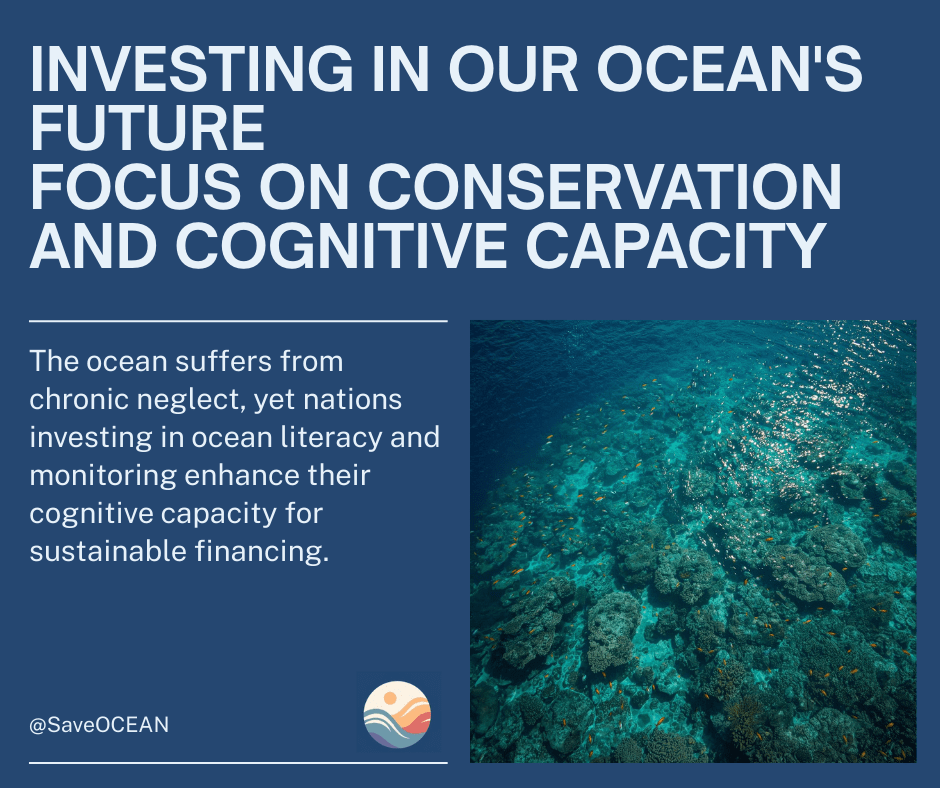
- The ocean suffers from a chronic attention deficit. It’s out of sight, so it’s out of mind.
- If attention becomes a measurable national asset, we can argue that:
- Nations that invest in ocean literacy, data, and monitoring are actually boosting their cognitive capacity.
- Digital ocean observation networks become strategic infrastructure, not “nice-to-have” projects.
2. Rebuilding the foundations: Our Natural Home
The first major plenary, “Building a Regenerative Society,” pushes on a very old anxiety: what if we’ve already broken too much?
Their core point: our systems are still largely extractive, designed to squeeze value out of people and nature. A regenerative society would flip that: restore ecosystems, repair social fabric, and design economies that actually get stronger the longer they run.
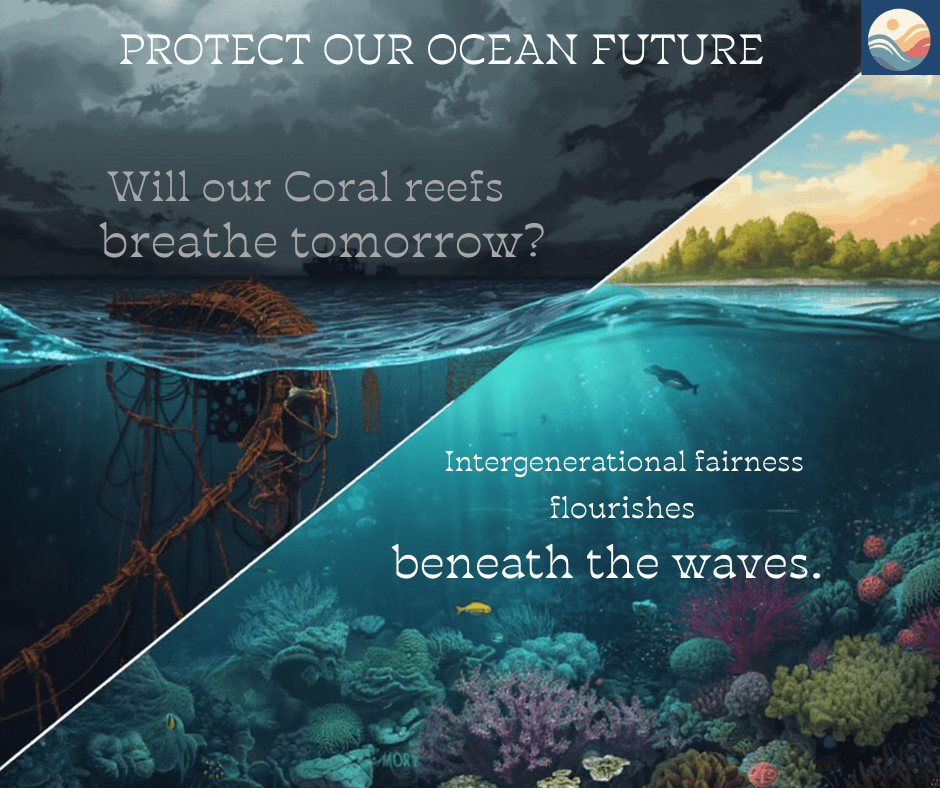
Then comes “Governance for the Long Term: How Can We Ensure Intergenerational Fairness?” remind everyone that “future generations” is not an abstract concept when your country is literally at risk of sinking.
Taken together, these sessions are wrestling with the same question from two angles:
- How do you design policies that still make sense in 2050?
- And how do you make sure the people who’ll live with those policies actually have a say now?
Why SaveOCEAN cares
- The ocean is the test case for both ideas:
- Overfishing, pollution, deep-sea mining = classic extraction.
- MPAs, blue carbon, habitat restoration = regeneration in practice.
- Intergenerational fairness is literally about whether:
- Coral reefs still exist.
- Coastal communities still have fisheries.
3. Health as design, not destiny
One of the most striking moments of the day is a session on gene editing which might let us cure many genetic diseases in one shot, but the hard part is ethics, access, and governance.
Why SaveOCEAN cares
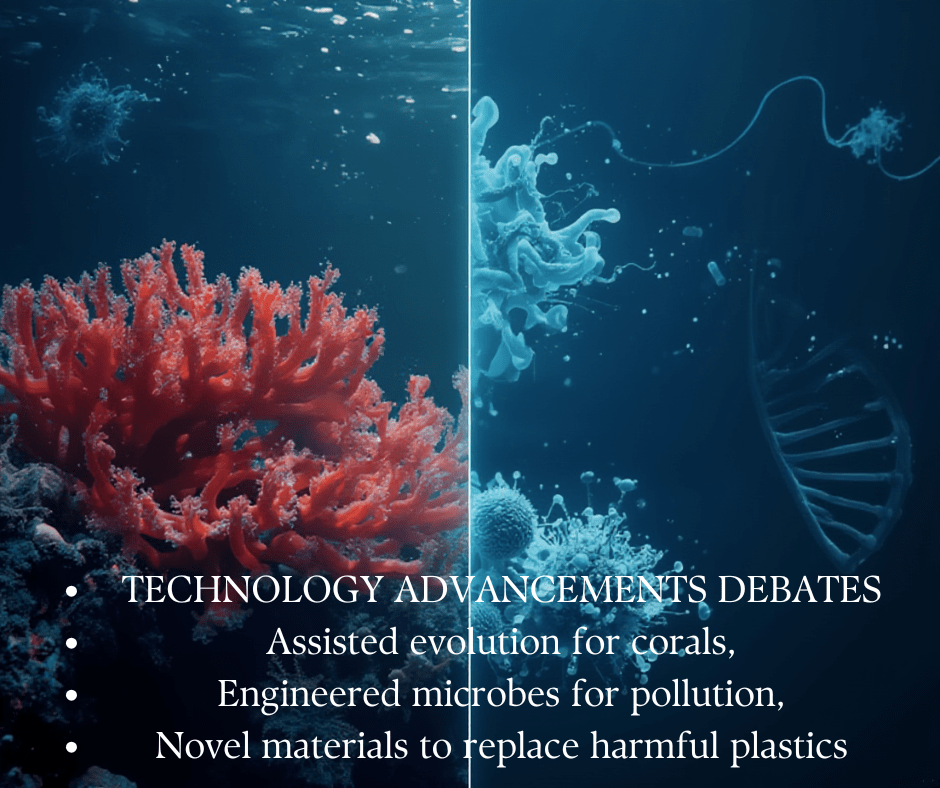
- We’re heading toward similar debates in the ocean space:
- Assisted evolution for corals,
- Engineered microbes for pollution,
- Novel materials to replace harmful plastics.
- The health sector is already working through:
- How to price “one-time cures.”
- How to govern powerful tools without freezing progress.
SaveOCEAN’s core concern is to prepare for the inevitable deployment of these powerful, potentially game-changing tools (like engineered microbes and novel materials) by learning from the struggles of the health sector—specifically, how to price these high-value, high-impact solutions and how to govern them effectively without stifling the necessary progress.

4. Futures & Consciousness – Winning Hearts, Not Just Grants
In “Mapping Inner Worlds: Can We Decode Human Consciousness?” neuroscientists Giulio Tononi and Anil Seth, together with Dawn Nakagawa from the Berggruen Institute, tackle the question that both philosophers and AI engineers secretly obsess over: what is a conscious experience, really?
A few threads:
- Consciousness isn’t just “lights on / lights off.” It might be better thought of as a structured pattern the brain builds moment by moment.
- If we can formalize that pattern, we might be able to measure or simulate aspects of consciousness — which has huge implications for AI, medicine, and even law.
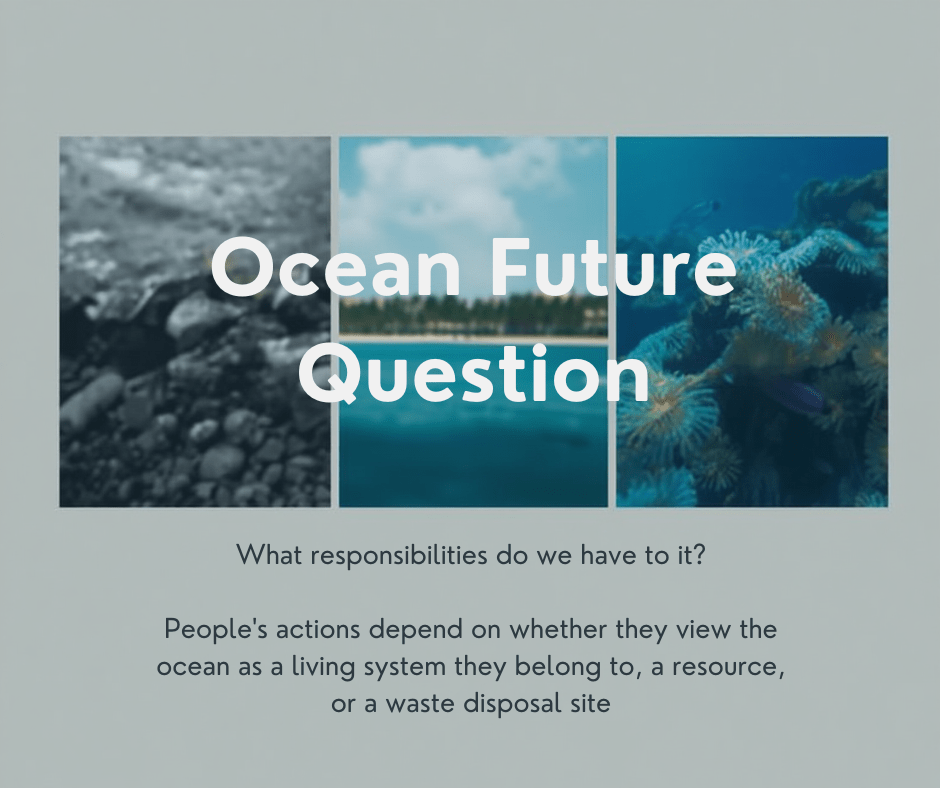
- But every attempt to define it runs into big philosophical landmines: if your framework says a system is conscious, what responsibilities do we have to it?
Why SaveOCEAN cares
- Ocean conservation is not just a data problem; it’s a story and identity problem:
- Do people see the ocean as a dumping ground, a luxury view, or a living system we belong to?
- Futures literacy matters:
- If the only ocean futures people picture are “endless growth” or “total collapse,” they’ll either ignore it or despair.
5. Systems, markets, and oceans: zooming out to the planet
The common thread: every system we rely on — health, trade, climate, oceans — is being stress-tested at once. The forum is less about doom and more about design: if we know that, what do we build differently?
Key ideas:
- Foresight shouldn’t live only in think-tanks; it should show up in schools, city halls, boardrooms.
- Different cultures already have long-term thinking embedded in their traditions; futures education should build on that, not overwrite it.
- The goal is less “predict 2035 exactly” and more “help people see multiple plausible futures and act wisely today.”
- Ocean Breakthroughs: What Futures Await Beyond the Depths?” zooms from space-like deep-sea environments to climate resilience, biodiversity, and the emerging “blue economy.”
Why SaveOCEAN cares
- The ocean drives key global systems—climate, biodiversity, and fisheries—all of which are facing disruptive change.
- As markets shift and investors/consumers increasingly demand verified ocean impact (mirroring the carbon revolution), SaveOCEAN leads the necessary futures literacy.
- By framing challenges like deep-sea environments and the “blue economy” within a range of potential outcomes, SaveOCEAN empower stakeholders to make strategic, future-proof decisions that safeguard the ocean

6. Prototypes for Humanity: making the future tangible
The day closes on a concrete note with “Prototypes for Humanity” and the Dubai Future Solutions awards, which take 100 university-born innovations from around the world and spotlight a handful of winners. These range across energy, health, circular economies, and urban systems, all designed as real tools rather than thought experiments. The symbolism is effective: after hours of theory about futures, you end the day walking past physical prototypes built by young people who decided not to wait for permission.
Why SaveOCEAN cares
- Hidden in those projects are:
- The next generation of ocean sensors, materials, cleanup systems, and biodiversity tools.
- Many of these innovators have technology, but no:
- Access to real-world ocean testbeds.
- Policy context.
- Business model or investor network.
SaveOCEAN’s mission is to bridge this gap, acting as the essential accelerator that connects raw technology with the operational environment, regulatory framework, and funding needed to move these vital prototypes from the lab bench to effective deployment in the ocean. This embodies the principle of not waiting for others to solve global challenges.
So what’s the through-line?
In summary, Day 1 of the Dubai Future Forum is circling a few simple but uncomfortable truths:
Technology won’t save us if our attention, institutions, and relationships are brittle. That’s the “national cognitive potential” argument.
We’re on the brink of wild breakthroughs — from gene editing that could erase entire classes of disease to tools that probe consciousness but the hard part is governance, not gadgets.
The future is no longer a niche topic. It’s showing up in education policy, city planning, health systems, and even how teenagers choose between asking a teacher and asking AI.
And beneath all of it is a choice: do we treat the next decade as something that happens to us, or as a design brief?
The forum showed that the next decade is being scripted right now — in health, governance, tech, and markets.
Our job at SaveOCEAN is to make sure that in every one of those scripts, the ocean is not a backdrop, but a main character and that we’re the ones helping write its lines.
#Saveocean
 SaveOCEAN
Leave a comment