
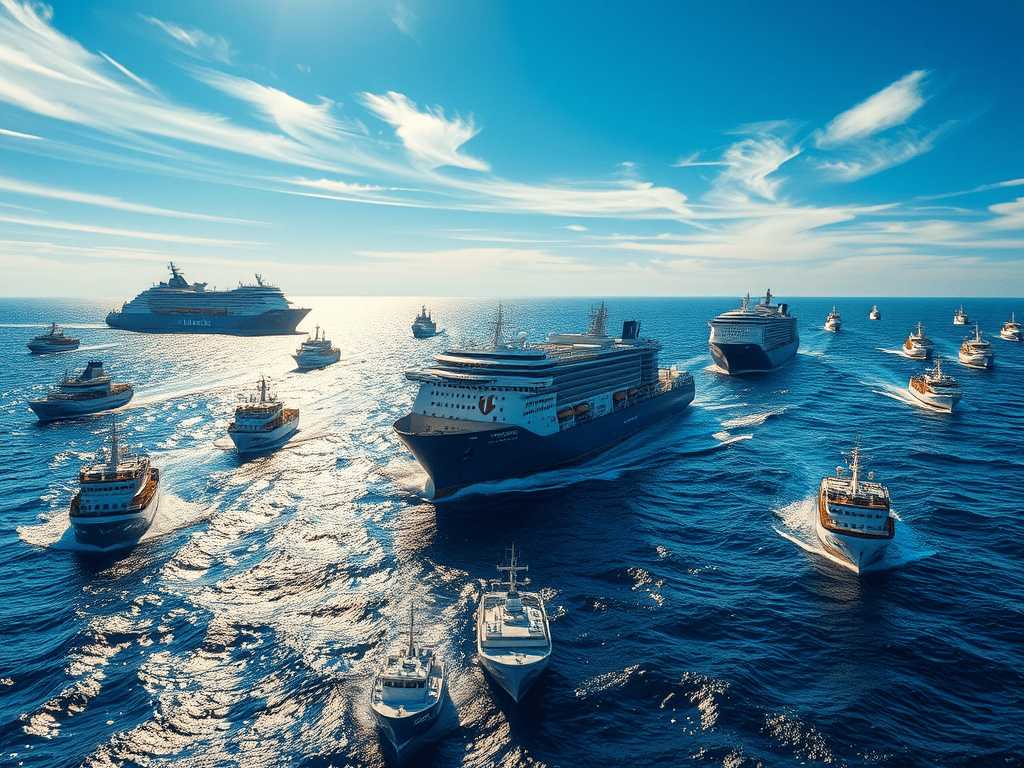
When you picture ocean science, you might imagine research vessels and high-tech buoys. But the next big leap in understanding our changing seas may come from an unexpected source: the commercial ships that already cross our oceans every day.
At the Third United Nations Ocean Conference (UNOC3) in Nice, a new initiative called “10 000 Ships for the Ocean” was launched with an ambitious goal: to equip 10,000 commercial vessels with meteorological and oceanographic sensors by 2035.
These ships will act as mobile observatories, continuously feeding real-time data into the Global Ocean Observing System (GOOS), the worldwide backbone for tracking the state of our oceans.
Why this matters
Despite all our technology, vast areas of the ocean are still poorly monitored. Forecast centers currently use far fewer data points over the sea than over land to predict the weather, which limits our ability to model storms, waves and currents accurately. That gap makes shipping riskier, weakens early-warning systems and leaves major blind spots in our climate understanding.
By turning merchant ships into observing platforms, the initiative promises to:
- Improve weather and ocean forecasts, making navigation safer and more efficient.
- Strengthen early warning systems for extreme events like storms and marine heatwaves.
- Provide critical data for climate research, including sea-level rise and ocean warming.
- Support Sustainable Development Goal 14, which calls for conserving and sustainably using the ocean.
In short, better data means better decisions—for captains at sea, for coastal communities, and for global climate policy.
A powerful public-private alliance
The 10,000 Ships initiative is backed by heavyweight institutions: the World Meteorological Organization (WMO), the Intergovernmental Oceanographic Commission (IOC) of UNESCO, and the International Maritime Organization (IMO).
Crucially, the initiative is already moving from concept to reality. Nearly 500 ships have been pledged by major operators such as MSC, Maersk, SMT, Höegh Autoliners, Brittany Ferries and Alcatel Submarine Networks.
These early adopters are sending a clear message: contributing to ocean science is no longer a niche activity – it’s part of responsible, modern shipping.
For participating companies, the benefits go beyond goodwill. Access to better met-ocean information can improve route planning, reduce fuel use and emissions, and enhance onboard safety—directly supporting both the bottom line and sustainability goals.
The tech challenge—and opportunity
Outfitting 10,000 ships with sensors is not just a numbers game. It will generate a huge flow of new data that must be standardized, quality-checked and integrated into existing systems. That means creating common technical specifications, plug-and-play equipment and digital tools that work for both scientists and fleet managers.
Experts involved in the initiative highlight the role that automation and artificial intelligence will play in handling and interpreting this growing data stream—turning raw measurements into actionable information for navigation, forecasting and climate services.
What happens next
The organizers have laid out several immediate priorities:
- Engage more shipping companies through targeted outreach and bilateral discussions.
- Build a unified governance model so that governments, industry and science agencies can coordinate effectively.
- Co-design an implementation roadmap with clear milestones, technical standards and responsibilities.
- Host a high-level summit to align on governance, technology choices and financing mechanisms.
The long-term vision is a truly global, sustained observing system in which ships, buoys, satellites and robotic floats work together to monitor the ocean from surface to seafloor.
How can you support?
Even if you don’t own a fleet, you can help this initiative succeed:
Raise awareness in the maritime community.
- Share information about the 10,000 Ships initiative with contacts in shipping, logistics, ports and insurance.
- Encourage companies to see participation as part of their ESG and climate-risk strategies.
Advocate for supportive policies.
- Call on national governments and maritime authorities to provide incentives—such as funding, tax benefits or recognition schemes for ships that contribute data to GOOS.
Support open ocean data.
- Champion policies that keep met-ocean data open and accessible, so that scientists, coastal planners and local communities can all benefit.
Connect initiatives.
- Link 10,000 Ships with other ocean-monitoring efforts, such as the Argo float program, citizen-science projects and plastic-pollution monitoring, to build a richer, more integrated picture of ocean health.
Tell the story.
- Use your platforms blogs, classrooms, social media to highlight how everyday commerce can also be a force for ocean stewardship.
A chance to turn every voyage into a climate action
The ocean is our planet’s life-support system, but we cannot protect what we cannot measure. The 10,000 Ships for the Ocean initiative offers a simple but transformative idea: every voyage can double as a scientific mission. Every container ship, ferry or car carrier equipped with sensors becomes another “eye” on the sea, helping us navigate a warming, rising and increasingly unpredictable ocean.
For SaveOcean.net, this is exactly the kind of partnership the world needs—bringing together science, industry and civil society to secure a healthier ocean for future generations.
To learn more or see which companies have already joined, visit 10000ships.org and explore how your organization, community or country can help build the ocean observing fleet of the future.
 SaveOCEAN
Leave a comment