
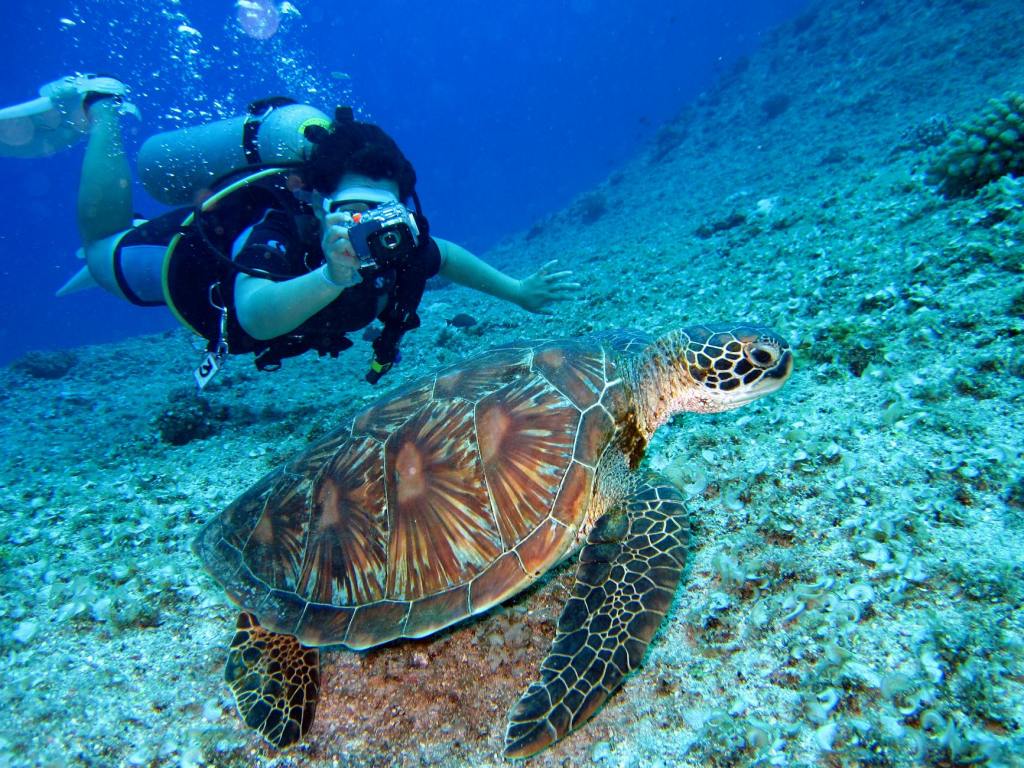
The ocean doesn’t need our admiration.
It needs our follow-through.
Here’s the part most people don’t realize:
The ocean has been quietly buffering the damage for us.
- It has absorbed more than 90% of the excess heat trapped in the climate system.
- It has taken up around a quarter of our CO₂ emissions.
- And over the last 100 years, that CO₂ uptake has made the ocean about 26% more acidic on average.
That’s the trade.
The ocean protects us… and pays the price.
So when someone asks, “How can we save the ocean?”
I don’t start with guilt. I start with leverage.
Because the ocean doesn’t need one heroic solution.
It needs millions of small, coordinated decisions that hit the biggest drivers first.
Here are the levers that actually move the needle — the ones we can measure, scale, and hold ourselves accountable to.
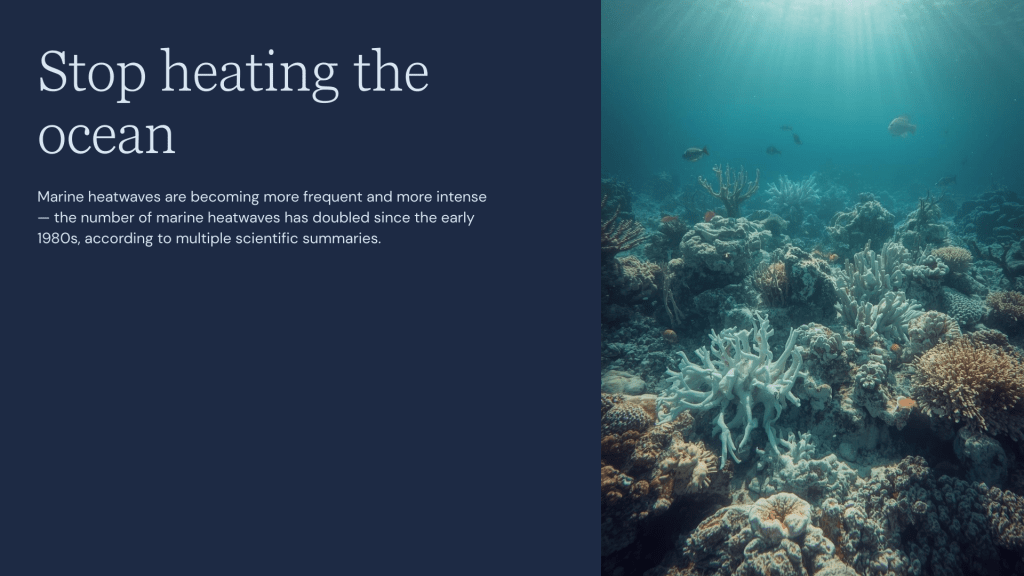
1) Stop heating the ocean
This is the root system.
Marine heatwaves are becoming more frequent and more intense — the number of marine heatwaves has doubled since the early 1980s, according to multiple scientific summaries.
You can clean beaches forever, and the ocean will still bleach coral and shift ecosystems if the water keeps warming.
Saving the ocean means:
- decarbonizing energy and transport
- cutting methane
- treating “net zero” like an operations plan, not a slogan
This is not “climate” over here and “ocean” over there.
It’s the same story.
2) Slow acidification (because chemistry doesn’t negotiate)
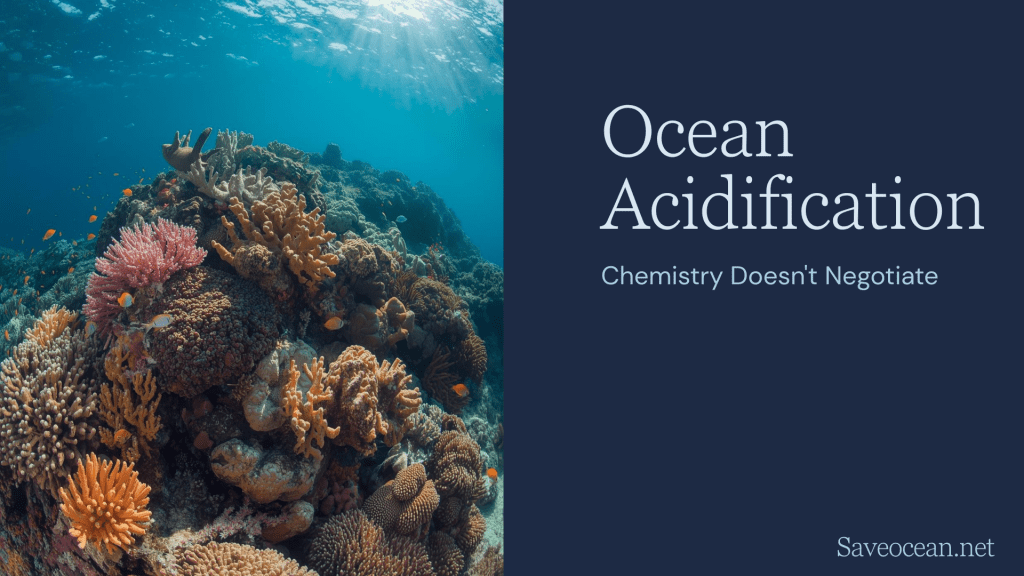
When the ocean absorbs CO₂, it changes its chemistry. That’s what “ocean acidification” is.
The average ocean is still basic (pH ~8.1), but it’s trending downward — and that shift makes it harder for many shell-forming organisms and corals to build and maintain structure.
Some actions to remember:
- Less fossil CO₂ in the air = less acidification in the sea.
- But CO₂ isn’t the only thing lowering pH. Sulfur and nitrogen oxides (SOx/NOx) form strong acids that can contribute to regional/coastal acidification, particularly along busy shipping lanes.
- Promote for stricter fuel standards, Emission Control Areas (ECAs), port electrification, cleaner engines and after-treatment.
- Reduce nutrient runoff and organic pollution that drive coastal acidification.
- Upgrade wastewater treatment and consider effluent pH as a policy lever
- Restore and expand seagrass, kelp, and other “blue habitats” to create local refuges
3) Stop dumping what we wouldn’t drink
Plastic gets all the headlines — and yes, it matters.
UNEP estimates ~11 million tones of plastic enter the ocean every year.
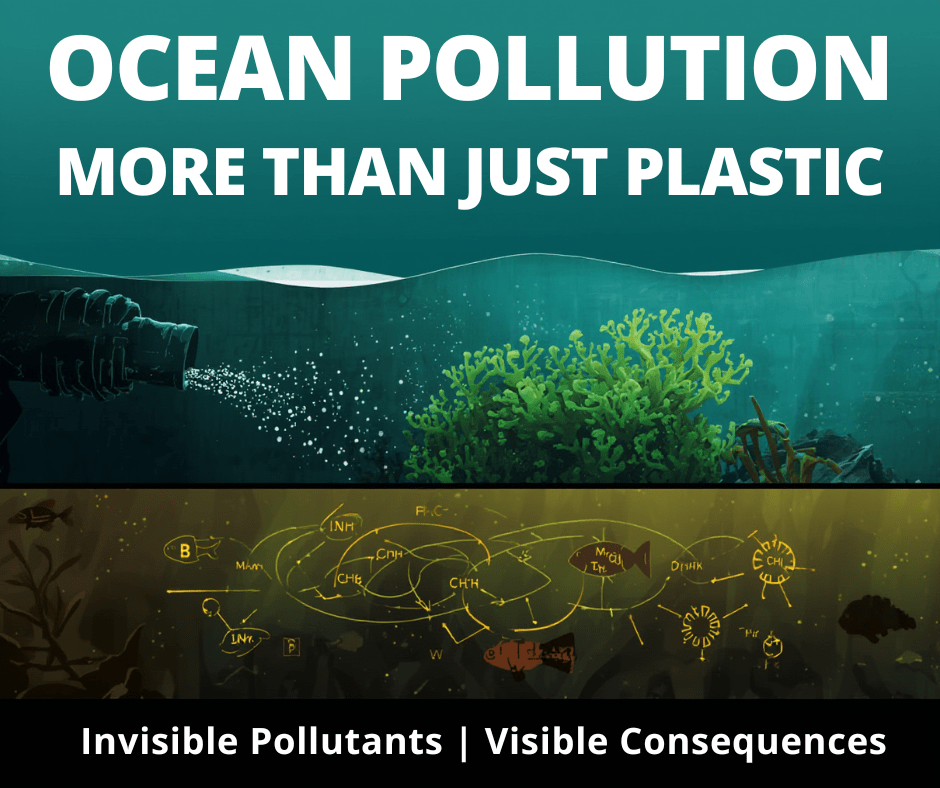
But “ocean pollution” is bigger than plastic:
- untreated wastewater
- fertilizer runoff that fuels algal blooms
- chemicals that don’t belong in food webs
Even “invisible” pollution has visible outcomes. Human-driven nutrient pollution is a major cause of coastal dead zones.
If you want an ocean that can feed people in 20 years, you don’t poison its nursery today.
4) Stop emptying the ocean (and fish smarter, not harder)
Overfishing isn’t a morality tale. It’s a management problem.
FAO’s latest global assessment reports 35.5% of fish stocks are overfished, while 64.5% are within biologically sustainable levels — and places with effective management do dramatically better. fao.org
Translation:
When we manage fisheries well, the ocean can recover.
When we don’t, we get collapse, conflict, and food insecurity.
What works (again and again):
- science-based catch limits
- stronger monitoring and enforcement
- reducing bycatch
- eliminating illegal, unreported, and unregulated fishing
5) Give nature space to rebound (and make protection real)
We love announcing protected areas.
But the ocean doesn’t recover from press releases.
Global figures vary by how “protected” is defined, but the documented protected share of the ocean is still under 10% — around 8.4–8.5% in recent Protected Planet/UNEP reporting.
And “protected” only matters if it’s enforced and well-designed.
Effective protection looks like:
- the right places (spawning grounds, nurseries, biodiversity hotspots)
- the right rules (not “paper parks”)
- the right monitoring (so we can prove outcomes)
6) Restore the ocean’s quiet superpowers (mangroves, seagrass, wetlands)
If you’ve ever stood near a mangrove forest, you’ve felt it.
Stillness. Density. Life.
These coastal ecosystems punch above their weight:
NOAA summarizes research suggesting mangroves and coastal wetlands can sequester carbon at rates far higher (even ~10x) than mature tropical forests, and store multiple times more carbon per area. oceanservice.noaa.gov
Restoring them is not just “nice.”
It’s practical:
- carbon storage
- storm protection
- fish habitat
- water filtration
7) Measure what matters — and make it social
This is the part SaveOCEAN cares about most.
Not because data is a fashion trend.
But because data turns good intentions into accountability.
The ocean is big. That’s why we get away with vague promises.
So we need:
- shared baselines (where are we starting?)
- clear metrics (what will change?)
- transparent reporting (did it work?)
- community context (who benefits, who bears the risk?)
And we need to remember the human truth behind every chart:
Scientists estimate roughly half of Earth’s oxygen production comes from the ocean, largely via plankton. oceanservice.noaa.gov
That’s not a fun fact.
That’s a dependency.
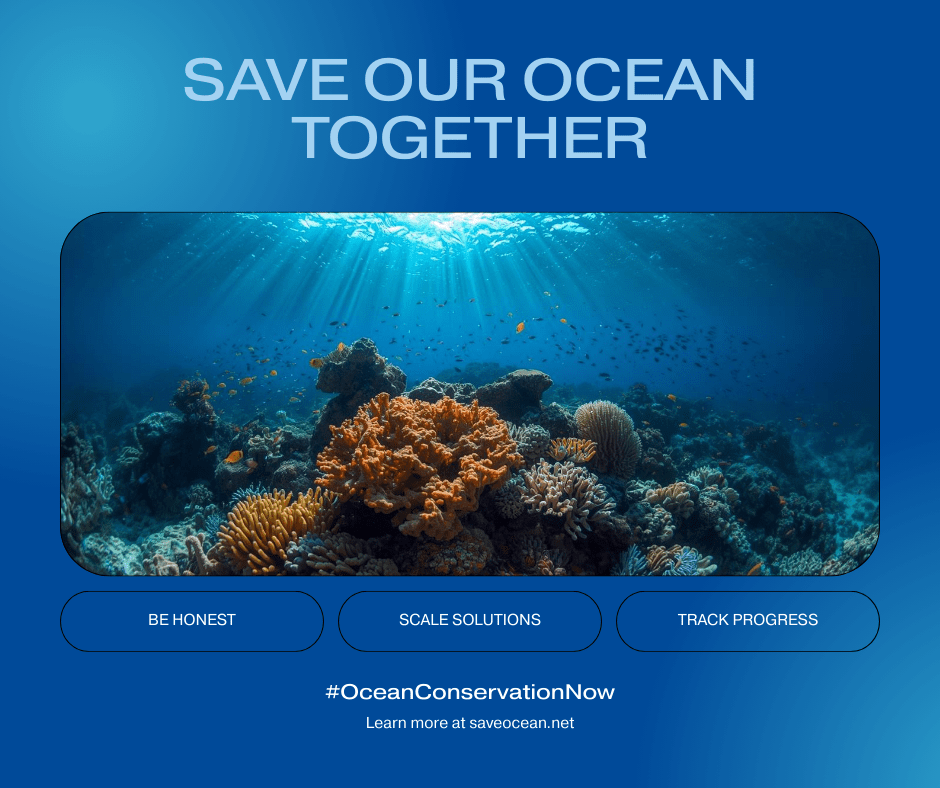
So… how do we save the ocean?
We do it the way we save anything we actually love:
By being honest about what’s driving the damage.
By choosing interventions that scale.
By tracking progress like it matters.
And by refusing to let “someone should” replace “we will.”
Because we cannot negotiate with nature.
But we can negotiate with each other — and decide that evidence will guide the “what,” and empathy will keep us steady on the “why.”
 SaveOCEAN
Leave a comment