As we navigate through 2025, the question everyone at SAVEOCEAN is asking is simple: Is it finally getting better?
If you look closer, past the headlines of doom, you will see something else. You will see movement. You will see resilience. For the first time in decades, it feels like the relentless tide of pollution is beginning to show. The honest answer is that we are in the middle of a high-stakes race. While the volume of plastic in our oceans is still staggering, estimated between 75 and 199 million tons this year, 2025 has become a historic “tipping point” for action. We are seeing more debris removed and more territory protected than ever before in human history.
We haven’t won the war, but in 2025, we stopped retreating and started advancing.
Current Measures: What Are We Doing Right?
In 2025, we shifted from “talking about the problem” to “enforcing the solutions.” Here are the three pillars currently holding the line:
The Global Plastics Treaty (INC-5.2)
In August 2025, representatives from 175 nations gathered in Geneva for the final negotiations of a legally binding treaty to end plastic pollution. Unlike previous voluntary agreements, this treaty targets the entire lifecycle of plastic—from the moment it’s produced to how it’s disposed of. This opens the door to protecting the “Wild West” of the open ocean.
- The Goal: A 30% reduction in microplastic releases by 2030.
- New Laws: As of December 2025, the EU has implemented strict new rules on plastic pellets (the raw “nurdles” used to make plastic) spills during shipping, treating them as hazardous waste.
Fisheries Subsidies Ban
New WTO regulations officially took effect this year, cutting off billions in government funding for industrial fleets that engage in overfishing.
High-Tech Interception
The battle has moved to the source. The Ocean Cleanup project has now deployed 20 Interceptor systems in the world’s most polluting rivers.
By stopping plastic in rivers before it reaches the sea, we are finally “turning off the tap.” ,
In the North Pacific, their latest AI-driven systems have improved collection efficiency by 60% compared to just two years ago.
The “High Seas” Gained Protection
Following the ratification of the High Seas Treaty, 2025 saw the designation of the first truly international Marine Protected Areas (MPAs) in waters beyond national jurisdiction. We are finally closing the governance gap that allowed the open ocean to be a lawless dumping ground.
The 30×30 Momentum
The global goal is to protect 30% of the ocean by 2030. As of late 2025, we have officially surpassed the 10% mark for Marine Protected Areas (MPAs). This means more “no-take” zones where ecosystems can recover without the interference of industrial fishing or deep-sea mining.
The Reality Check
We must be honest: The ocean is still running a fever. The climate crisis remains the ultimate threat to ocean health, exacerbating acidification and deoxygenation. While macro-plastic debris is being challenged, microplastics remain pervasive in the food web. The job is colossal.
2025: The numbers that matter
| Measure | 2025 Achievement | Impact Proof |
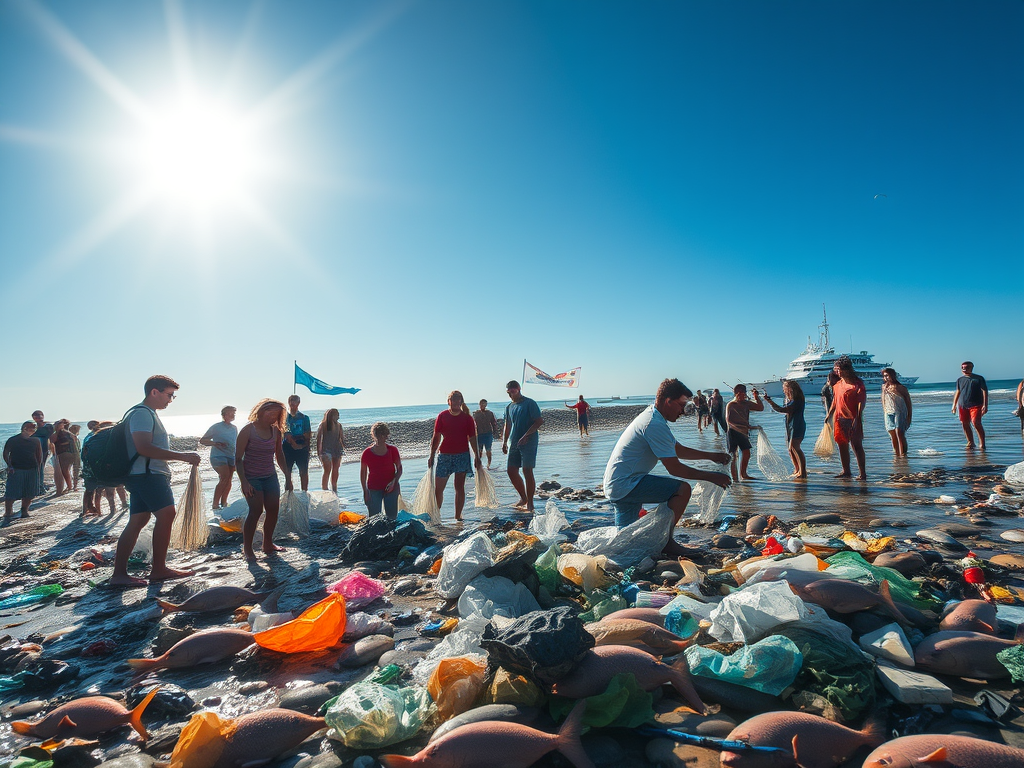
| Global Cleanup Events | 47.4 tons removed in one weekend | 53.3 miles of coastline restored in 25 countries. |
| Great Pacific Garbage Patch | 1 million+ lbs removed (cumulative) | Satellite imagery shows a measurable decrease in debris density in core “hotspots.” |
| Kelp Restoration | Nursery capacity doubled in Canada | Restored kelp forests are now absorbing carbon at twice the rate of previous years. |
| River Interception | 20 Interceptors active | Stopping plastic in the world’s 1,000 most polluting rivers. |
| Policy Inclusion | 92% of Island NDCs | Almost every island nation now includes ocean health in their climate plans. |
Key Fact: In 2025, a study of the Eastern Tropical Pacific found that while microplastics are still rising, the rate of increase in areas with active “river-to-ocean” barriers has begun to stabilize for the first time in a decade.
Voices from the Frontlines: User Stories
The data is impressive, but the human stories tell us why we keep fighting.
The Guardian of the Turtles: Bruno’s Story
In Brazil, Bruno Stefanis from Instituto Biota de Conservação spent his year on the beaches of Kauai and Alagoas. “We used to find five or six entangled turtles every week,” Bruno says. “After the 2025 Global Ocean Cleanup removed 47 tons of ghost nets from these habitats, those numbers dropped. Seeing a turtle return to the water without a plastic shroud is the only proof I need.”
Indigenous Leadership: The BC Fisheries
In British Columbia, four Indigenous-led small-scale fisheries achieved Ocean Wise Recommended status in 2025. By blending traditional knowledge with modern technology to track pollution, they have successfully kept their coastal waters cleaner than neighboring industrial zones. Their success proves that localized, community-led management is often the most effective tool we have.
Is it enough?
We are far from a “clean” ocean. Plastic production is still projected to rise, and microplastics remain a “hidden” enemy in our food chain.10 However, 2025 has proven that the technology works, the policy is forming, and the community is ready.
We are no longer just cleaning up the mess; we are redesigning our relationship with the sea.
What’s Next for 2026?
We aren’t slowing down.
If 2025 was the year we built the foundation, 2026 must be the year we build the house at breakneck speed. We cannot afford a “gap year.”
Here is our vision for the next 12 months:
From Treaty to Teeth: The new global plastics agreements mean nothing without enforcement. 2026 is the year we hold corporations and governments accountable to the new rules. No loopholes.
Tackling the Invisible: We must broaden the fight beyond bottles and bags. 2026 needs a major focus on agricultural runoff (dead zones) and pharmaceutical pollutants that are silently altering marine ecosystems.
The Blue Economy Pivot: We must aggressively invest in regenerative ocean farming (kelp and bivalves) that cleans the water while providing food, shifting away from destructive industrial fishing practices.
YOUR CALL TO ACTION
The ocean doesn’t need your pity; it needs your participation. The progress of 2025 didn’t happen by accident; it happened because millions of voices demanded it.
Do not let off the gas now.
- Localize the Global Fight: The new treaties are global, but implementation is local. Show up at town halls and demand your municipality adopt the strictest versions of new waste management standards.
- Vote with Your Wallet: The circular economy is growing. In 2026, make a hard commitment to support brands using 100% recycled or alternative materials, and boycott those resisting the change.
- Stay Loud: Hope is a discipline. Share the victories. Amplify the science. Don’t let the algorithm drown out the urgent need for ocean action.
The ocean has sustained humanity for millennia. It’s finally our turn to return the favor. The tide is turning because we are turning it together.
Let’s make waves in 2026.
 SaveOCEAN
Leave a comment