What the European State of the Climate 2025 just told us and why every wave is asking you to do something about it
A confession before we begin
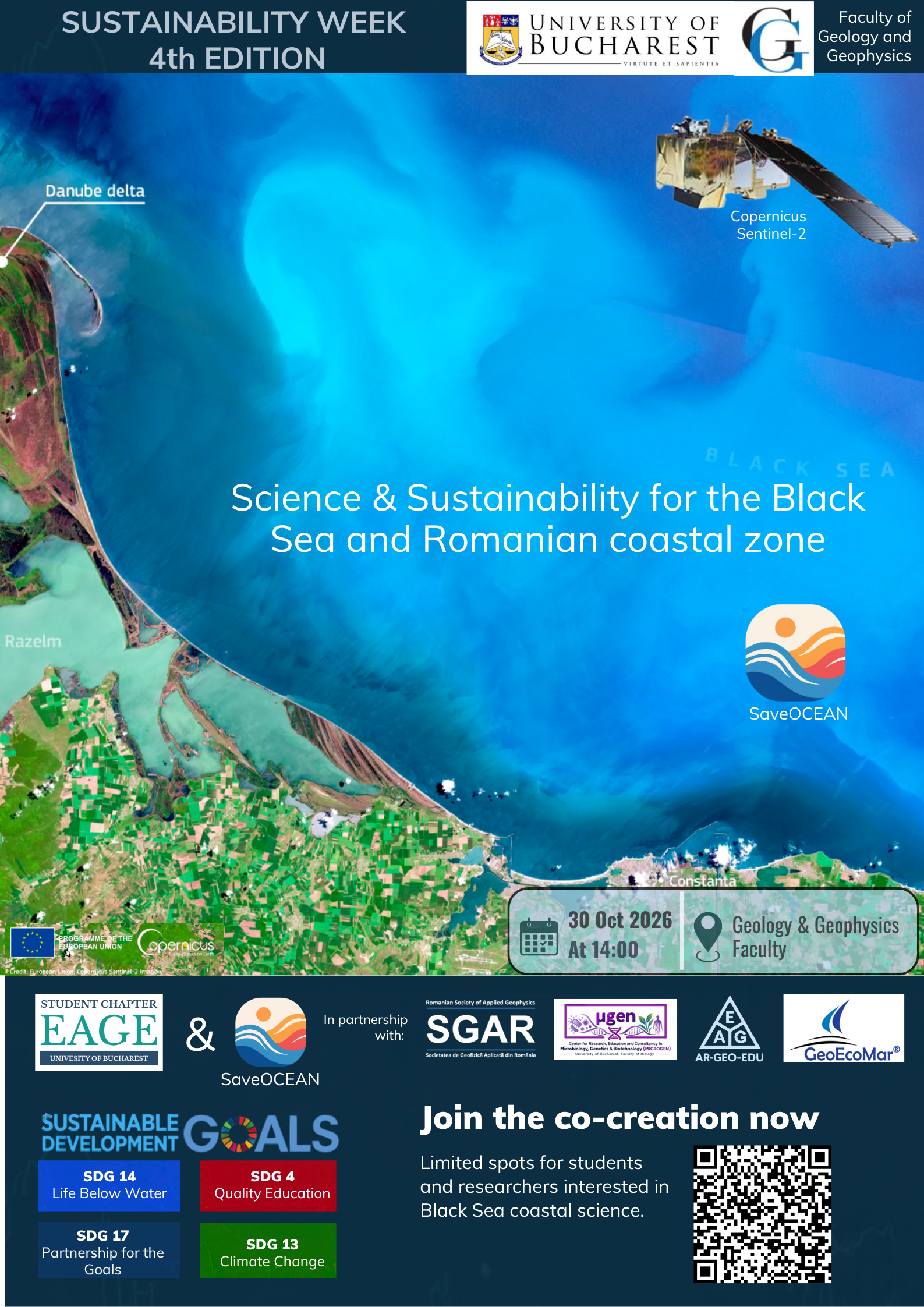
At SaveOCEAN, we believe saving the ocean starts with understanding it.
So we read the 173-page European State of the Climate 2025 — published by Copernicus and the World Meteorological Organization on 29 April 2026 — so you don’t have to.
Here’s what the data is telling us. Read to the end. There’s a way through this — but only if we move fast, and only if we move together.
The headline you can’t unsee
86% of Europe’s seas experienced at least “strong” marine heatwave conditions in 2025. The entire Mediterranean? 100% — for the third year in a row.
Let that sit for a second.
Not 86% of one country. Not 86% in one bad week. 86% of the entire European ocean region, from the Arctic Circle to the Strait of Gibraltar, cooked under marine heatwave conditions at some point during the year. Of those, more than a third — 36% of the region — reached “severe” or “extreme” categories. Both numbers are all-time records.
This isn’t a freak summer. This is the new shape of our seas.
Five numbers that should be on every front page
The report is rich, but five data points cut deeper than the rest:
1. 10.94°C — the average sea surface temperature across Europe’s seas in 2025. The fourth consecutive record-breaking year. The previous record (2024) didn’t even last twelve months.
2. +1.4°C — how much the Mediterranean has warmed since the 1980s. The global non-polar ocean has warmed by +0.6°C in the same window. The Mediterranean is heating more than twice as fast as the global ocean.
3. 15.5°C on 24–25 July 2025 — a record daily sea surface temperature in the Norwegian Sea, 3°C above average, the largest daily anomaly ever recorded for that sector. Water along the Norwegian coast hit 19°C. In the sub-Arctic.
4. 9.4 cm — global mean sea level rise since 1999. The rate has accelerated from 2.9 mm/year in 1999–2009 to 3.8 mm/year in 2015–2025. The ocean isn’t just warming — it’s swallowing coastlines faster than it was a decade ago.
5. Up to 75% — the share of suitable habitat that Posidonia oceanica, the Mediterranean’s foundation seagrass species, could lose by 2050 under high-emission scenarios. These are the meadows that store carbon thirty times faster than rainforests, hold up to 40,000 fish per acre, and protect coastlines from erosion. Already down 34% over the last 50 years.
If you only remember one number from this post, make it the third one. 3°C above average. Sub-Arctic. That’s the canary, and the cage door is open.
What’s actually happening underneath the surface
The ocean has been doing humanity an enormous, unpaid favour for the last 200 years: absorbing roughly 90% of the excess heat from greenhouse gas emissions. That’s why the air hasn’t warmed faster than it has. The ocean took the hit for us.
It can’t keep doing that.
In 2025, atmospheric CO₂ concentrations were higher than at any time in at least two million years. Methane was higher than at any point in at least 800,000 years. The ocean is now overcharged — its heat content hit a new global record in 2025, surpassing 2024’s record.
When the ocean stays this hot for this long, three things happen:
Marine heatwaves stop being events and become seasons. The proportion of European seas hit by marine heatwaves of any intensity has risen from an average of 40% in the 1980s to 98% from 2023–2025. What was once unusual is now the default state.
Foundation species collapse. The Mediterranean’s Posidonia seagrasses are dying. When the foundation crumbles, the apartment building falls — fisheries, biodiversity, coastal storm protection, carbon storage. All linked, all weakening at once.
Adjacent land heats up too. The Norwegian Sea marine heatwave in July 2025 reinforced the unusual heat over Fennoscandia, which experienced its longest heatwave on record. Hot ocean = hot land.
The silver thread — and yes, there is one
Here’s what gives us at SaveOCEAN reason to keep showing up every day:
Renewables supplied 46.4% of Europe’s electricity in 2025, with solar alone reaching a record 12.5%. The transition is not a fantasy. It’s happening and the data is on its side.
Conserved Posidonia meadows recover. The report explicitly notes that marine protected areas and restoration initiatives over the past decade have measurably stabilised meadows, increased species richness, and rebuilt nursery habitats. Conservation works when we actually do it.
Half of the EU Biodiversity Strategy 2030 actions are already in place or completed, with most of the rest underway. Policy can move when the political will is there.
The ocean is still savable. But “savable” and “saved” are different verbs, and the gap between them is closed by people, not hope.
What this means for you (yes, you, reading this)
Big reports can feel like watching a tidal wave from a long way away. Real, but abstract. Let’s translate.
If you’re an early-career professional or student: the next decade of ocean policy will be written by people in your generation. Show up. Apply for the fellowships. Get into the rooms.
If you’re a founder or investor: marine heatwaves are a financial risk. Insurance markets, fisheries, coastal infrastructure, tourism — all repricing. ESG-aligned ocean tech is one of the under-funded frontiers of the climate economy. SaveOCEAN’s work on AI-enabled ocean monitoring is built for exactly this moment.
If you’re just a person who loves the sea: tell the people in your life one number from this post. Sign up for a citizen-science programme. Reduce, refuse, vote, donate, talk. Every action compounds.
Read Copernicus’s full ESOTC 2025 report at climate.copernicus.eu/ESOTC/2025. https://lnkd.in/d4iVT5MK The interactive charts are worth your time.
Join the SaveOCEAN movement at saveocean.net
Share this post. The ocean has no lobbyists. It has us.
A final word from us
We started SaveOCEAN because we were tired of seeing the ocean we love be degraded without effective monitoring or timely intervention.
The ESOTC 2025 report confirms what fishers, divers, surfers, scientists, and coastal communities have been saying for years: the ocean is changing in front of our eyes, faster than the models predicted, and the window to act is now.
We will not be the generation that watched the Mediterranean become an aquarium of dead seagrass. We will not be the generation that lost the Norwegian Sea to fever dreams of summer.
We’re done with grey boxes. We’re building blue hearts.
Will you build with us?


🌊 SaveOCEAN — Transparent & Collective to Protect Every Wave.
Source: C3S/ECMWF and WMO, 2026: C3S-WMO European State of the Climate 2025, climate.copernicus.eu/ESOTC/2025, doi.org/10.24381/zy93-sb27
Data interpretation, framing, and editorial perspective by SaveOCEAN. All numbers cited are drawn directly from the ESOTC 2025 report.