The European Commission is about to make corporate reporting on plastic pollution functionally meaningless.
On 6 May 2026, the European Commission opened a four-week consultation on its revised European Sustainability Reporting Standards (ESRS 2.0) — the rules thousands of companies must follow when disclosing their environmental and social impacts under the Corporate Sustainability Reporting Directive (CSRD).
While an extent of streamlining was necessary, the draft introduces a critical oversight regarding marine health: it specifically exempts secondary microplastics—the absolute heart of the ocean plastic crisis—from the main reporting obligation..
Overall, the simplifications seen in the documentation includes:
- mandatory datapoints cut by more than 60%,
- total datapoints down over 70%,
- reporting costs reduced by roughly a third per company.

Our concern
Buried in the revised ESRS E2 pollution disclosures is a change that, at first glance, looks technical.
Under the revised ESRS E2 pollution disclosures, the Commission has decided that companies must only report on primary microplastics, those intentionally manufactured and added to products, such as microbeads in cosmetics or glitter. Secondary microplastics — the fragments that come from the breakdown of larger plastic items, from tyres, textiles, packaging, and fishing gear — are exempt. The Commission’s justification is feasibility and proportionality: secondary microplastics are too hard to measure at the corporate level. We get that, and yet we disagree.
Here’s the problem with that reasoning.
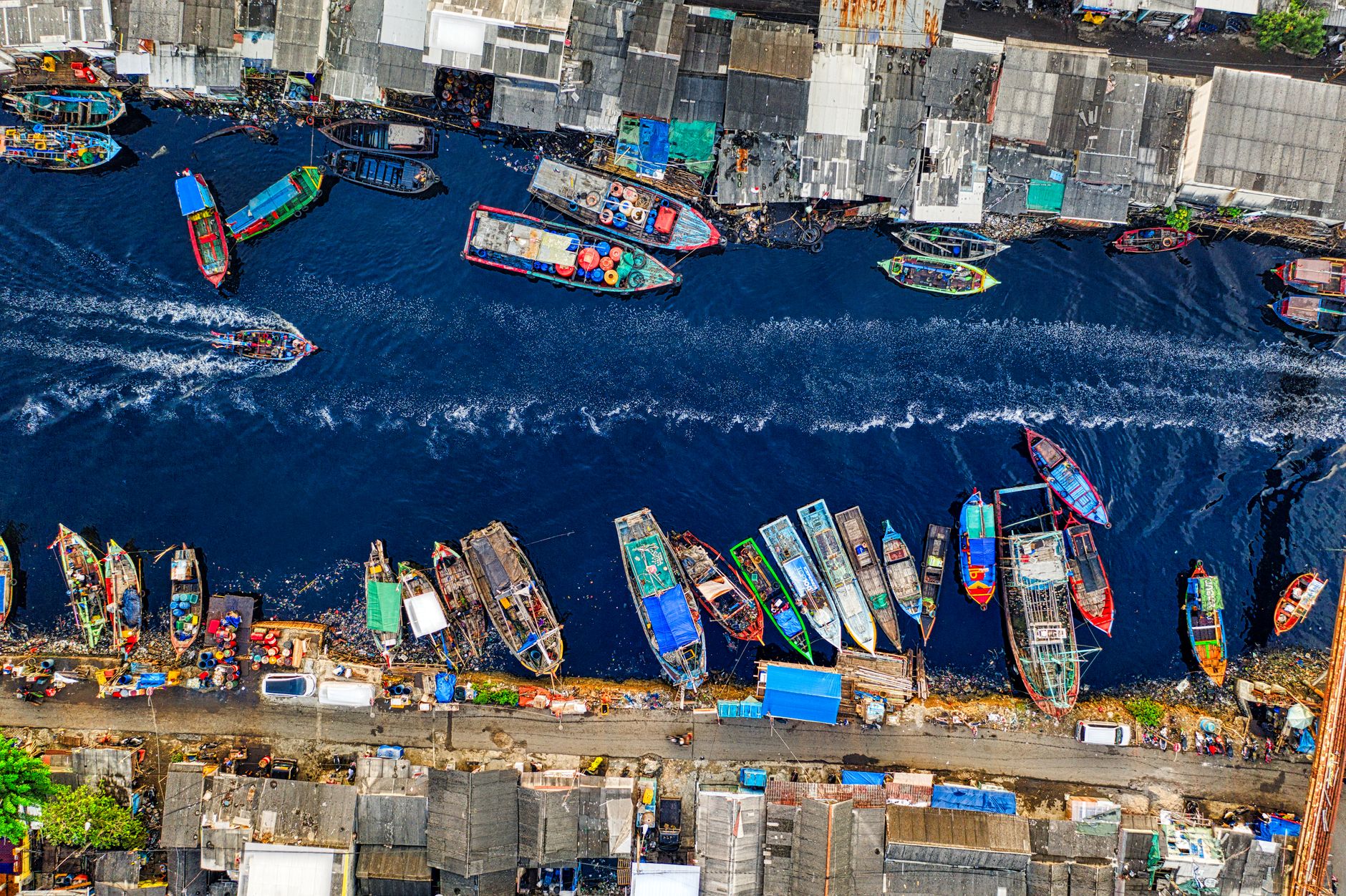
Secondary microplastics are not a footnote, but the main source of the marine plastics crisis. Tyre wear alone is among the largest single sources of microplastic pollution flowing into the ocean. Synthetic textile fibres shed through your weekly laundry cycle are another. Degraded packaging and ghost fishing gear account for vast quantities more.
Moreover, there are chemicals present in such microplastics. They add another layer to the problem. Floating through the Earth’s atmosphere, they land largely in the Arctic and Antarctic cold waters, where the issue is unjustifiably magnified, and bio-magnified.
“Secondary microplastics are what we humans are eating, drinking, and inhaling.”
For us in SaveOCEAN, we find it strangely disproportional. The demand is incomplete, if you ask only a cosmetics company to report on its glitter while exempting tyre manufacturers, fast-fashion brands, packaging giants, and industrial fishing operators from disclosing their microplastic contribution.
Boiling down to what this means to a big company – it can now publish a fully compliant ESRS sustainability statement that contains meaningless information about its actual contribution to ocean plastic pollution. And is applauded for its sustainability status.
However, the good part is, there is an open window for change. There is still room for including secondary and it can still be moved before the consultation closes on 3 June.
Simplification does not solve the ocean crisis
That being said, a simpler reporting is still needed because,
- The double materiality assessments were genuinely confusing, and value-chain data requests had become a tax on small suppliers.
- The new value-chain cap, which lets companies with 1,000 or fewer employees refuse oversized data requests, is sensible.
- The clearer materiality language is an improvement.
Closer alignment with global standards is overdue. None of that needs to be unwound.
But simplification only earns the label “constructive” if it preserves the disclosures that actually move decisions.
What really needs to change
For the ocean, three things in ESRS 2.0 need to survive — or be restored — before adoption:
1. Restore secondary microplastics disclosure qualitatively. If the exact tonnage is too hard for now, require companies in high-emission sectors — tyres, synthetic textiles, packaging, paints and coatings, and fishing — to disclose the sources of secondary microplastic release in their operations and value chain, the management measures in place, and reduction targets.
2. Keep ESRS E3 (Water and Marine Resources) recognizably intact. The danger in a “more than 60% datapoint reduction” is that environmental topics with weaker investor lobbies — water and oceans most of all — get cut hardest. Marine impact disclosures are already the orphan child of corporate reporting. If the materiality assessment becomes a tool for companies to declare ocean impacts immaterial because no shareholder is asking, the standard fails the policy objective it claims to preserve.
3. Hold the line on double materiality. The Commission has, to its credit, refused to collapse ESRS into pure ISSB-style financial materiality, despite pressure to do so. Double materiality — the requirement to disclose not only how the environment affects the company but how the company affects the environment — is the only reason ocean impacts get reported at all. Most marine harm doesn’t show up on a balance sheet for years, sometimes decades. Strip out impact materiality and the ocean disappears from the report.
What you should do
The revised ESRS is not a retreat from sustainability reporting. It is, in most respects, a recalibration that was probably necessary. But somewhere in the line-by-line editing, the Commission has produced a draft in which a company can pollute the ocean with billions of tyre-wear particles, microfibres, and degraded packaging fragments, and disclose none of it — while a cosmetics firm reports its biodegradable glitter to four decimal places.
There’s difference between simplification and dishonesty, and the new edit disregards the actual scale of corporate ocean impact. Fixing it doesn’t require reopening the Omnibus or rewriting the framework. It requires putting secondary microplastics back into ESRS E2, holding the line on marine and water disclosures in E3, and defending double materiality from the next round of lobbying.
There is a real risk that the consultation period is treated as a formality. Adoption is targeted for Q2 or early Q3 2026, with the standards applying from financial year 2027. If something is broken in the text on 3 June, it will most likely still be broken when the standards enter into force.
That makes the next two weeks unusually consequential for anyone who cares about the marine environment. NGOs, scientific bodies, ocean-exposed industries that actually do measure their impact, and member states with coastlines all have standing to file feedback.
The ocean does not get a second consultation.
The Commission has invited it. The deadline is 3 June. Act now, the portal is open here