From a coral polyp smaller than your fingertip to a whale weighing more than 100 tones, every species in the ocean is connected to something bigger.
And perhaps the most extraordinary thing is this:
We still don’t know most of them.
Scientists estimate that between 700,000 and 1 million marine animal species may exist — excluding millions of microorganisms — and roughly two-thirds may still be waiting to be discovered or formally described.
Every expedition into unexplored waters is therefore much more than a voyage of discovery.
It is another opportunity to understand the enormous living system that keeps our planet functioning.
Here are 5 remarkable recent discoveries and insights that are changing how we see ocean biodiversity.

1. More than 30 potentially new species appeared during a single expedition
Imagine travelling into the deep ocean and encountering animals thaDuring a recent expedition in the tropical South Atlantic off Brazil, researchers using advanced imaging, remotely operated vehicles, and AI-assisted classification documented more than 30 species believed to be new to science. (Schmidt Ocean Institute)
That is not simply exciting because the animals are unusual.
Each newly documented creature is another piece of an ecological puzzle. What does it eat? What eats it? Does it recycle nutrients? Does it create habitat? Does it depend on another species we haven’t discovered yet?
Finding a species is only the beginning. Understanding its relationships is the real discovery.
2. Scientists measured a coral colony larger than many buildings
According with this report, a massive coral was found: https://oceanservice.noaa.gov/news/mar26/colossal-coral-mariana-islands.html corals may look like coloured rock formations, but they are colonies of tiny living animals called polyps. And sometimes those tiny animals achieve something monumental.

During surveys in the Mariana Islands, NOAA scientists measured a massive colony of Porites rus living inside a submerged volcanic caldera. Its estimated footprint: around 1,347 square metres — approximately 3.4 times larger than the previous record holder documented in American Samoa in 2020. (NOAA, March 2026)
It is the largest Porites coral ever reported — measuring approximately 3.4 times larger than the massive Porites coral colony reported in 2020 in American Samoa.
Thousands upon thousands of tiny individual polyps have collectively created a structure large enough to become an ecosystem in its own right.

Coral reefs cover less than 1% of the ocean floor. They support an estimated 25% of all marine species. (NOAA) When a single coral colony becomes an ecosystem in its own right — housing, feeding, and sheltering hundreds of other organisms — the loss of that one structure is never just the loss of one species.
Sometimes the smallest ecosystem engineers build the biggest worlds..
3. We can now discover ocean life without even seeing it

Every organism leaves traces behind.
- A scale.
- Mucus.
- Waste.
- Skin cells.
- Fragments of genetic material.
Scientists can now collect those traces directly from seawater using environmental DNA — eDNA — and identify which organisms have passed through an area without ever directly observing them. (NOAA Ocean Explorer — eDNA)
In 2026, NOAA released its first eDNA datasets from expeditions aboard the Okeanos Explorer. The samples revealed genetic evidence from fish, invertebrates, microbes, and marine mammals inhabiting deep-ocean environments too remote or fragile for direct survey. (NOAA, 2026)
Think about what this means for biodiversity monitoring.
An animal no longer has to swim in front of a camera for us to know it was there. The ocean itself carries biological clues. Instead of asking only “what can we see?”, we can increasingly ask: “what life has left its signature here?”
4. Deep-sea communities may follow invisible underwater highways

Far below Alaska, researchers recently analysed 75 hours of deep-sea video from locations between approximately 380 and 3,200 metres deep, discovering extraordinary communities of corals and sponges. (NOAA Ocean Exploration — Gulf of Alaska)
One finding was particularly striking: animals living within the same water masses and ocean-current systems often formed similar communities — even at quite different depths.
We usually look at a map and see geography. Marine species experience another map entirely.
Temperature. Salinity. Pressure. Nutrients. Currents. Oxygen.
These invisible oceanographic boundaries can determine where entire communities survive. As climate change alters ocean circulation and water properties — the Atlantic Meridional Overturning Circulation has already shown signs of weakening (Nature, 2024) — understanding those connections becomes critical.
Protecting biodiversity means protecting not only species and places, but also the environmental processes that connect them.
5. A whale is more than a magnificent animal — it moves nutrients through an ecosystem
Whales are spectacular in their own right. But their ecological influence extends far beyond their bodies.
As they move between deep and surface waters across enormous distances, whales help redistribute nutrients. Their waste stimulates phytoplankton growth at the surface — those microscopic organisms that produce roughly half of Earth’s oxygen and form the foundation of marine food webs. (NOAA)
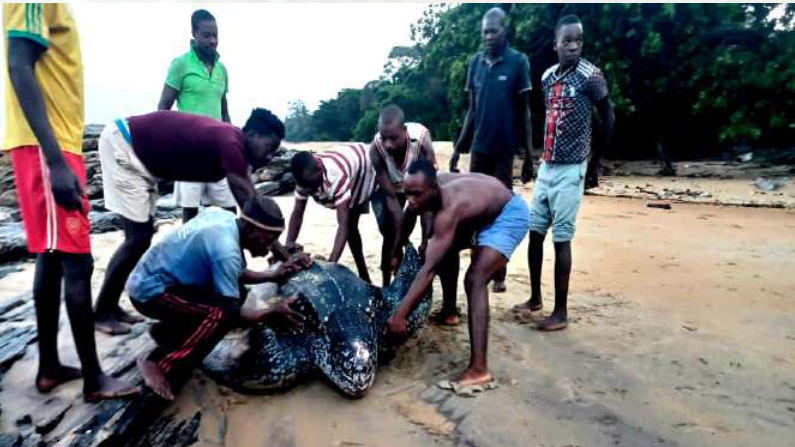
Whales also store significant carbon in their bodies. The IMF estimates that a single great whale sequesters an average of 33 tonnes of CO₂ over its lifetime — more than 1,500 trees. (IMF, 2019) When a whale dies and sinks — creating what marine biologists call a “whale fall” — that carbon is transported to the deep sea while the carcass provides food and habitat for deep-sea organisms for decades.
A whale doesn’t simply live in an ecosystem. It helps build one.
The question we can no longer avoid
The same principle appears again and again across marine biodiversity. The ocean isn’t a list of species. It is a network.
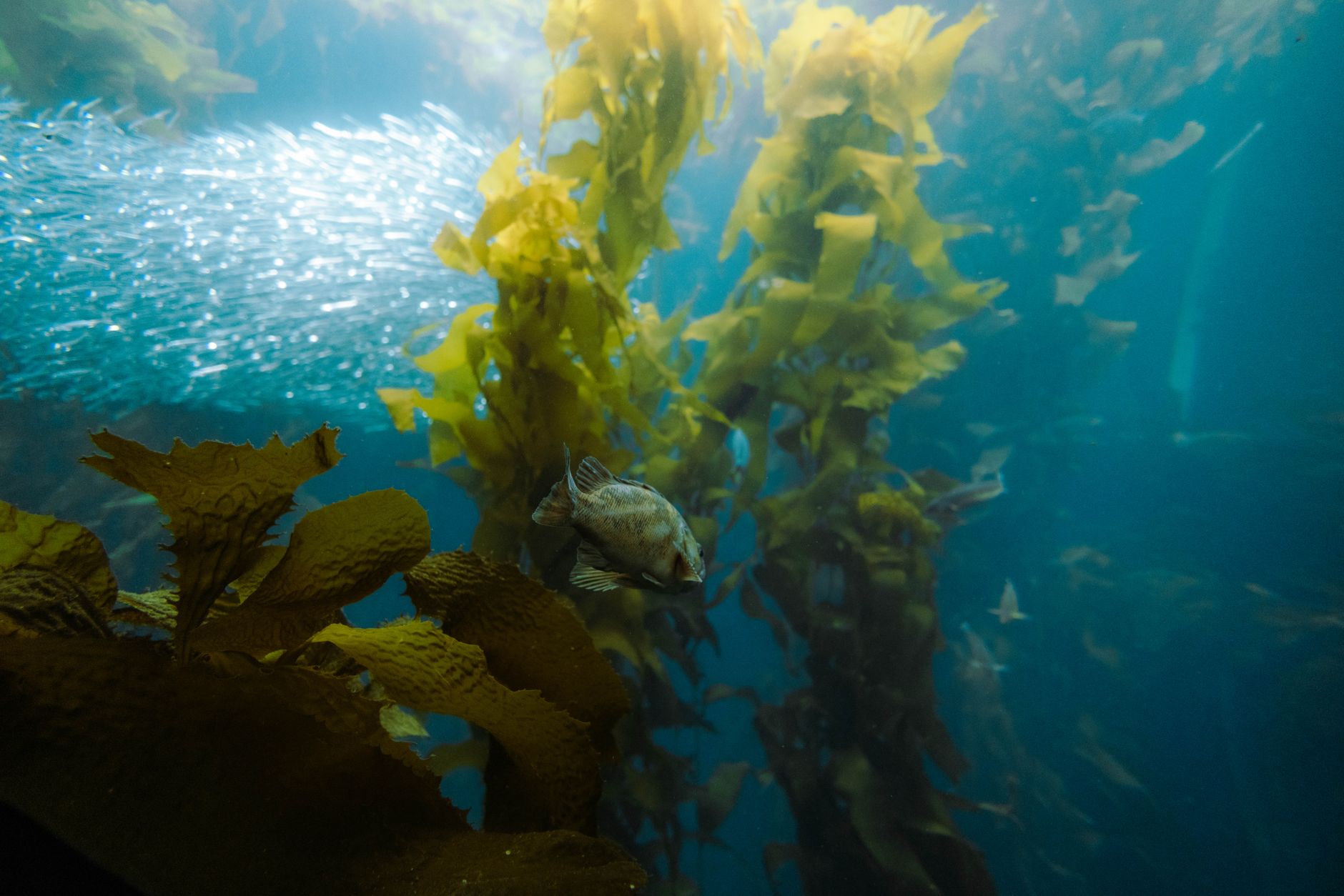
Remove a predator and prey populations shift. Lose a reef-building organism and habitat disappears. Reduce plankton and food webs collapse. Lose seagrass, mangroves, or kelp and countless nursery grounds, feeding areas, and carbon sinks vanish with them.
Even organisms we barely notice — microbes, worms, sponges, plankton, tiny crustaceans — participate in processes that govern nutrient cycling, carbon sequestration, and decomposition at planetary scale.
And that creates an uncomfortable question.
How can we know what we are losing when we haven’t even discovered much of what exists?
NOAA Ocean Exploration is now making hundreds of thousands of georeferenced biological observations available through global biodiversity databases — its contributions to OBIS and GBIF already exceed 740,000 organism records. (NOAA Ocean Exploration) That matters because discovery without data has limited power.
When observations become accessible, verified, comparable, and measurable, they can support research, conservation decisions, and long-term environmental monitoring. When they aren’t — when field data sits in spreadsheets, unverified, unstandardised, invisible to science and finance alike — the network remains unmapped even as it continues to degrade.
This is the gap OceanQuest was built to close: GPS-verified field observations, SHA-256 signed at point of collection, structured for ESRS E4, TNFD LEAP, GRI 304, from the moment the data exists. Every cleanup. Every biodiversity survey. Every citizen scientist in the water.
The ocean is full of signals. The question is whether we have the infrastructure to receive them.