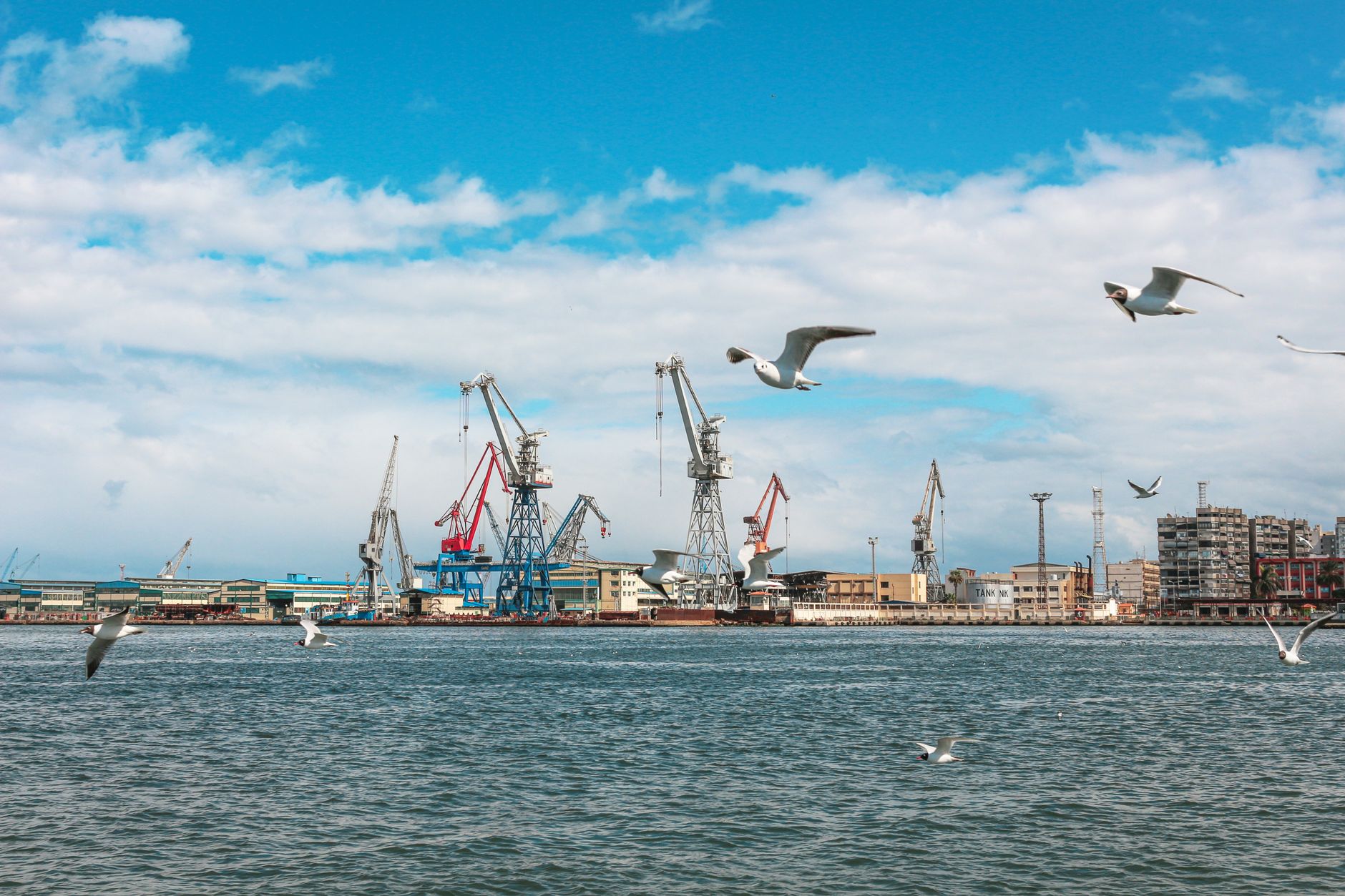
Imagine a company that operates a terminal on a Norwegian fjord. Every year, they conduct biodiversity surveys — photographing seagrass beds, cataloguing benthic species, documenting the ecology around their jetties. Their sustainability report includes habitat maps, species lists, an annual biodiversity index. Their auditor reviews it and signs off.
Then the shellfish farming ten kilometers away watches its revenues collapse.
Oxygen levels in the fjord have been declining for many years, driven by nutrient loading from industrial activity upstream. The species in the port company’s survey are still there. The ecosystem function that made the fjord productive — the one that neighbouring businesses and fishing communities depend on — is not.
Both things can be true at once: the biodiversity score can look acceptable, and the ocean can be failing in the way that matters most.

This is the core insight in a World Economic Forum piece published in 12th June 2026. Their argument is precise and important: most corporate sustainability frameworks have conflated two different things — the state of nature and the services nature provides — and as a result, most companies are managing nature-related risk blind.
State-of-nature metrics — species abundance, ecosystem extent and condition, habitat integrity — are essential. They underpin conservation policy, permitting, and social life. They are also how most companies currently measure their biodiversity exposure.
But they are not sufficient to understand business risk.
Nature-related risk often becomes material not when an ecosystem degrades in the abstract, but when that degradation weakens the services nature provides to operations, supply chains, and communities. Water regulation. Flood protection. Soil stability. Climate buffering. Coastal resilience. These are the pathways through which ecological change becomes operational disruption, supply volatility, and rising costs.
“Companies need to look beyond what nature is and understand what nature does.” says McKenzie and Cryle
The distinction sounds academic. It is not. A company whose operations depend on a river can track fish populations in that river for a decade and still miss the building risk from declining catchment condition fifty kilometres upstream — the degraded vegetation, the erosion, the changed water cycle — that is gradually reducing the reliability and quality of the water supply the operation and surrounding communities depend on.
That upstream catchment condition isn’t in the biodiversity survey. It is where the risk actually lives.
The Ocean Is the Most Consequential Ecosystem Service Provider on Earth
For ocean-adjacent businesses — offshore energy, aquaculture, fishing, shipping, tourism, coastal development — this reframing is not a nice-to-have. It is the entire risk picture.
The ocean provides services that underpin an economy worth $2.5 trillion annually. It regulates the climate. It absorbs roughly 25% of global CO₂ emissions. It produces more than half the oxygen in the atmosphere. It sustains the fisheries that 3.3 billion people depend on for food and income. It provides the coastal protection that shields $2 trillion of infrastructure from storm surge and erosion.
Every one of those services is degrading. And every company operating in, on, or adjacent to the ocean has a material dependency on at least one of them.
The problem is that most companies’ nature-related assessments stop at the fence line — or the lease boundary, the operational footprint, the permit area. They measure what they are required to report: impacts on species and habitats within their direct control. What they do not measure, and often cannot trace, is the condition of the wider marine ecosystem that those operations both depend on and affect.
A salmon farmer tracks disease in their pens. Do they have verified data on the temperature gradient of the wider fjord system that determines oxygen saturation? On the kelp coverage that regulates water flow and quality across the catchment? On the condition of the upstream watershed that determines the nutrient loading reaching their lease?
This is the question the World Economic Forum article is asking businesses to start answering. And it is the question that most companies operating near the ocean have no structured means to address.

Why the Risk Sits Beyond the Fence Line
The report is make a point that is particularly acute for marine environments:
- nature-related risk is spatially disconnected.
The ecological change that affects service supply may occur in one place while its consequences are felt somewhere entirely different.
Coastal protection depends on mangrove forests and seagrass beds located between communities and the open sea — ecosystems that may be kilometres from any company’s operational footprint. Fisheries productivity depends on the condition of spawning grounds and juvenile habitats that sit outside any individual operator’s lease or permit area. The blue carbon function of coastal wetlands — their capacity to absorb and store carbon — is determined by hydrological conditions extending across entire coastal catchments.
Effective responses to nature-related risk often require forms of collaboration and data collection that extend far beyond the fence line: with communities, with upstream landholders, with government agencies, with other businesses operating in the same ecosystem. And it is why the data needed to understand and manage that risk has to be spatial — not just what species are present, but where, in what condition, and connected to what services.

What Changes When You Have Location-Specific Ecosystem Health Data
The TNFD’s LEAP framework — Locate, Evaluate, Assess, Prepare — makes this spatial requirement explicit. The first step is not to measure biodiversity impact. It is to identify where your business interfaces with ecosystems and what the condition of those ecosystems is. Before you can evaluate risk and assess materiality, you need to know the geography of your nature dependencies.
That is a data problem. And until recently, it was a data problem without a scalable solution. Professional ecological surveys are expensive, slow, and geographically limited. Remote sensing provides coverage but limited depth. Government monitoring data is often incomplete, incompatible, and years out of date.
OceanQuest’s FieldQuest module was built to address exactly this gap. Every field data collection — whether by company staff, trained volunteers, or partner organisations is verified at point of collection and cryptographically signed, creating a tamper-proof, time-stamped record of ecosystem conditions at a specific location. The data is structured to align with ESRS E4 biodiversity standards, and GRI 304 — so it flows directly into the reporting frameworks that regulators, auditors, and investors are now using.
This is what spatially verified ecosystem health data looks like in practice: a Norwegian energy company monitoring the seabed condition across their operational area and the adjacent marine protected zone. A port authority tracking seagrass coverage and fish assemblage health along the full coastal corridor their infrastructure affects. A fishing cooperative documenting spawning habitat quality across a fjord system — not just within their lease area, but across the catchment whose condition determines their yield.
Not state-of-nature data in isolation. Not an ecosystem services model in the abstract. Verified, location-specific evidence of how the marine systems they depend on are actually functioning — and where those functions are becoming fragile.
The Risk That Isn’t Being Priced
There is a financial dimension to this that is only beginning to register.
Nature-related risk that is not being measured is not being priced. The $711 billion annual gap between current nature finance flows and what science says is needed exists in part because investors cannot underwrite outcomes they cannot verify. As CSRD, TNFD, and the Kunming-Montreal Global Biodiversity Framework sharpen mandatory disclosure requirements, companies that cannot demonstrate an evidence-based understanding of their ecosystem service dependencies and impacts are not just behind on reporting. They are carrying unpriced risk on their balance sheets.
The inverse is also true: a company that can demonstrate, with verified spatial data, that the marine ecosystem services its operations depend on are in good condition — and that its actions are measurably improving that condition — is managing its nature risk in a way that an investor can evaluate and an auditor can confirm.
Where Nature Matters Most to Your Business
The article ends with a sentence that I think will define the next five years of nature risk disclosure:
- companies will make better decisions to reduce business risk when they understand how ecological change affects the natural functions that support social and economic activity and where those functions are becoming fragile.
For companies with any exposure to the ocean — and more have that exposure than their current sustainability reports acknowledge — the question is now whether they have the tools to answer that. Not in general. Not in principle. But specifically, spatially, verifiably.
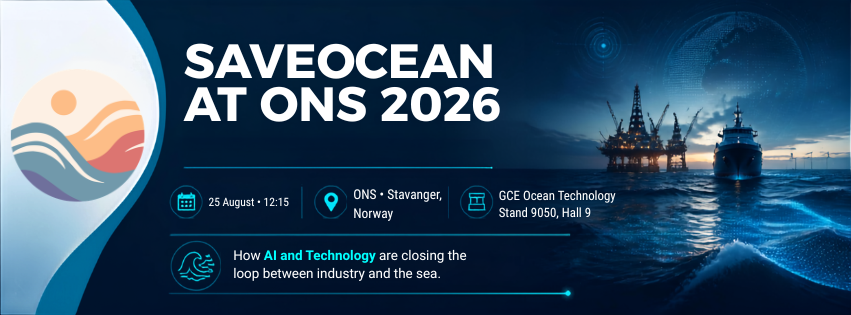
SaveOCEAN builds OceanQuest — the verified ocean action platform for TNFD LEAP, CSRD, ESRS E4/E5, GRI reporting. Contact us for more information