Before you read another word, look down at what you’re wearing.
There is a reasonable chance you are wearing denim. Four billion pairs of jeans are sold every year. They are the most democratic garment ever made. And every single one of them has a direct line to the ocean.
Not metaphorically. Literally.
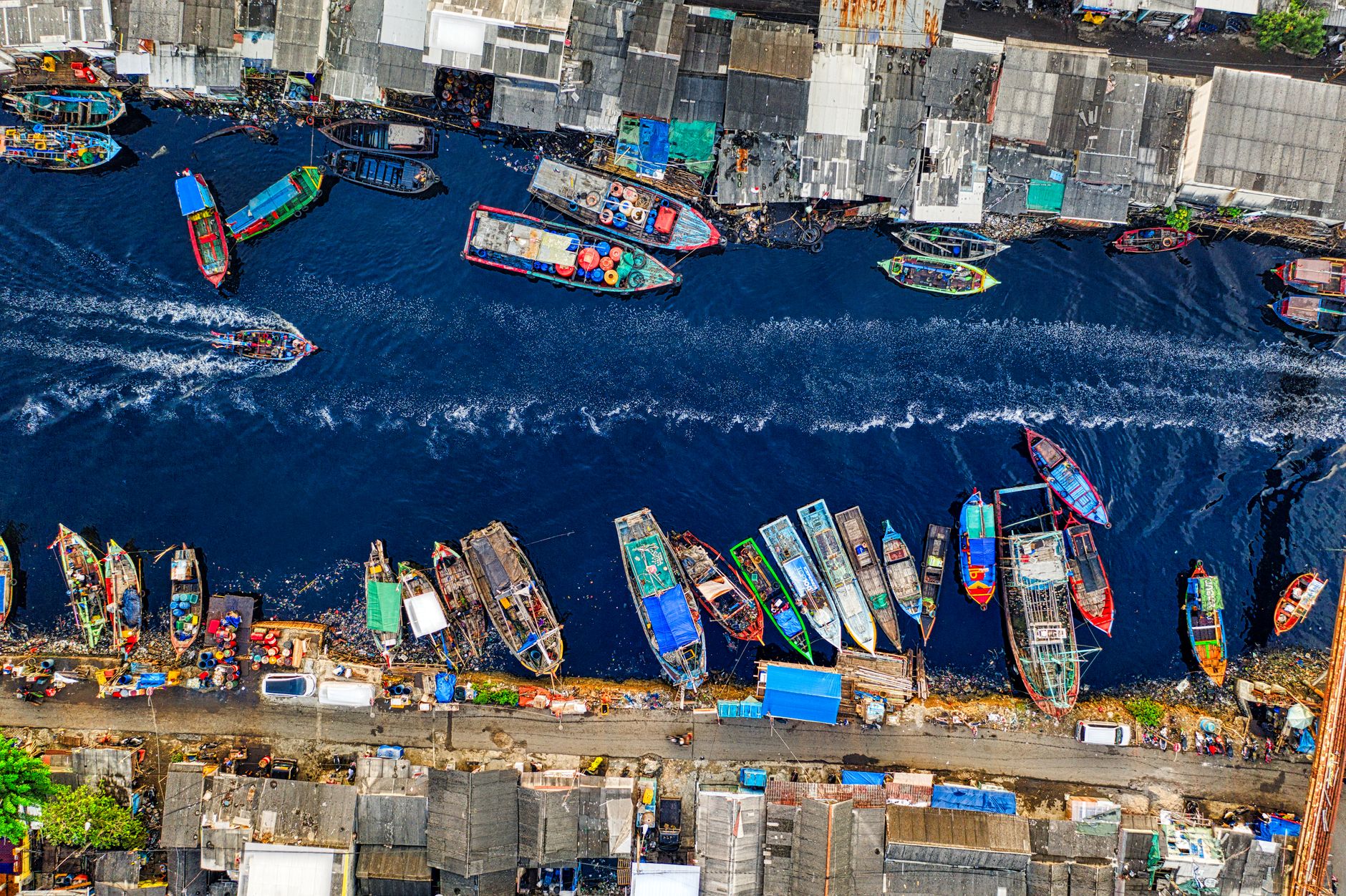
When you wash a pair of jeans, synthetic microfibers shed from the fabric, pass through your washing machine filter, travel through your wastewater system, and flow — in enormous quantities — into rivers, coastal waters, and eventually the open sea. Synthetic textiles are responsible for approximately 35% of all primary microplastics entering the ocean. The global fashion industry releases an estimated 500,000 tonnes of microfibers into marine environments every year.
And that’s before you consider what it took to make the jeans in the first place.

The Water Bill
A single pair of jeans requires 3,800 litres of water to produce. That figure comes from Levi’s own life-cycle assessment — one of the first fashion brands to be honest about the water intensity of denim at industrial scale. Here is the Levi’s interesting report about it: https://m.levistrauss.com/wp-content/uploads/2015/03/Fact-Sheet-for-LCA-FINAL.pd
The cotton must be grown, the yarn spun, the denim woven, the fabric dyed, washed, treated with chemicals, washed again, and finished. Each step consumes water. Much of that water — colored with synthetic dyes, treated with potassium permanganate and hypochlorite to achieve fades and distressed effects — has historically been discharged into local waterways.
The fashion industry uses 93 billion cubic meters of water annually. Textile dyeing is the second-largest source of water pollution on the planet. And most of that water eventually reaches the sea.

What Tunisia Is Doing Differently
UNEP recently published a story that deserves wider attention. In Tunisia — which supplies roughly 8% of the EU denim market — manufacturers like Gonser Denim Revolution (GDR) and DEMCO are demonstrating that a different model is possible.
At GDR, potassium permanganate and hypochlorite have been phased out in favour of safer chemical alternatives. Wastewater is now treated and recycled at the point of production.
The result:
- up to 75% less water per pair of jeans.
- At DEMCO, ozone washing technology has cut water use by 90% in the bleaching process.
UNEP’s InTex program has been central to this: working with factories to collect operational data, run life-cycle assessments, and turn sustainability from a vague intention into a measurable action plan.
“With this, we know where we can improve the environmental impact, where we can reduce our footprint,” said Bilel Ben Miled, Sustainability Manager at GDR.
That sentence should be a benchmark for every company in every industry.

The Coming Reckoning for Fashion Companies
The EU’s Corporate Sustainability Reporting Directive is landing on the fashion sector with particular force.
ESRS E5 — the standard covering resource use and circular economy — requires companies to track material inflows and outflows, document waste destinations across 8 categories, and report a share of waste with unknown final destinations.
Starting 2027, digital product passports will require brands to document everything about a garment: where the cotton came from, what chemicals were used, how the buttons and rivets were sourced, and whether the final product can be recycled.

That last word — recycled — is where the chain usually breaks. Globally, less than 1% of clothing is recycled into new clothing. The other 99% is incinerated, landfilled, or left in the environment. The ocean is, in too many places, the final destination of fashion’s waste.
The regulatory framework is now demanding that companies prove otherwise. Not claim it. Prove it — with traceable, auditable data.
This is precisely the gap that most fashion companies have no tool to fill. They can tell you how many units they shipped. They cannot tell you, with verifiable evidence, where each kilogram of post-production waste went and what happened to it.
The Data Problem Is the Ocean Problem
Here is the connection that I think doesn’t get made often enough.
The fashion industry’s impact on the ocean is not just a chemistry problem or a logistics problem. It is, at its root, a data problem.
- We cannot track what we cannot measure.
- We cannot protect what we cannot prove.
And right now, the ocean is receiving the discharge of an industry that has historically had no structured obligation — and no tools — to document what it puts into the world.
UNEP’s InTex programme shows what changes when you give factories the tools to collect and analyse their own operational data. The same principle applies to waste: the moment you can see where your waste goes, you can start to change where it ends up.
That is the logic behind OceanQuest’s CircularityChain module. It tracks waste flows across all eight circularity outcome categories — from reuse and recycling to incineration and landfill — and generates a verified Circularity Score in real time. It also closes the single most alarming gap in the new ESRS E5 requirements: the share of waste with an unknown final destination. If you cannot prove your waste didn’t reach the ocean, the assumption — and soon, the regulatory burden — will be that it did.

What Responsible Fashion Actually Looks Like
The UNEP story from Tunisia gives me real optimism, because it demonstrates that the industry’s transformation is not theoretical. Technology exists today to dramatically reduce the water footprint of denim manufacturing. Chemicals that damage aquatic ecosystems can be replaced. Wastewater can be recycled. Life-cycle assessments can turn good intentions into specific, measurable targets.
Digital product passports are a start. They create a record that follows the garment from fibre to finished product. But the final chapter of that record — what happens at end of life — is still largely unwritten.
And until it is, the ocean will keep receiving what the fashion industry fails to account for.
The Right Question to Ask Your Wardrobe
“It came from the Earth,” said UNEP Goodwill Ambassador Amber Valletta, after touring the Tunisian factories. “There were a lot of hands that went into making it and a lot of different processes. It travelled all over the world just to get to you and your closet.”
And when it leaves your closet — where does it go?
That is the question the fashion industry now has a legal obligation to answer, and the tools to start answering honestly. Not with estimates and projections, but with verified, traceable data that follows the material from the denim weave to its final destination.
At SaveOcean, we believe the ocean deserves that level of accounting. Not because regulation requires it — though it increasingly does — but because without it, we are flying blind over a crisis that is deepening in waters that cannot speak for themselves.
The jeans you are wearing travelled around the world to reach you. Make sure the data follows them all the way home.
SaveOcean AS builds OceanQuest — the verified ocean action platform for CSRD, ESRS E4/E5, GRI, and BlueCarbon reporting. Learn more at saveocean.net/oceanquest.