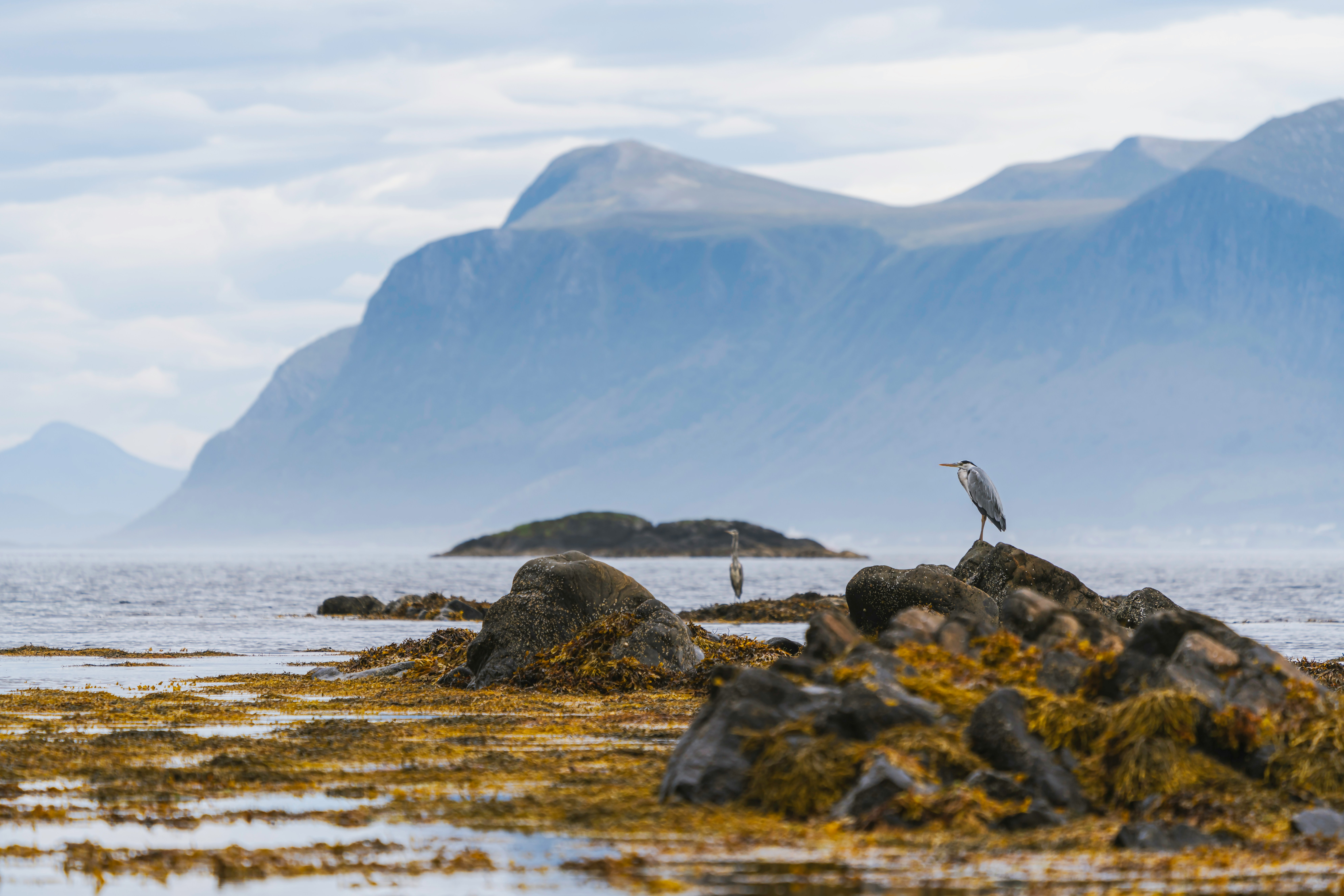
Few nations are as closely tied to the ocean as Norway.
For centuries, the sea has shaped Norwegian culture, livelihoods, trade, and national identity. Today, Norway remains one of the world’s leading maritime economies, with global influence in fisheries, shipping, offshore energy, aquaculture, and marine science.
At the same time, Norway stands at the center of an increasingly difficult global conversation.
“How can a country benefit economically from the ocean while also protecting the ecosystem that sustains it?”
As marine biodiversity declines and climate impacts intensify across Arctic and North Atlantic waters, Marine Protected Areas (MPAs) are becoming one of the most important tools available to preserve ocean health for future generations.
But creating meaningful protection requires more than political announcements. It requires science, transparency, accountability, and long-term commitment.
What are Marine Protected Areas?
Marine Protected Areas are designated ocean regions where human activities are managed or restricted to protect marine ecosystems, biodiversity, and habitats.
Some MPAs allow carefully regulated economic activities such as sustainable fishing or tourism, while others operate as fully protected “no-take zones.” Research consistently shows that healthy marine ecosystems are more resilient, more productive, and better equipped to adapt to environmental change.
Norway’s Ocean Paradox
Norway is often internationally recognized as a sustainability leader. The country has invested heavily in renewable energy, marine science, sustainable fisheries management, and green maritime innovation.
Yet, Norway also faces growing criticism for contradictions within its ocean policy.
While supporting international biodiversity goals and ocean conservation frameworks, Norway continues to expand offshore oil and gas exploration in sensitive marine regions, including Arctic areas. Debates surrounding seabed mining, aquaculture impacts, and industrial pressures on coastal ecosystems have also intensified in recent years.
This creates a difficult paradox.
Norway promotes itself as a champion of ocean sustainability while simultaneously relying on industries that contribute to ecosystem pressure and climate emissions.
Marine conservation groups and researchers have repeatedly warned that some Norwegian marine ecosystems are under increasing stress from, among others,
- Bottom trawling
- Pollution and plastic waste
- Ocean warming and acidification
- Industrial expansion in vulnerable Arctic waters
Critics argue that many existing Marine Protected Areas in Norway still allow activities that significantly impact seabed ecosystems, raising concerns about whether certain protected zones are truly protected in practice.
The challenge for Norway is no longer whether ocean protection matters –
The real challenge lies in whether political ambition will match scientific urgency.
The Arctic and the North Atlantic are rapidly changing
Norway’s geographic position places it on the frontline of climate-driven ocean change.
The Arctic is warming significantly faster than the global average, affecting marine food webs, sea ice patterns, fish migration routes, and biodiversity across northern waters. Changes in the Barents Sea and Norwegian Sea are already reshaping marine ecosystems that coastal communities and industries depend upon.
Therefore, increasing Marine Protected Areas in this region, as a critical climate adaptation tool can help maintain resilience under environmental stress.
Institutes are driving Marine protection forward
Norway has some of the world’s strongest marine science and environmental research communities, such as the Institute for Marine Research, NIVA, SINTEF Ocean, The Norwegian Polar Institute, and GRID Arendal are actively contributing to marine conservation and MPA development.
They have played major roles in advancing marine biodiversity research, ecosystem mapping, Arctic monitoring, and sustainable ocean management.
Environmental organizations and collaborative initiatives have also pushed for stronger marine protections and evidence-based ocean policy. Ecosystem-based ocean governance, biodiversity monitoring, Arctic resilience, ocean-climate interactions, sustainable fisheries, and digital marine observation systems are the research initiatives being emphasized across Norway.
This scientific foundation is essential because effective Marine Protected Areas must be informed by continuous environmental data rather than static policy frameworks.
Ocean Monitoring Matters
One of the biggest global weaknesses in marine protection is enforcement and monitoring.
Protected areas often exist on maps while illegal fishing, pollution events, habitat destruction, or ecosystem degradation continue unnoticed.
The future of marine conservation will increasingly depend on technologies such as:
- AI-powered environmental analytics
- Satellite observation systems
- Real-time ocean sensors
- Predictive ecosystem modeling
- Autonomous marine monitoring
- Open-access environmental data platforms
Norway is uniquely positioned to lead in this space due to its expertise in maritime technology, ocean science, and digital infrastructure.
Ocean sustainability cannot become a branding exercise while ecosystems continue to deteriorate beneath the surface. Real protection demands measurable outcomes, scientific transparency, and accountability across both governments and industries.
We believe Norway has the expertise, technological capability, and scientific leadership to become one of the world’s strongest examples of data-driven marine conservation.
But leadership also requires difficult conversations
Protecting ocean ecosystems while expanding industrial activity in sensitive marine regions presents a challenge that cannot be solved through policy language alone. Long-term ocean stewardship requires balancing economic interests with ecological boundaries that science increasingly makes impossible to ignore.
We believe Marine Protected Areas should:
- Be science-led
- Include transparent monitoring systems
- Use real-time environmental intelligence
- Support ecosystem recovery
- Involve local and Indigenous communities
- Deliver measurable ecological impact
At SaveOCEAN, we believe Marine Protected Areas should evolve from passive protected zones into intelligently monitored ecosystems supported by transparent, real-time environmental data.
SaveOCEAN – OceanTech’s transformative role in action
At SaveOCEAN, we believe the future of marine conservation requires honesty as much as innovation.
The next generation of marine conservation will depend on collaboration between science, technology, policy, industry, and communities.
We are in collaboration with all these actors, getting essential feedbacks, and developing a single unifying product – OceanQuest.
At SaveOCEAN, our mission is to support smarter and more transparent ocean protection through AI-driven environmental monitoring, data accessibility, and scalable marine intelligence systems.
Ocean is the infrastructure for the future of life, climate stability, and global resilience, and ocean monitoring with cross-sectoral benefit is our way of contributing to saving it.