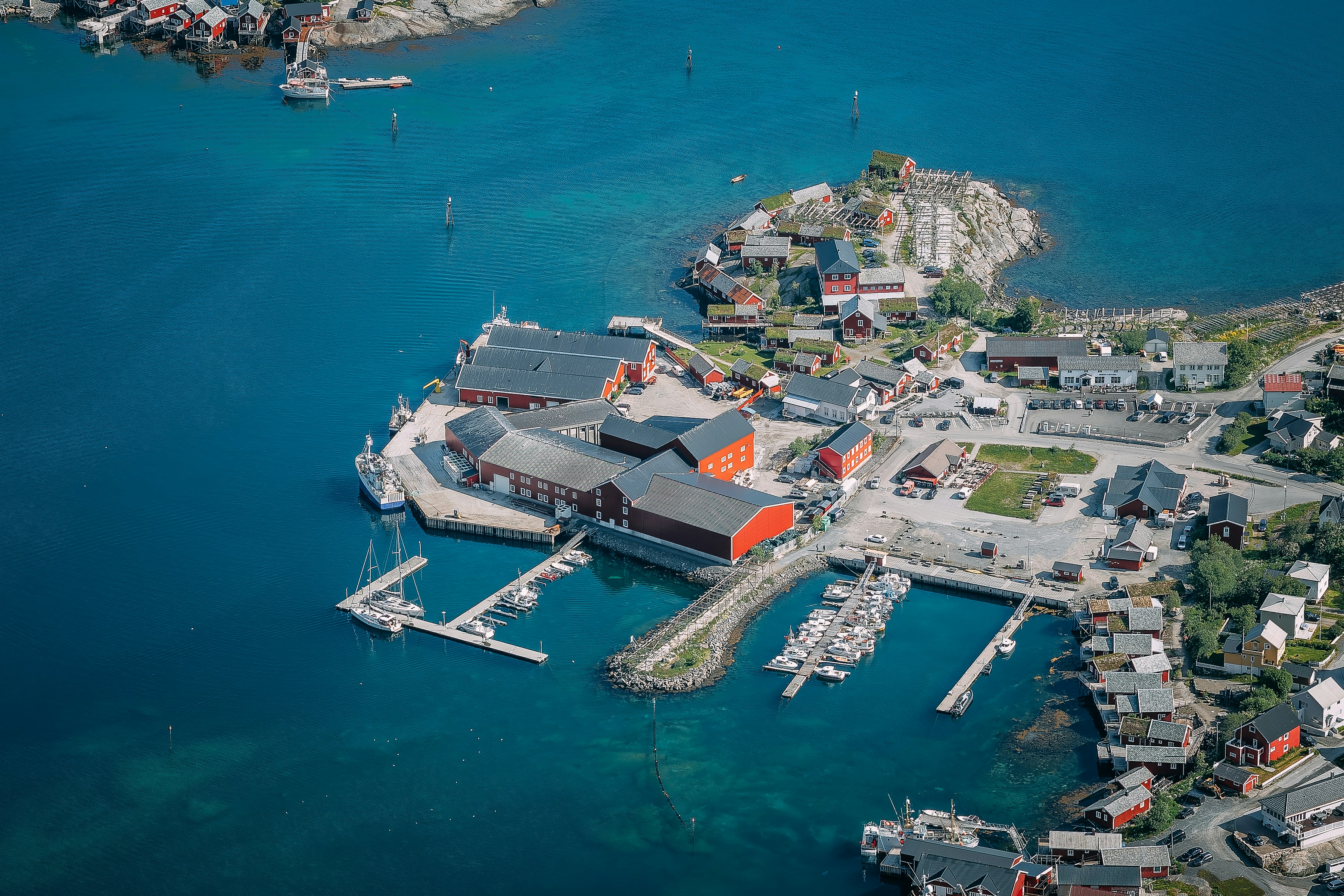
Marinas pollute the waters. The Nordics are uniquely positioned to address it. They have innovative solutions, strong regulatory frameworks, and room to act before marina pollution becomes entrenched. Photo: Unsplash, Danny Rienecker. Reine, Lofoten, Norway
The Nordic region has built much of its identity around clean water, coastal living, outdoor recreation, and responsible environmental management. From Norway’s fjords and Sweden’s archipelagos to Denmark’s harbors, Finland’s coastal towns, and Iceland’s small ports, life by the sea is part of the Nordic story.
But there is one overlooked environmental challenge sitting right at the edge of many coastal communities: marina pollution.
Marinas are often seen as peaceful gateways to the sea. They support boating, tourism, local businesses, and recreation. Yet they can also become pollution hotspots. Unlike industrial pollution, marina pollution usually does not come from one large source. It builds slowly through many small activities: fuel leaks, oil residues, wastewater discharge, marine litter, microplastics, and chemicals from boat maintenance.
Boat maintenance – the clearest example of marina pollution
Many recreational boats use antifouling paints to stop algae and marine organisms from growing on hulls. These paints often contain substances such as copper and zinc. During scraping, pressure washing, and hull cleaning, paint particles and residues can enter marina waters and settle into sediments.
Fuel and oil leaks
A small spill during refueling may not look dramatic, but when hundreds of boats operate in the same sheltered basin, the combined impact becomes significant. Wastewater, sewage, marine litter, synthetic ropes, degraded equipment, and microplastics add to the problem.
Marina design
The design of many marinas makes this worse. They are often built in sheltered waters to protect boats from waves and strong currents. That is good for boat owners, but not always good for water quality. Limited circulation means pollutants can remain trapped instead of being flushed away.

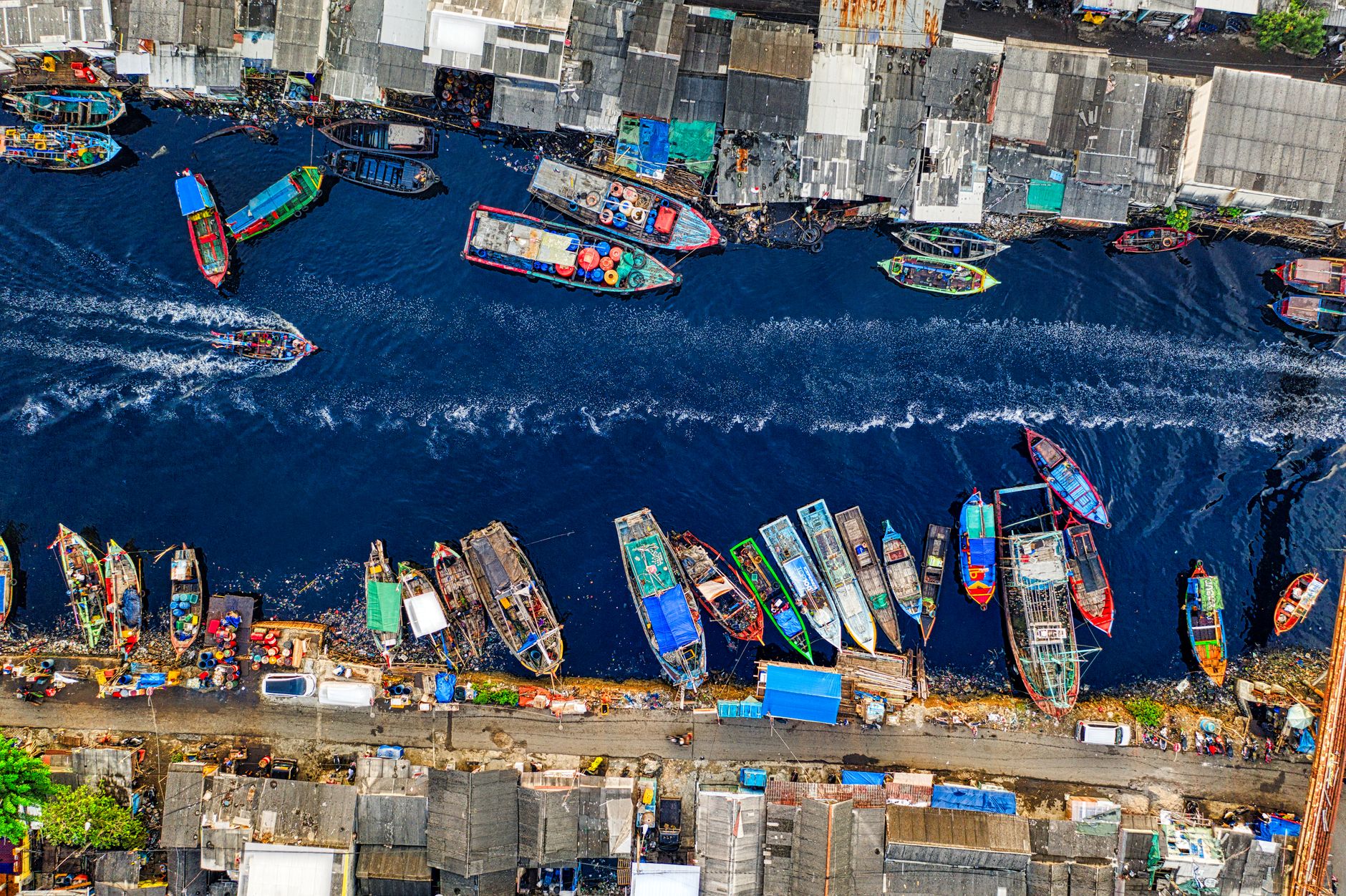
Image: Pollution near boat parkings. Credits: NOAA office of response and restoration
An economic issue as much as an environmental one
Environmental and economic issues go hand-in-hand more often than we’d like to see. Clean marinas create value – boaters are not only paying for a berth; they are paying for a good experience. Clean water, safe infrastructure, visible care, and reliable waste systems make a marina more attractive. That can support higher occupancy, repeat visitors, and stronger customer satisfaction.
The value also spreads beyond the marina itself. Visiting boaters spend money on restaurants, fuel, repairs, groceries, accommodation, and local tourism. For many Nordic coastal communities, marinas are part of the local economy. When marinas are clean and well managed, the surrounding businesses benefit too.
Pollution, on the other hand, creates future costs. Contaminated sediments, dredging, cleanup operations, infrastructure damage, and regulatory compliance can become expensive for both marina operators and municipalities. Preventing pollution is often cheaper than restoring damaged environments later.
Why we are rooting for the Nordics to step up
The Nordics are well positioned to step up, here’s why.
The Nordic countries already have strong environmental reputations, high public trust, advanced digital infrastructure, and deep maritime culture. Boating is popular, coastal tourism is valuable, and sustainability is not just a slogan — it is part of how the region competes globally.
Yet, compared with more crowded boating regions such as the Mediterranean, the Nordics are less saturated and less congested. The region has a relatively small population spread across large coastal and marine areas.
This gives Nordic countries a rare advantage
There is still room to act early, build better systems, and protect waters before marina pollution becomes harder and more expensive to reverse.
Norway already holds strong spot
In Norway, public coastal development is already highly controlled. The 100-metre shoreline belt has strong planning restrictions, and building new private infrastructure in public coastal areas cannot be done freely.
Investment momentum is building around marine pollution and circular solutions. Norway is committing significant funding to tackle plastic pollution globally, while Nordic Innovation highlights ocean protection, restoration, pollution tracking, and circular economy initiatives as key growth areas. Norway’s Retailers’ Environment Fund is also accelerating efforts to reduce plastic use and transform the plastic economy.
Existing Nordic measures can act as a backbone for the healthy marinas
The Nordics could become a testing ground to use the existing solutions for cleaner marina management: better pump-out systems, smarter waste collection, environmentally safer hull maintenance, digital berth platforms, water quality monitoring, better marina certifications, and transparent sustainability standards.
The Nordics are well positioned to lead. They combine maritime culture, environmental trust, digital readiness, strong public institutions, and a global reputation for sustainability. Instead of waiting until marina pollution becomes a crisis, the region can treat clean marinas as an investable opportunity.
Clean marinas are not just about removing litter from the water. They are about rethinking marina management as part of sustainable coastal development.