A few months ago, a group of students opened a blank Microsoft Azure project sometime around mid-January midday, between a lecture they’d just sat through and a shift they were about to start.
They had a thesis to write. Most of them had jobs. None of them had built anything in Azure before. And the brief I’d given them was, frankly, oversized: build the platform that the ocean conservation world is missing.
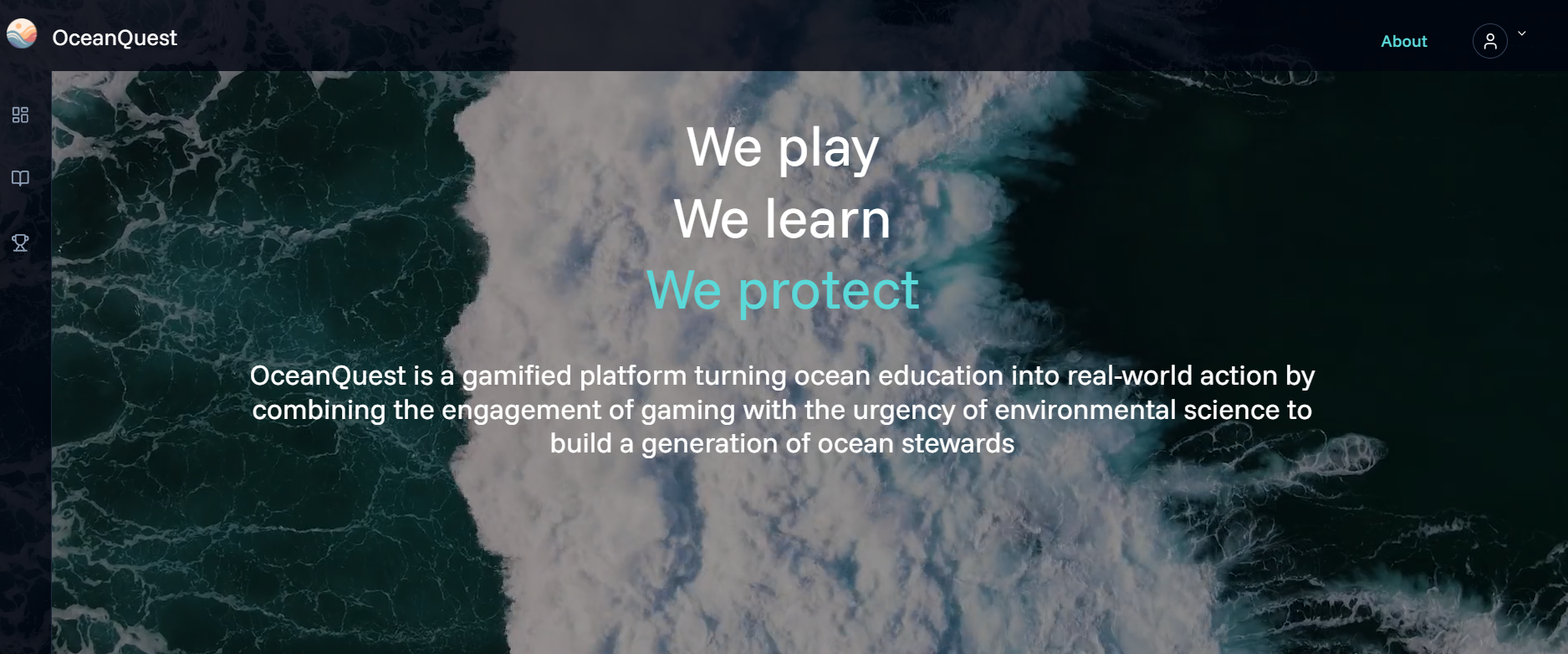
Today, that platform is live. It’s called OceanQuest, and it does something nobody else has put in one place.

What’s actually broken about ocean conservation
Spend any time inside the ocean space and you notice the same pattern, over and over.
There are millions of curious people who want to do something — but every path they find leads to either an academic paper they can’t read, a donation page, or a Saturday cleanup three hours from their flat. The intent is real. The friction is brutal.
There are researchers who can’t find volunteers for fieldwork. There are tourism operators running incredible trips that almost nobody finds. There are municipalities running cleanups that fifteen people show up to. And there are companies, increasingly bound by CSRD reporting obligations, trying to write credible sustainability reports using ocean-impact numbers nobody can actually verify.
Everyone in the system is doing the right thing.
They’re just doing it alone, in silos, in formats that don’t talk to each other.
What OceanQuest is
OceanQuest is a single platform — gamified, verified, open to both individuals and organizations — where ocean curiosity turns into ocean action with measurable results.
If you’re a private user, you can:
- Learn about the ocean in a format that doesn’t require a marine biology degree to understand
- Join real-world quests near you: cleanups, dives, conservation events, research expeditions, citizen-science trips
- Create and publish your own quests for others to join
- Build up a verifiable record of your own ocean impact
If you’re a business with ESG or CSRD obligations, the same engine gives you something the market hasn’t had: verified impact numbers that can stand up in a sustainability report. Not estimates. Not vibes. Verified actions, logged on the platform, tied to real events with real participants.
If you’re a researcher, a municipality, or a tour operator, OceanQuest is your distribution channel. Publish a quest, and the people who actually want to be there can find it.
The point is not to lecture anyone. The point is to make ocean action the easiest, most interesting thing on someone’s calendar this weekend.
Why “quests” and not “actions” or “events”
Word choice matters. We deliberately did not call them events. Events feel formal, scheduled, intimidating — something you commit to weeks in advance and feel guilty cancelling.
Quests feel optional, curious, slightly playful. You go on a quest because you want to, not because you owe somebody. The behavioral science here is well-established: when people feel autonomous, they show up. When they feel lectured, they unsubscribe.
The team
I want to be specific about who built this, because they deserve it.

This was a group of OsloMet students, juggling thesis work, lectures, exams, and in several cases full-time jobs. The whole thing was designed and shipped in roughly three to four months. Azure was new to all of them. The product surface area was wider than anything they’d done before.
They didn’t ask for an extension. They didn’t scope it down. They shipped.
I’ve worked with engineering teams a lot more senior than this one that move a lot slower. What this team produced — not just the code, but the architecture decisions, the user-flow thinking, the willingness to throw away a week’s work when something better became obvious — is the kind of output most companies pay senior salaries for.
To the team: Frida von Hafenbradl, Jarle Kirkeby, Cecilia Dinh and Sapphire Gro, thank you.
Special thanks to the incredible work of the Supervisor Tulpesh Patel which guided them all the way.

You built something the ocean genuinely needs, and you did it during the hardest semester of your degree. That is not a small thing.
What happens next
OceanQuest is live now and anyone can sign up using their own Google or personal Microsoft account.
A few specific things I’d love help with from the people reading this:
If you’re an individual: create an account, browse the learning quests to gain badges and recognition. The hardest part of any new platform is the first month. Early users shape what this becomes.
Keep an eye on the quests near you, and either join one or publish one of your own. This part is under the development.
If you can’t do any of the above but you want to help: sharing this post is genuinely useful. Distribution is the hardest part of launching anything, and the ocean conservation space is fragmented enough that word of mouth still moves the needle more than ad spend.
The bigger thesis
I’ll close with the thing I actually believe.
The next decade of ocean conservation will not be won by the organization that produces the best report or the loudest campaign. It will be won by whoever builds the connective tissue — the layer that lets a curious person in Oslo, a researcher in Lisbon, a tourism operator in the Azores, a municipality in northern Norway, and a sustainability lead at a Fortune 500 all participate in the same system, on terms that work for each of them.
That’s what we’re trying to build. OceanQuest is the first version of it.
It is not finished. It will get better. Some of what we shipped will turn out to be wrong, and we will change it. But the platform is real, it works, and as of today it is open.