Methane is 80 times more powerful than CO₂ as a climate forcer. It drives roughly one-third of all the warming we are experiencing right now — today, not in some modelled future. And according to UNEP’s newly released An Eye on Methane 2025 report, we have just 52 months to meet the Global Methane Pledge target of a 30% reduction in global methane emissions by 2030.
The report is a landmark in climate science. But read it carefully and you’ll notice something striking: the ocean is almost entirely absent from the conversation.
That absence is not an oversight. It’s a warning.
What the UNEP Report Actually Found
The An Eye on Methane 2025 report, published by UNEP’s International Methane Emissions Observatory (IMEO), brings together data from satellite networks, industry reporting, and scientific field studies to give us the clearest picture yet of where methane is coming from — and how badly we are failing to address it.
The headline findings are difficult to read without a sense of urgency:
- The detection gap is enormous. UNEP’s Methane Alert and Response System (MARS) has sent over 3,500 satellite-detected methane alerts to 33 countries. Response rates have increased twelve-fold in a single year and almost 90% of alerts still go completely unaddressed by the governments and companies responsible.
- Industry coverage is partial, at best. OGMP 2.0, the world’s most comprehensive methane reporting framework representing 42% of global oil and gas production.
- Data quality lags behind ambition. Only 7% of global oil and gas production has reached “Level 5” — the highest tier of measurement-based reporting. The rest are still working from estimates, many of them outdated.
- Agriculture and waste are barely tracked. These two sectors together account for 60% of human-caused methane emissions globally.
The report’s title says it plainly: From measurement to momentum. Data is driving action — now the pace must match the promise.
The Chapter the Report Doesn’t Write: The Ocean
Here is what An Eye on Methane 2025 focuses on: fossil fuels, steel production, waste, and agriculture. All critically important. But the report contains almost nothing about: the ocean.
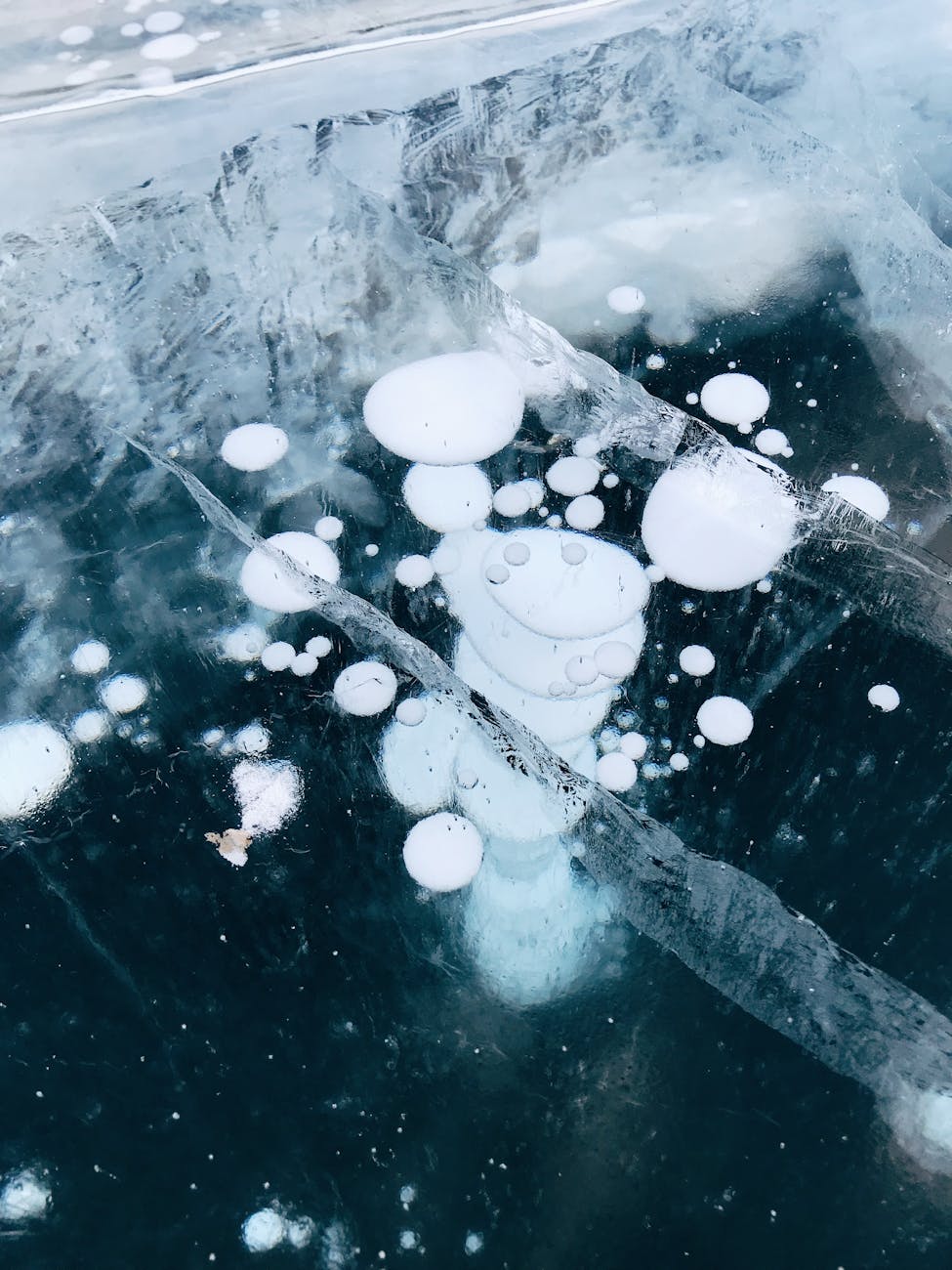
Beneath the seafloor, locked in ice-like structures called methane hydrates (or clathrates), lies more carbon than in all of Earth’s known coal, oil, and gas reserves combined. These hydrates form under the high pressure and low temperatures of the deep ocean. They are stable — until they aren’t.
As ocean temperatures rise, the conditions that keep methane hydrates frozen are becoming less reliable. On Arctic continental shelves, where hydrates exist in shallower water, scientists have documented active methane seep fields — bubbling plumes of gas rising from the seafloor toward the surface. Some of this methane dissolves in the water column and is consumed by microbes. Some reaches the atmosphere.
The scale of potential release is significant. Yet it is barely mentioned in global methane accounting frameworks. It doesn’t appear in OGMP 2.0 reporting. It’s not covered by MARS satellite alerts. It is, by almost every measure, an unmonitored frontier.
90% of Alerts Go Unaddressed. Citizen Science Is Part of the Answer.
UNEP’s report is honest about why the response rate to MARS alerts is so low. Satellites can detect a methane “super-emitter” event from space. But acting on that alert requires someone on the ground — at the facility, at the shoreline, at the seep field — to verify, document, and report. The chain from detection to action breaks repeatedly at the local level.
IMEO’s Methane Training Series has trained nearly 2,000 people across 40 countries in methane measurement and monitoring. That’s meaningful. It’s also a fraction of what’s needed.
This is where OceanQuest by SaveOCEAN.net enters the picture.
OceanQuest coastal missions is planned to train citizen scientists to observe, record, and submit environmental data from ocean and coastal environments. Our methodology is designed to produce standardized, auditable data — the kind that feeds into CSRD biodiversity reporting, SDG 14 tracking, and open scientific databases.
The logical next step — one we are actively working toward — is extending OceanQuest mission protocols to include coastal methane indicators: documenting seep activity, recording water column anomalies, flagging suspicious offshore infrastructure, and building the kind of local observation network that satellite systems cannot replicate.
When 90% of methane alerts go unaddressed because nobody is there to respond, the answer is to put trained observers everywhere the ocean meets the land.
What Needs to Happen
The UNEP report is clear about what’s required. We’ll add the ocean layer it doesn’t address.
1. Expand methane monitoring to marine environments.A dedicated program for seafloor seep monitoring, subsea pipeline surveillance, and coastal wetland methane flux measurement would fill one of the most consequential blind spots in global climate data.
2. Include ocean-source methane in CSRD reporting. Companies with offshore operations, coastal infrastructure, or supply chains that touch marine environments should be required to account for marine methane exposure in their ESRS E4 biodiversity and ecosystems disclosures. Right now, almost none do.
3. Join SaveOCEAN. Whether you’re a diver, a coastal resident, a marine science student, or a corporate sustainability team looking for verified ocean impact data, SaveOCEAN gives you a structured pathway to contribute observations that matter.
The Data Revolution Is Real. The Ocean Needs to Be In It.
UNEP’s An Eye on Methane 2025 represents a genuine milestone. The Eye on Methane data platform has drawn over 75,000 views and thousands of downloads since COP29. Satellite networks are detecting super-emitter events that would have been invisible a decade ago. Companies are — slowly — moving toward measurement-based reporting.
But the report closes with a phrase that deserves to be read as a direct challenge: “The pace must match the promise.”
For the ocean, the pace hasn’t even started.
At SaveOCEAN.net, we believe the ocean cannot be the missing chapter in the methane story. The data revolution IMEO is driving needs a coastal extension — and citizen science is how we build it.
The ocean is sending signals. Methane is one of them. Help us read it.
Take Action
- Join an OceanQuest coastal mission → Join the waiting list to submit your observations to the growing ocean health database
- Explore the UNEP Eye on Methane platform → See the satellite data for yourself